
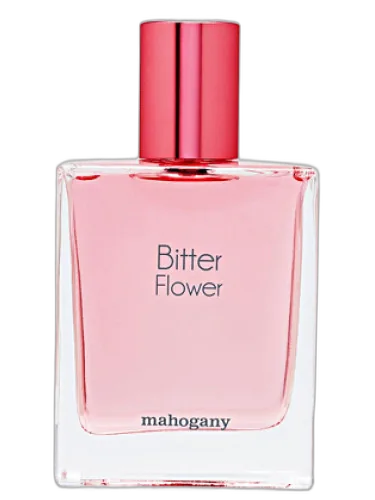

Bitter Flower Mahogany
At a glance
Is Bitter Flower Mahogany worth trying?
Bitter Flower by Mahogany is a Floral Woody Musk fragrance for women.
- Best match
- Evening wear in Fall
- Performance feel
- Very Good longevity with Strong sillage
- Signature profile
- white floral, citrus, sweet with Raspberry, Orange, Bergamot
The first impression
Bitter Flower by Mahogany is a Floral Woody Musk fragrance for women. Bitter Flower was launched in 2016. The nose behind this fragrance is Roland Theil. Top notes are Raspberry, Orange and Bergamot; middle notes are Velvet, Jasmine, Orange Blossom, Gardenia and Woodsy Notes; base notes are Vanilla, Amber, Musk and Patchouli.
What shapes the scent
The perfumer behind it

Roland Theil
Roland Theil is a French perfumer known for his work with the Mahogany brand. He created Bitter Flower Mahogany and Sogno Mediterraneo Mahogany, both of which showcase his ability to blend floral and woody notes. His compositions often balance richness with freshness, appealing to modern tastes.
Notes pyramid
Top Notes
First impression · 15-30 min
 Raspberry
 Orange
 Bergamot
Heart Notes
Core character · 2-4 hours
 Velvet
 Jasmine
 Orange Blossom
 Gardenia
 Woodsy Notes
Base Notes
Lasting impression · 4+ hours
 Vanilla
 Amber
Amber
 Musk
Musk
 Patchouli
The mood it creates
The Alchemist Archetype: Portrait of Bitter Flower Mahogany
Essence
The one who chooses Bitter Flower Mahogany as their fragrance is, at their core, an Alchemist-a seeker of transformation, depth, and hidden truths. This archetype thrives on the interplay between beauty and decay, the sacred and the profane. They are drawn to the tension in the scent: the bitter edge of dark florals clashing with the warm, woody embrace of mahogany. Like the alchemists of old, they are not content with surface appearances; they seek to transmute the raw materials of experience into something richer, darker, and more meaningful.
Style & Aesthetic
Their world is one of deliberate contrasts. They dress in textures that tell a story-worn leather, heavy wool, perhaps a hint of vintage silk. Their style is neither ostentatious nor careless; it is considered, as though each garment were chosen for its ability to carry the weight of memory. They prefer dimly lit rooms filled with old books, where the scent of tobacco and aged paper lingers. Their taste in art leans toward the baroque or the surreal-Caravaggio’s chiaroscuro, Dali’s melting clocks, anything that distorts reality just enough to reveal its hidden fractures.
Philosophically, they are drawn to thinkers who embrace contradiction-Nietzsche’s amor fati, Jung’s shadow work, Bataille’s sacred transgressions. They believe that truth is found not in purity, but in the mingling of opposites. Life, to them, is an experiment, a series of alchemical reactions where pain and pleasure, love and loss, are all ingredients in the crucible of becoming.
Philosophy & Values
They do not love lightly. Their relationships are intense, often marked by a push-and-pull between intimacy and solitude. They crave deep connection but fear the dissolution of self that comes with it. Their love is a slow-burning fire, not a spark-they test, they observe, they wait. When they commit, it is with a ferocity that can be overwhelming, for they see love as another form of alchemy: two souls merging, each transforming the other.
Their friendships are few but enduring. They attract those who are equally comfortable with silence and depth, who do not flinch at the darker currents of conversation. They have little patience for small talk, but if you speak of dreams, fears, or the uncanny, they will listen with the intensity of a confessor.
Shadow
Yet the Alchemist is not without their darkness. Their obsession with depth can become a kind of avoidance-a refusal to engage with the mundane, the simple, the joyfully superficial. They may romanticize melancholy, mistaking suffering for wisdom. At their worst, they become hermetic, sealing themselves away in their own mind, mistaking isolation for enlightenment.
Their relationships suffer when they demand too much transformation from others. Not everyone wishes to be alchemized, and their insistence on peeling back layers can feel invasive, even cruel. They must learn that some truths are not meant to be uncovered, some doors not meant to be opened.
Conclusion
They possess an uncanny ability to find meaning in suffering. Where others see chaos, they see patterns; where others despair, they distill wisdom. Their presence is grounding, not because they offer empty comfort, but because they acknowledge the weight of existence without shrinking from it. They are fiercely independent thinkers, unafraid to question dogma or dismantle illusions.
Creatively, they are unparalleled in their ability to synthesize disparate influences. Their work-whether art, writing, or even their daily life-bears the mark of someone who has stared into the abyss and returned with something strange and beautiful.
If you like this, try these
Fragrances with a comparable profile - shared accords, notes, and character.
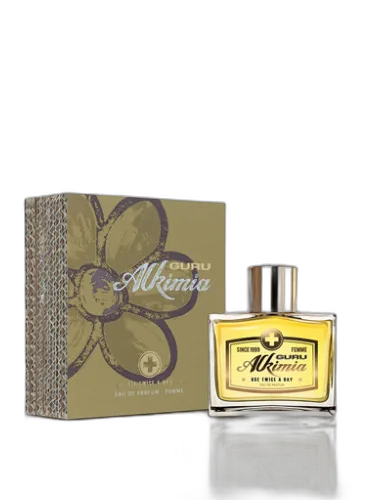
Guru Scent
Alkimia Donna Guru Scent
Shared top notes: bergamot, orange

Accessorize
Lovelily Accessorize
Shared top notes: bergamot, orange, raspberry

Ted Lapidus
Lapidus Woman Ted Lapidus
Shared top notes: bergamot
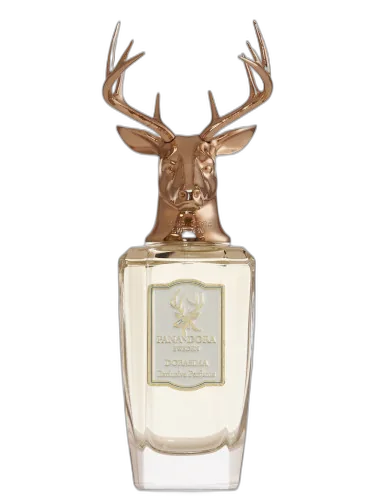
Pana Dora
Dorasima Pana Dora
Shared top notes: bergamot, orange

Luciano Soprani
Solo Soprani Love Luciano Soprani
Shared top notes: bergamot, raspberry