


Minerva Maison Alhambra
At a glance
Is Minerva Maison Alhambra worth trying?
Minerva by Maison Alhambra is a Floral Woody Musk fragrance for women and men.
- Best match
- Evening wear in Fall
- Performance feel
- Good longevity with Moderate sillage
- Signature profile
- white floral, tuberose, vanilla with Orange Blossom, Mandarin Orange, Tuberose
The first impression
Minerva by Maison Alhambra is a Floral Woody Musk fragrance for women and men. Minerva was launched in 2022. Top notes are Orange Blossom and Mandarin Orange; middle notes are Tuberose, Ylang-Ylang and Agave; base notes are Vanilla, Sandalwood, White Musk and Cedar.
What shapes the scent
The perfumer behind it

Unknown Perfumer
Notes pyramid
Top Notes
First impression · 15-30 min
 Orange Blossom
 Mandarin Orange
Heart Notes
Core character · 2-4 hours
 Tuberose
 Ylang-Ylang
 Agave
Agave
Base Notes
Lasting impression · 4+ hours
 Vanilla
 Sandalwood
 White Musk
 Cedar
Cedar
The mood it creates
The Sage Archetype: Portrait of Minerva Maison Alhambra
Essence
The one who cherishes Minerva by Maison Alhambra is, above all, a seeker of wisdom. Their essence aligns with Jung’s Sage archetype-the thinker, the observer, the one who values knowledge not as mere accumulation but as a lens through which life gains meaning. Like Athena, the namesake of this fragrance, they embody strategic intellect, a love for the refined, and an undercurrent of quiet authority.
Yet, the Sage is not without shadows. Their pursuit of understanding can slip into detachment, their love for depth may breed aloofness, and their analytical mind sometimes paralyzes instinct. The scent of Minerva-ambered, leather-bound, with a whisper of spice-mirrors this duality: warm yet structured, inviting yet reserved.
Style & Aesthetic
Their wardrobe is deliberate-structured but never stiff. Think tailored blazers with softened edges, well-worn leather satchels, and understated jewelry that hints at antiquity. They favor deep, muted tones: burgundy, charcoal, olive. Their home is a curated archive-bookshelves weighted with well-thumbed volumes, a writing desk cluttered with half-filled journals, a single amber-hued decanter of whiskey left untouched for contemplative evenings.
Minerva suits them because it is a fragrance of contrasts: the warmth of vanilla and amber against the austerity of leather and woods. It does not shout; it lingers, leaving others to wonder what lies beneath its measured surface.
Mornings are sacred-black coffee, a few pages of Nietzsche or Borges, the deliberate ritual of dressing as if preparing for an unseen audience. They thrive in environments where knowledge is currency: academia, rare bookshops, late-night debates in dimly lit bars. They are the friend who recommends the perfect novel, the colleague who quotes Sun Tzu in a board meeting.
But their love of solitude can harden into isolation. They may mistake withdrawal for independence, forgetting that wisdom untested by the world is merely theory.
Philosophy & Values
To them, life is a text to be deciphered. They are drawn to philosophy, history, and the subtle interplay of power and meaning. Stoicism appeals to them-not as a rigid doctrine, but as a framework for navigating chaos with composure. They believe in self-mastery before world-changing; one must first understand the mechanisms of their own mind before attempting to influence others.
Yet, their reverence for wisdom can become dogma. They may dismiss emotion as irrational noise, or grow impatient with those who do not share their intellectual rigor. Their shadow whispers: "To know is to be above."
Relationships
They are not gregarious, but neither are they hermetic. Their friendships are few but profound, built on mutual respect and shared curiosity. Romantic partners must engage their mind before their heart-though once engaged, their loyalty is unshakable. They are drawn to those who challenge them, who force them out of their cerebral fortress and into the messiness of feeling.
Yet, their greatest relational flaw is their tendency to intellectualize intimacy. They may dissect love rather than surrender to it, analyze pain instead of grieving it. Their shadow warns: "To understand is not always to heal."
Shadow
Their brilliance is also their burden. The same mind that grants them clarity can imprison them in overanalysis. They may grow disdainful of those who live by instinct, forgetting that not all truths are reached through reason. Their greatest challenge is to step out of the library of their mind and into the raw, unedited experience of life-to let leather crack, amber fade, and still find beauty in the impermanence.
Minerva is their armor and their mirror. It reminds them that wisdom is not just in knowing, but in knowing when to set knowledge aside.
If you like this, try these
Fragrances with a comparable profile - shared accords, notes, and character.

Memo Paris
Marfa Memo Paris
Shared top notes: mandarin orange, orange blossom

Orientica Premium
Areej Oud Anaqa Orientica Premium
Shared top notes: mandarin orange, orange blossom

Martin Lion
Chi X Chi Martin Lion
Shared top notes: mandarin orange, orange blossom

Shades Of Scents
Fairy Dust Shades Of Scents
Shared top notes: mandarin orange, orange blossom
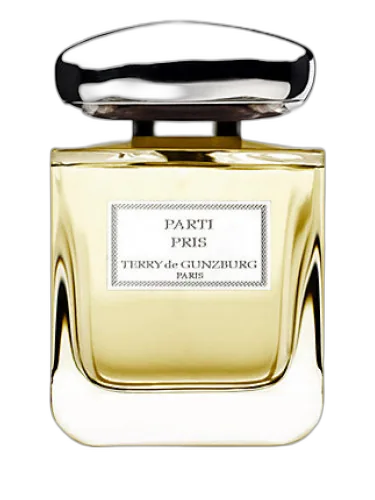
Terry de Gunzburg
Parti Pris Terry De Gunzburg
Shared top notes: mandarin orange, orange blossom