
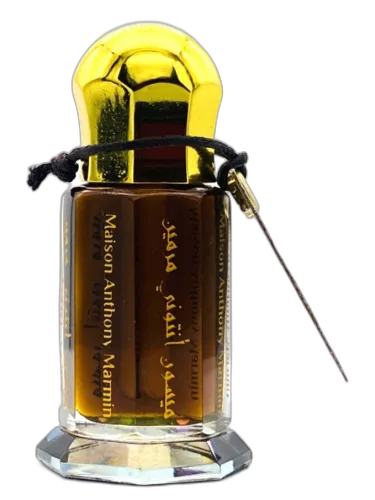

Amber Al Quds Maison Anthony Marmin
At a glance
Is Amber Al Quds Maison Anthony Marmin worth trying?
Amber Al Quds by Maison Anthony Marmin is a fragrance for women and men.
- Best match
- Evening wear in Winter
- Performance feel
- Excellent longevity with Strong sillage
- Signature profile
- amber, animalic, powdery with Incense, Ambergris, Honey
The first impression
Amber Al Quds by Maison Anthony Marmin is a fragrance for women and men. The nose behind this fragrance is Anthony Abdul Karim Marmin.
What shapes the scent
The perfumer behind it

Anthony Abdul Karim Marmin
Anthony Abdul Karim Marmin is a perfumer closely associated with the house of Abdul Karim Al Faransi, where he has created a wide range of fragrances. His style spans bold, resinous compositions like Amber 4000 and Amber Afghani, as well as more complex, evocative scents such as Al Quds and Amazonia. Known for blending traditional Middle Eastern ingredients with modern accords, his work often features rich amber, oud, and spice notes.
Notes pyramid
All Notes
Complete scent profile
 Incense
 Ambergris
 Honey
Honey
 Musk
Musk
 Leather
 Apricot
 Taif Rose
 Sandalwood
 Peach
Peach
 Fig
Fig
The mood it creates
The Mystic Archetype: Portrait of Amber Al Quds Maison Anthony Marmin
Essence
The person who cherishes Amber Al Quds by Maison Anthony Marmin is defined by the Mystic archetype. This is not a mere lover of fragrance, but one who seeks the sacred in scent-a seeker of hidden truths, drawn to the spiritual and the sensual in equal measure. Amber, with its deep resinous warmth, is the olfactory embodiment of devotion, mystery, and timelessness. The wearer of this fragrance is not content with superficial pleasures; they crave depth, ritual, and meaning.
Philosophy & Values
They believe that life’s meaning is not found in answers but in the pursuit of them. Truth, to them, is layered like the notes of a perfume-top notes deceive, heart notes enchant, but the base notes reveal what endures. They value silence as much as speech, intuition as much as reason. Their spirituality is not dogmatic but experiential; they may meditate, pray, or simply sit in stillness, attuned to the unseen.
Relationships are deep but few. They do not suffer small talk gladly, yet when they speak, their words carry weight. Their love is intense but not possessive-they understand that to hold too tightly is to lose the essence of a thing. They are drawn to those who, like them, see beyond surfaces, but they may struggle with those who demand constant emotional accessibility.
Shadow
Yet the Mystic’s strength is also their flaw. Their love of depth can become escapism-a retreat from the messiness of human connection. They may grow impatient with those who cannot (or will not) see the world as they do, dismissing them as shallow. At times, their introspection curdles into melancholy, a sense of being forever outside the world, observing but not fully participating.
Their independence can harden into isolation. They may rationalize solitude as wisdom when, in truth, it is fear-fear of being misunderstood, of losing themselves in another’s demands. They might also struggle with commitment, not out of indifference, but because they fear the mundane will erode the sacred.
Conclusion
Their tastes are refined but never ostentatious. They prefer the weight of aged wood, the texture of handwoven fabrics, the flicker of candlelight over electric glare. Their home is a sanctuary-books on Sufi poetry, Byzantine iconography, or alchemy may line the shelves, not as decoration but as lived philosophy. They drink tea slowly, savoring the ritual as much as the flavor.
In style, they favor understatement with an edge of the exotic-linen draped loosely, a single ornate ring, perhaps a scarf dyed in deep indigo. Their aesthetic is neither modern nor antiquated but exists outside time, as if they are a traveler between eras.
If you like this, try these
Fragrances with a comparable profile - shared accords, notes, and character.
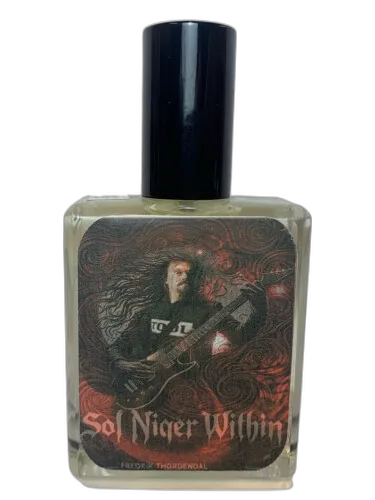
Phronema Perfumes
Sol Niger Within Phronema Perfumes
Shared top notes: ambergris, musk, sandalwood
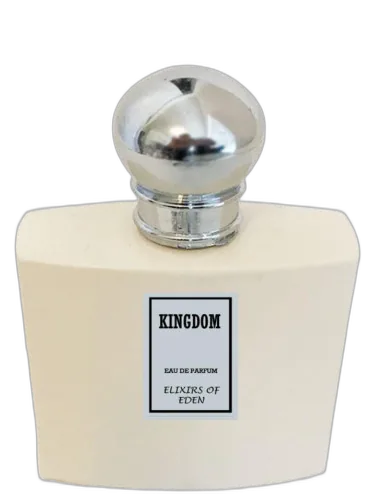
Elixirs Of Eden
Kingdom Elixirs Of Eden
Shared top notes: ambergris, incense, musk
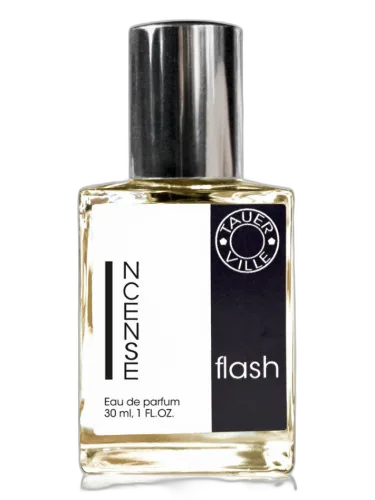
Tauerville
Incense Flash Tauerville
Shared top notes: incense, leather, musk
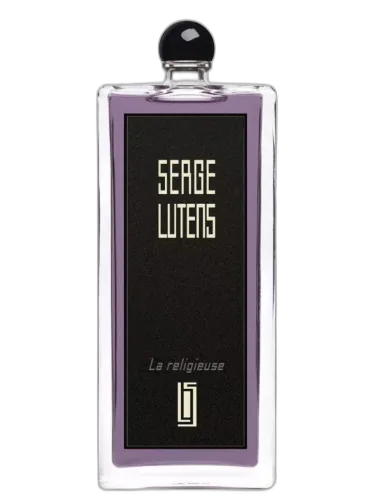
Serge Lutens
La Religieuse Serge Lutens
Shared top notes: incense, musk
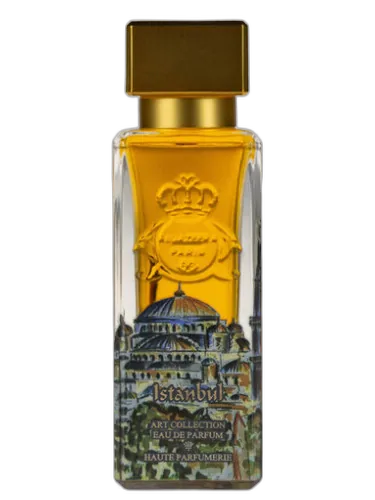
Al-Jazeera Perfumes
Istanbul Al-jazeera Perfumes
Shared top notes: ambergris, incense, musk