
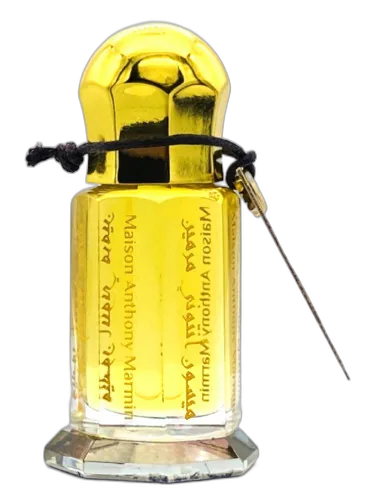

Islamabad Maison Anthony Marmin
At a glance
Is Islamabad Maison Anthony Marmin worth trying?
Islamabad by Maison Anthony Marmin is a fragrance for women and men.
- Best match
- Evening wear in Fall
- Performance feel
- Good longevity with Moderate sillage
- Signature profile
- woody, floral, warm spicy with Sandalwood, Osmanthus, Wildflowers
The first impression
Islamabad by Maison Anthony Marmin is a fragrance for women and men. The nose behind this fragrance is Anthony Abdul Karim Marmin.
What shapes the scent
The perfumer behind it

Anthony Abdul Karim Marmin
Anthony Abdul Karim Marmin is a perfumer closely associated with the house of Abdul Karim Al Faransi, where he has created a wide range of fragrances. His style spans bold, resinous compositions like Amber 4000 and Amber Afghani, as well as more complex, evocative scents such as Al Quds and Amazonia. Known for blending traditional Middle Eastern ingredients with modern accords, his work often features rich amber, oud, and spice notes.
Notes pyramid
All Notes
Complete scent profile
 Sandalwood
 Osmanthus
 Wildflowers
 Cambodian Oud
 Patchouli
The mood it creates
The Islamabad Maison Anthony M Archetype: Portrait of Islamabad Maison Anthony Marmin
Essence
This person is most closely aligned with the Sage-a seeker of truth, wisdom, and hidden meanings. The Sage thrives on intellectual depth, drawn to the mystique of knowledge and the subtle interplay of ideas. Islamabad by Maison Anthony Marmin, with its refined blend of oud, saffron, and amber, speaks to this archetype: it is a fragrance that does not shout but whispers, inviting those who appreciate complexity and sophistication.
The Sage’s mind is a labyrinth of contemplation, always probing beneath the surface. They are not satisfied with easy answers or fleeting pleasures; they crave substance, nuance, and the kind of beauty that reveals itself slowly. Yet, like all archetypes, the Sage has a shadow-a tendency toward detachment, over-analysis, and a reluctance to engage with the raw, unfiltered aspects of life.
Style & Aesthetic
Their aesthetic is one of understated elegance. They favor tailored but not ostentatious clothing-linen, wool, perhaps a well-worn leather jacket that has aged with character. Their home is a sanctuary of curated objects: rare books, handcrafted ceramics, a single striking painting that invites contemplation rather than immediate admiration.
In music, they gravitate toward compositions that unfold slowly-classical ragas, ambient soundscapes, or jazz that rewards attentive listening. Their taste in food mirrors this refinement: they savor spices that linger, wines with complex bouquets, and dishes that tell a story rather than merely satisfy hunger.
Their daily life is structured but not rigid. Mornings might begin with meditation or reading, evenings with a glass of something rich and a notebook filled with half-formed thoughts. They are not workaholics, but they are deeply engaged in their craft-whether it be writing, research, or another pursuit that demands patience and precision.
Travel, for them, is less about ticking off destinations and more about immersion. They would rather spend a month in one city, absorbing its rhythms, than rush through a dozen. They are drawn to places with history, where the past lingers in the air like the scent of old paper and incense.
Philosophy & Values
To this person, life is a grand inquiry. They are drawn to philosophy, literature, and art not as mere hobbies but as essential tools for understanding existence. Their values are rooted in intellectual honesty, curiosity, and a deep respect for tradition-yet they are not bound by dogma. They appreciate the wisdom of the past but are unafraid to question it.
They believe in the power of subtlety. Loud declarations and brash displays of emotion feel crude to them. Instead, they communicate through implication, metaphor, and quiet gestures. Their moral compass is guided by reason, but they are not cold-they simply prefer depth over sentimentality.
Relationships
They are not a social butterfly, but neither are they a recluse. They prefer small gatherings where conversation is meaningful, where silence is as welcome as speech. Their friendships are few but profound-built on mutual respect rather than convenience.
Romantically, they are drawn to those who can match their intellectual intensity. Passion, for them, is not about grand gestures but about shared understanding-a glance that carries volumes, a debate that lingers in the mind long after it ends. However, their shadow emerges here: they can be emotionally reserved, retreating into thought when vulnerability is required. Their partner may sometimes feel like they are loved in the abstract rather than in the immediate, tangible sense.
Shadow
The Sage’s greatest weakness is their tendency to over-intellectualize life. They can become so absorbed in analyzing experience that they forget to live it. Emotions, when not neatly categorized, unsettle them. They may withdraw into solitude not out of misanthropy but because the messiness of human interaction feels exhausting.
At their worst, they can be aloof, dismissive of those who do not share their depth. They may mistake cynicism for wisdom, forgetting that true understanding requires both thought and feeling. Their challenge is to step out of the observer’s role and engage fully-not just with ideas, but with the unpredictable, imperfect world around them.
Conclusion
Islamabad, with its intricate layers, is the perfect metaphor for this person. It is not a scent for the impatient or the superficial. It reveals itself slowly, rewarding those who take the time to understand it.
The Sage who wears this fragrance is a thinker, a seeker, a lover of the profound. But they must remember that wisdom without warmth is merely knowledge-and life, in all its chaos and beauty, demands both.
If you like this, try these
Fragrances with a comparable profile - shared accords, notes, and character.
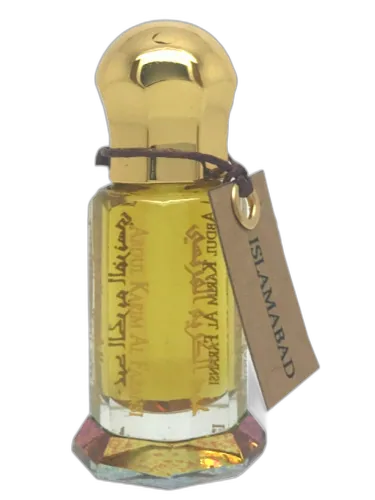
Abdul Karim Al Faransi
Islamabad Abdul Karim Al Faransi
Shared top notes: cambodian oud, osmanthus, patchouli
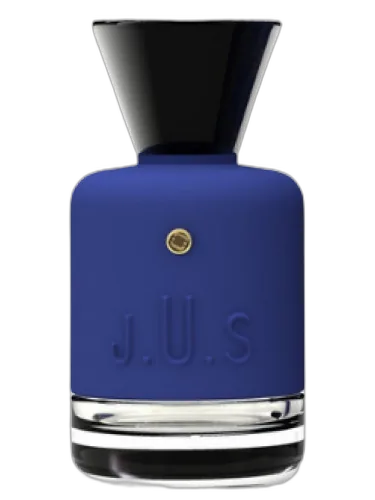
J.U.S Parfums
Bloomastral J.u.s Parfums
Shared top notes: osmanthus, sandalwood

UERMI
Ab ± Cashmere Uermi
Shared top notes: osmanthus, patchouli, sandalwood
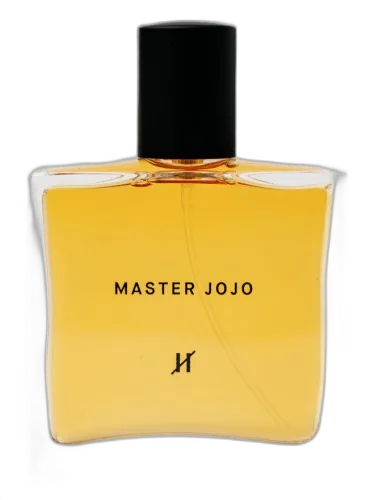
Handsome London
Master Jojo Handsome London
Shared top notes: patchouli, sandalwood

Boucheron
B Boucheron
Shared top notes: osmanthus, patchouli, sandalwood