
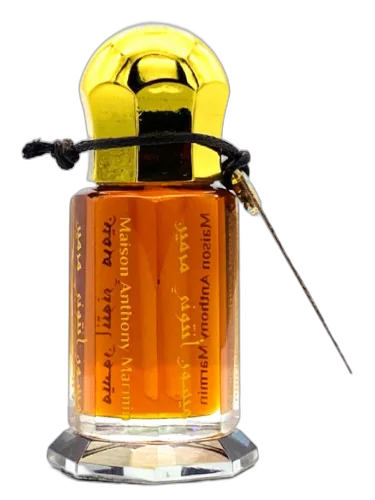

Mukhallat At Tabari Maison Anthony Marmin
Fragrance Story
Mukhallat At Tabari by Maison Anthony Marmin is a fragrance for men. The nose behind this fragrance is Anthony Abdul Karim Marmin.
Composition Profile
About the Perfumer

Anthony Abdul Karim Marmin
Anthony Abdul Karim Marmin is a perfumer closely associated with the house of Abdul Karim Al Faransi, where he has created a wide range of fragrances. His style spans bold, resinous compositions like Amber 4000 and Amber Afghani, as well as more complex, evocative scents such as Al Quds and Amazonia. Known for blending traditional Middle Eastern ingredients with modern accords, his work often features rich amber, oud, and spice notes.
Fragrance Notes
All Notes
Complete scent profile
 Taif Rose
 Black Musk
 Cambodian Oud
 Floral Notes
 Patchouli
 Sweet Notes
 Dried Fruits
 Honey
Honey
 Vanilla
 Woody Notes
Mukhallat At Tabari Maison Anthony Marmin by Maison Anthony Marmin offers a distinctive olfactory experience that stands out from other fragrances in its category.
Crafted with the finest ingredients and a blend of traditional and modern perfumery techniques, this fragrance represents the pinnacle of the perfumer's art.
Mukhallat At Tabari Maison Anthony Marmin embodies the distinctive style of Maison Anthony Marmin while adding a unique chapter to their fragrance portfolio.
Character Profile
The Mystic Archetype: Portrait of Mukhallat At Tabari Maison Anthony Marmin
Essence
This person is most closely aligned with the Sage-the seeker of wisdom, the silent observer who deciphers the world through intuition and contemplation. The Sage does not merely consume knowledge; they distill it into something deeper, something almost alchemical. Mukhallat At Tabari, with its rich, resinous depth-oud, amber, spices, and a whisper of florals-mirrors this archetype perfectly. It is a fragrance that does not announce itself loudly but lingers, revealing its complexity only to those who take the time to truly perceive it.
Style & Aesthetic
Their style is understated but deliberate-luxury that does not scream. They might favor dark, textured fabrics, layered in a way that suggests both warmth and mystery. Jewelry, if worn at all, is likely antique or symbolic rather than ostentatious. Their home is a sanctuary of books, incense, and carefully chosen artifacts-each object a talisman of meaning rather than mere decoration.
They appreciate craftsmanship, the slow and deliberate creation of things meant to last. Fast fashion and disposable trends repel them; they would rather own one exquisite piece than a dozen forgettable ones.
Their days are structured around rituals-morning tea in silence, late-night reading, walks taken not for exercise but for thought. They are drawn to places of quiet intensity: dimly lit libraries, old cathedrals, forests at dusk. They do not fear solitude; in fact, they require it to recharge.
Work, for them, must have meaning. They are not suited to mindless repetition or corporate drudgery. They thrive in fields that allow for deep focus-writing, research, psychology, perfumery itself, or any craft that demands both precision and intuition.
Philosophy & Values
For them, life is an ongoing experiment in understanding. They are drawn to the esoteric, the hidden meanings behind things, whether in philosophy, art, or the subtle dynamics of human interaction. They do not believe in absolute truths but in the fluidity of perception-truth is something to be uncovered layer by layer, like the unfolding notes of their beloved Mukhallat.
Their values are rooted in depth over surface, wisdom over cleverness. They disdain cheap entertainment, preferring conversations that spiral into the metaphysical or the quietly profound. Yet, they are not dogmatic; they understand that wisdom often lies in paradox, in holding contradictions without needing to resolve them.
Relationships
They do not collect acquaintances. Their relationships are few but deep, built on mutual respect for intellect and emotional nuance. They are the confidant, the one who listens with an almost unsettling intensity, offering insights that cut to the core of things.
Yet, their shadow emerges here-they can be distant, retreating into their own mind when emotions become too chaotic. They may intellectualize feelings rather than fully experiencing them, a defense against vulnerability. Some might mistake their quiet for coldness, their introspection for detachment.
Shadow
Their greatest strength-their depth-can become their prison. In their quest for understanding, they may withdraw too far, losing touch with the raw, messy vitality of life. They might disdain those who live more superficially, forgetting that wisdom without warmth is merely cleverness in disguise.
At their worst, they can become paralyzed by over-analysis, turning every experience into an intellectual exercise rather than simply living it. Their fear of shallowness can make them dismiss joy that is too simple, too uncomplicated-a tragic irony, for even the Sage must sometimes step into the light.
Conclusion
Mukhallat At Tabari is not a fragrance for the hurried or the indifferent. It rewards patience, revealing its secrets only to those who linger. So too does this person-a mind of layered complexity, a soul that thrives in the spaces between words, in the silence beneath noise. They are the quiet philosopher, the observer who sees more than they say. And like their chosen scent, they leave an impression that lingers long after they have passed by.
Similar Fragrances
Fragrances with a comparable profile - shared accords, notes, and character.
Maison Anthony Marmin
Mukhallat At Tabari Maison Anthony Marmin
Shared accords: animalic, floral, musky
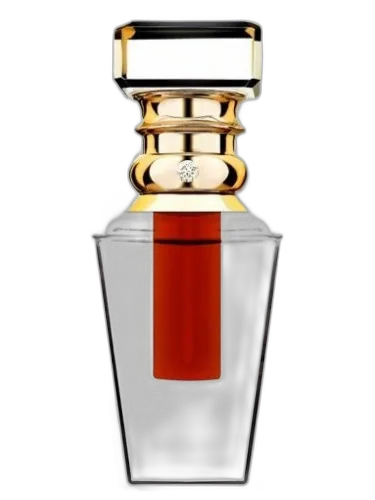
Khas Oud & Perfumes
Abu Abdalla Khas Khas Oud & Perfumes
Shared accords: animalic, powdery, rose
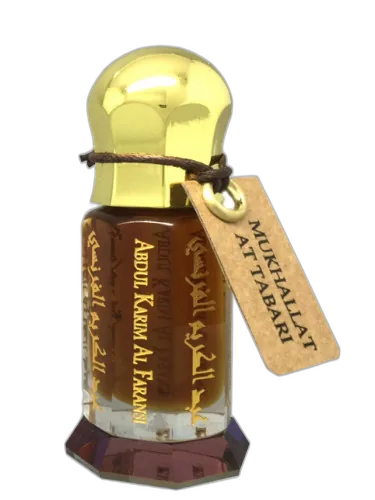
Abdul Karim Al Faransi
Mukhallat At-tabari Abdul Karim Al Faransi
Shared accords: floral, musky, powdery

Rasht Otr
His Highness Rasht Otr
Shared accords: animalic, floral, musky
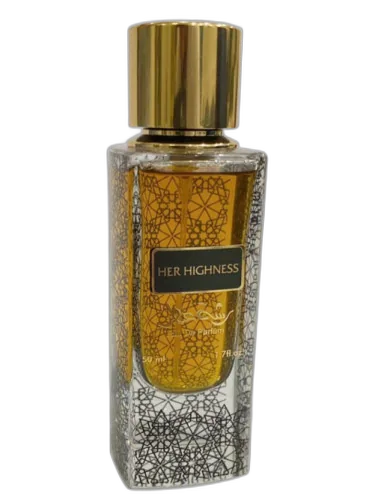
Rasht Otr
Her Highness Rasht Otr
Shared accords: animalic, floral, musky