


Musk Al Ghazal Maison Anthony Marmin
At a glance
Is Musk Al Ghazal Maison Anthony Marmin worth trying?
Musk Al Ghazal by Maison Anthony Marmin is a fragrance for women and men.
- Best match
- Evening wear in Winter
- Performance feel
- Excellent longevity with Strong sillage
- Signature profile
- warm spicy, musky, powdery with Henna, Spices, Sandalwood
The first impression
Musk Al Ghazal by Maison Anthony Marmin is a fragrance for women and men. The nose behind this fragrance is Anthony Abdul Karim Marmin. Top notes are Henna and Spices; middle note is Sandalwood; base note is Musk.
What shapes the scent
The perfumer behind it

Anthony Abdul Karim Marmin
Anthony Abdul Karim Marmin is a perfumer closely associated with the house of Abdul Karim Al Faransi, where he has created a wide range of fragrances. His style spans bold, resinous compositions like Amber 4000 and Amber Afghani, as well as more complex, evocative scents such as Al Quds and Amazonia. Known for blending traditional Middle Eastern ingredients with modern accords, his work often features rich amber, oud, and spice notes.
Notes pyramid
Top Notes
First impression · 15-30 min
 Henna
Henna
 Spices
Heart Notes
Core character · 2-4 hours
 Sandalwood
Base Notes
Lasting impression · 4+ hours
 Musk
Musk
The mood it creates
The Lover Archetype: Portrait of Musk Al Ghazal Maison Anthony Marmin
Essence
This person is defined by the Mystic archetype-a seeker of depth, drawn to the unseen, the sacred, and the enigmatic. Musk Al Ghazal, with its rich, animalic warmth and spiritual sensuality, is their chosen scent because it embodies both earthly passion and transcendent longing. It is not merely a fragrance but an invocation-an olfactory prayer that bridges the sensual and the divine.
The Mystic does not merely wear perfume; they commune with it. The deep, velvety musk, the smoky resins, the faint whisper of oud-these are not notes but symbols, keys to a hidden world. This person is attuned to the invisible currents of life, the subtle energies that most overlook.
Style & Aesthetic
Their style is deliberately enigmatic. They favor textures that suggest rather than declare: aged leather, raw silk, linen that carries the wrinkles of time. Their wardrobe is neither minimal nor excessive, but curated-each piece a talisman, a fragment of a larger story.
They are drawn to antiquity, not out of nostalgia, but because old things carry the weight of lived experience. A well-worn book, a tarnished silver ring, a faded Persian rug-these objects are sacred to them, not for their beauty alone, but for the unseen histories they hold.
They thrive in liminal spaces-dawn and dusk, the threshold between sleep and waking, the quiet hours when the world is still. Their home is a sanctuary, filled with incense, candles, and the faint hum of sacred music. They are drawn to rituals, not out of superstition, but because ritual is the language of the unseen.
They may practice meditation, journaling, or divination, not as hobbies but as disciplines. They read voraciously, but not indiscriminately-philosophy, mysticism, and poetry dominate their shelves. They consume art like food, needing it to survive.
Philosophy & Values
To them, life is a pilgrimage-not toward some distant heaven, but toward the core of existence itself. They reject superficiality, preferring instead the layered, the ambiguous, the paradoxical. Their philosophy is one of sacred materialism: they find the divine in the flesh, the spiritual in the sensual.
They value authenticity above all else-not the performative kind, but the raw, unfiltered truth of being. They despise pretense, yet they themselves are not without masks-for even the Mystic must navigate the world. Their greatest struggle is balancing their need for solitude with their desire for deep, transformative connection.
Relationships
They are not gregarious, but neither are they reclusive. Their relationships are few but profound, built on mutual recognition rather than convenience. They attract those who sense their depth, but they repel the shallow with an almost magnetic force.
In love, they seek merging-not possession, but dissolution of boundaries. Their passion is intense but not possessive; they love like a flame loves the air, consuming yet never confining. Yet this very intensity can become their shadow: they may withdraw when others cannot meet their depth, leaving behind confusion and unspoken longing.
Shadow
The Mystic’s greatest strength-their depth-is also their flaw. Their relentless pursuit of meaning can make them disdainful of the mundane, impatient with those who do not share their vision. They risk becoming isolated, mistaking solitude for enlightenment.
At their worst, they may slip into spiritual arrogance, believing themselves privy to truths others cannot grasp. They may also struggle with ambivalence, torn between the desire to share their inner world and the fear of being misunderstood.
Conclusion
Musk Al Ghazal is more than a scent to them-it is a mirror, reflecting their dual nature: both human and divine, grounded and ethereal. They wear it not to be noticed, but to remember who they are.
In the end, the Mystic is neither saint nor sinner, but a wanderer between worlds-forever seeking, forever incomplete, forever alive to the mystery that pulses beneath the surface of things.
If you like this, try these
Fragrances with a comparable profile - shared accords, notes, and character.

Aquaflor Firenze
Don Aquaflor Firenze
Shared heart notes: sandalwood

Marc Jacobs
Bang Bang Marc Jacobs
Shared heart notes: sandalwood
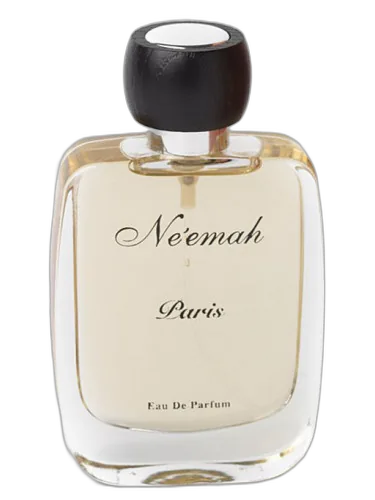
Ne'emah For Fragrance & Oudh
Paris Ne'emah For Fragrance & Oudh
Shared heart notes: sandalwood
Alexandria Fragrances
New Year's Eve Alexandria Fragrances
Shared heart notes: sandalwood

Elegantes
Cashmere Elegantes
Shared heart notes: sandalwood