
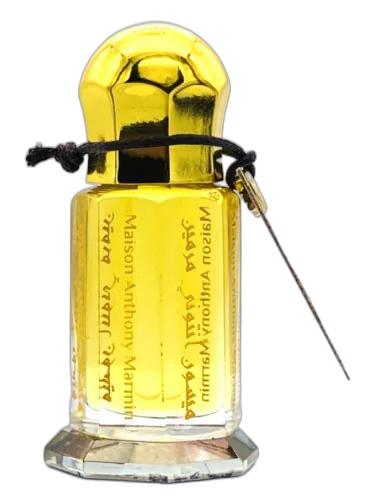

Nedjma Maison Anthony Marmin
At a glance
Is Nedjma Maison Anthony Marmin worth trying?
Nedjma by Maison Anthony Marmin is a fragrance for women and men.
- Best match
- Evening wear in Winter
- Performance feel
- Excellent longevity with Strong sillage
- Signature profile
- citrus, powdery, woody with Musk, Lemon, Rose
The first impression
Nedjma by Maison Anthony Marmin is a fragrance for women and men. The nose behind this fragrance is Anthony Abdul Karim Marmin.
What shapes the scent
The perfumer behind it

Anthony Abdul Karim Marmin
Anthony Abdul Karim Marmin is a perfumer closely associated with the house of Abdul Karim Al Faransi, where he has created a wide range of fragrances. His style spans bold, resinous compositions like Amber 4000 and Amber Afghani, as well as more complex, evocative scents such as Al Quds and Amazonia. Known for blending traditional Middle Eastern ingredients with modern accords, his work often features rich amber, oud, and spice notes.
Notes pyramid
All Notes
Complete scent profile
 Musk
Musk
 Lemon
Lemon
 Rose
Rose
 Jasmine
 Sandalwood
 Violet
 Mandarin Orange
 Bergamot
 Vanilla
 Ylang-Ylang
 Amber
Amber
 Tea
Tea
 Plum
Plum
 Cedar
Cedar
 Precious Woods
 Honey
Honey
 Agarwood (Oud)
The mood it creates
The Mystic Archetype: Portrait of Nedjma Maison Anthony Marmin
Essence
This person is most closely aligned with the Sage-a seeker of wisdom, drawn to the hidden and the profound. The fragrance Nedjma Maison Anthony Marmin, with its intricate blend of oud, spices, and smoky resins, speaks to someone who values depth, introspection, and the esoteric. The Sage is not content with surface-level truths; they crave knowledge that transcends the mundane, and their scent reflects this-rich, layered, and enigmatic.
Yet, like all archetypes, the Sage has a shadow. Their relentless pursuit of wisdom can become a retreat from the world, a way to avoid the messiness of human emotion. They may grow detached, mistaking their intellectual distance for enlightenment when it is merely isolation in disguise.
Style & Aesthetic
Their tastes are refined but never ostentatious. They prefer the understated luxury of handcrafted leather journals, aged whiskey, and dimly lit rooms filled with books. Their wardrobe leans toward monochrome elegance-dark wool, tailored silhouettes, perhaps a single piece of jewelry with personal significance. They appreciate art that demands interpretation: abstract paintings, avant-garde cinema, or the haunting melodies of classical Arabic music.
Yet their aesthetic is not sterile; there is warmth beneath the austerity. They might keep a single fresh flower on their desk or wear a scarf woven with intricate patterns-small concessions to beauty that hint at a suppressed sensuality.
They thrive in environments that balance stimulation and serenity-a quiet apartment in a bustling city, a remote cabin with a view of the mountains. Their daily rituals are sacred: morning meditation, evening walks, the deliberate application of their fragrance as a form of self-communion.
They are drawn to travel, not for escapism but for expansion. A week in Marrakech, a month in Kyoto-they seek places where history and mystery intertwine. Yet they are not mere tourists; they immerse themselves, learning languages, studying local philosophies, collecting experiences like rare spices.
Philosophy & Values
They believe in the slow accumulation of wisdom, not the quick acquisition of facts. Their philosophy is a blend of Eastern mysticism and Western skepticism-they revere Rumi but also Nietzsche, finding truth in paradox. They distrust dogma but are drawn to ritual, whether it’s the precise preparation of tea or the nightly burning of incense.
Their values are rooted in authenticity. They despise pretense, though they themselves may occasionally fall into the trap of intellectual elitism. They value solitude but recognize its dangers-too much, and they risk becoming a hermit; too little, and they lose their clarity.
Relationships
In love and friendship, they are selective. They do not suffer fools, but neither do they dismiss others outright-they observe, waiting to see if someone can match their depth. When they do connect, it is with fierce loyalty, though they struggle with vulnerability. Their love is often expressed through acts-a carefully chosen book, a shared silence at dawn-rather than effusive words.
Their shadow emerges here: they can be emotionally withholding, rationalizing their detachment as wisdom. They may unintentionally push people away, mistaking solitude for strength.
Shadow
Their greatest flaw is their reluctance to engage with the world on its own terms. They may grow so enamored with their own intellect that they dismiss simpler joys-laughter, spontaneity, the unexamined pleasure of a shared meal. Their pursuit of wisdom can become a form of pride, isolating them from those who do not speak in riddles.
Yet when balanced, they are extraordinary-a guide, a thinker, a quiet force of depth in a shallow world. Their fragrance, Nedjma Maison Anthony Marmin, is not just a scent but a statement: I am here, but not entirely of here. And that is precisely how they wish to be known.
If you like this, try these
Fragrances with a comparable profile - shared accords, notes, and character.
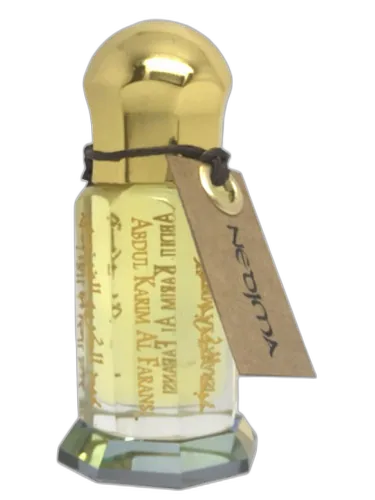
Abdul Karim Al Faransi
Nedjma Abdul Karim Al Faransi
Shared top notes: agarwood (oud), amber, bergamot

En Voyage Perfumes
Figa En Voyage Perfumes
Shared top notes: amber, bergamot, cedar
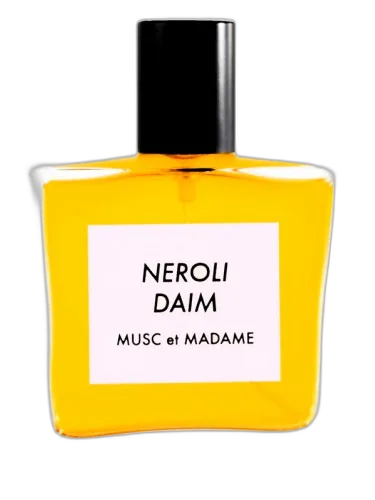
Musc et Madame
Neroli Daim Musc Et Madame
Shared top notes: bergamot, jasmine, musk

West Third Brand
Beautiful Savages West Third Brand
Shared top notes: bergamot, cedar, jasmine

Allen Shaw
Rose Allen Shaw
Shared top notes: agarwood (oud), amber, cedar