
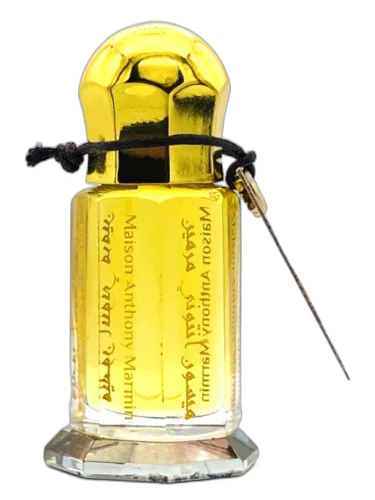

Oud Assam Maison Anthony Marmin
At a glance
Is Oud Assam Maison Anthony Marmin worth trying?
Oud Assam by Maison Anthony Marmin is a fragrance for men.
- Best match
- Evening wear in Winter
- Performance feel
- Excellent longevity with Strong sillage
- Signature profile
- woody, warm spicy, sweet with Sweet Notes, Indian Spices, Mint
The first impression
Oud Assam by Maison Anthony Marmin is a fragrance for men. The nose behind this fragrance is Anthony Abdul Karim Marmin.
What shapes the scent
The perfumer behind it

Anthony Abdul Karim Marmin
Anthony Abdul Karim Marmin is a perfumer closely associated with the house of Abdul Karim Al Faransi, where he has created a wide range of fragrances. His style spans bold, resinous compositions like Amber 4000 and Amber Afghani, as well as more complex, evocative scents such as Al Quds and Amazonia. Known for blending traditional Middle Eastern ingredients with modern accords, his work often features rich amber, oud, and spice notes.
Notes pyramid
All Notes
Complete scent profile
 Sweet Notes
 Indian Spices
 Mint
Mint
 Woody Notes
 Patchouli
 Sandalwood
Watery Notes
Sandalwood
Watery Notes
 Agarwood (Oud)
The mood it creates
The Sage Archetype: Portrait of Oud Assam Maison Anthony Marmin
Essence
To wear Oud Assam by Maison Anthony Marmin is to embrace the weight of history, the depth of introspection, and the quiet authority of wisdom. This fragrance-dark, resinous, and commanding-is not for the frivolous or the faint of heart. It belongs to one who seeks meaning beyond the surface, who values the unseen currents beneath life’s chaotic waves.
This person is, at their core, a Sage-an archetype defined by knowledge, contemplation, and a relentless pursuit of truth. They are drawn to the mysteries of existence, whether in philosophy, art, or the hidden structures of human nature. Their mind is a labyrinth of ideas, and their presence exudes a quiet confidence, as if they have already glimpsed answers others are still searching for.
Style & Aesthetic
Their aesthetic is one of timeless elegance, favoring rich textures, muted earth tones, and understated craftsmanship. They may wear tailored jackets of deep charcoal or supple leather, garments that age with dignity rather than chase trends. Their home is a sanctuary of books, rare artifacts, and carefully curated objects-each with a story, each chosen with deliberation.
In music, they gravitate toward compositions that unfold slowly-Baroque fugues, ambient soundscapes, or the melancholic strains of a ney flute. Their palate is equally refined, preferring complex flavors: single-malt whisky, dark chocolate with sea salt, or the smoky bitterness of well-brewed coffee.
Philosophy & Values
They believe in the power of understanding-not just knowledge for its own sake, but wisdom that transforms. Stoicism appeals to them, as does Zen Buddhism’s embrace of paradox. They are skeptical of dogma but respect tradition when it carries enduring truth.
Their highest value is integrity, both intellectual and moral. They despise superficiality, pretense, and the hollow performance of virtue. If they speak, it is because they have something to say; if they act, it is because they have weighed the consequences.
Relationships
They are not a social butterfly, but neither are they a recluse. Their friendships are few but profound, built on mutual respect rather than convenience. They listen more than they speak, and when they do speak, their words carry weight.
Romantically, they seek a partner who can match their depth-someone who values silence as much as conversation, who understands that love is not just passion but also shared understanding. They may struggle with vulnerability, preferring the safety of their own mind to the unpredictability of raw emotion.
Shadow
Yet, wisdom has its costs. Their greatest strength-detachment-can become their flaw. They may retreat too far into thought, mistaking contemplation for living. Their skepticism, while sharp, can harden into cynicism, making them dismissive of simpler joys.
At worst, they may grow arrogant, believing their insights make them superior to those who live more instinctually. They forget that wisdom untempered by humility becomes its own prison.
Conclusion
For this person, the challenge is not to abandon depth but to balance it with presence. The scent of Oud Assam lingers, just as their influence does-subtle, enduring, impossible to ignore. They must learn that true wisdom is not just knowing but also feeling, not just observing but also engaging.
In the end, they are like the oud itself: rare, complex, and best appreciated by those who take the time to truly understand.
If you like this, try these
Fragrances with a comparable profile - shared accords, notes, and character.
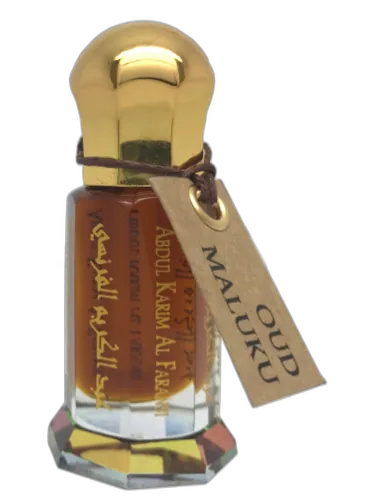
Abdul Karim Al Faransi
Oud Maluku Abdul Karim Al Faransi
Shared top notes: agarwood (oud), patchouli, watery notes

Alkemia Perfumes
Oudh Arboreal Alkemia Perfumes
Shared top notes: agarwood (oud), patchouli
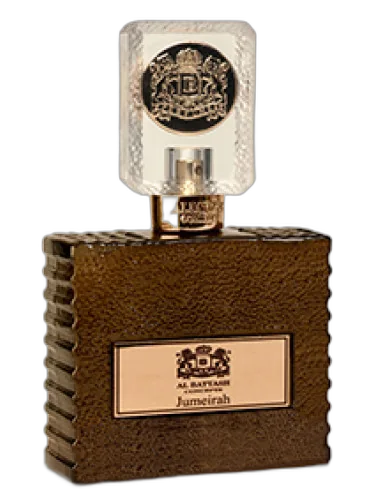
Al Battash Concepts
Jumeirah Al Battash Concepts
Shared top notes: agarwood (oud), patchouli, sandalwood
ABD Malik
Tobacco & Oud Abd Malik
Shared top notes: agarwood (oud), patchouli, woody notes
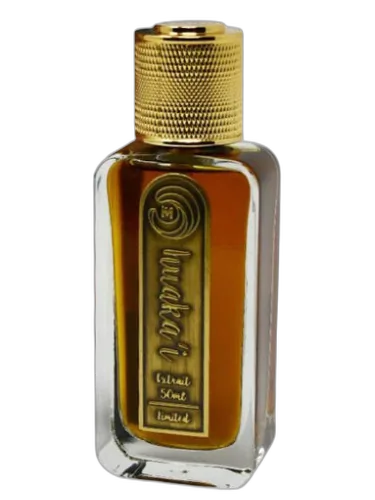
Motif Olfactif
Huaka'i Motif Olfactif
Shared top notes: agarwood (oud), patchouli, sandalwood