
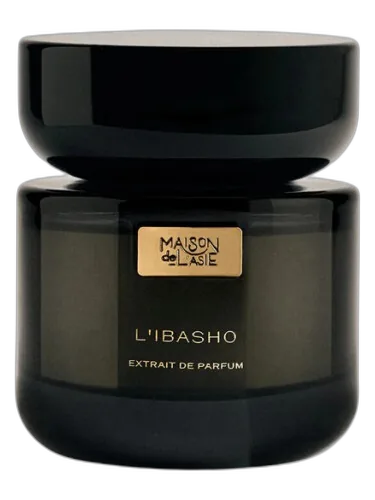

L'ibasho Maison De L'asie
Fragrance Story
L'Ibasho by Maison de L'Asie is a Floral fragrance for women and men. L'Ibasho was launched in 2025. The nose behind this fragrance is Antoine Lie. Top notes are Turkish Rose, Japanese Cherry Blossom and Cherry; middle notes are Rice and Ink; base notes are Talc, Patchouli and Orris.
Composition Profile
About the Perfumer

Antoine Lie
Antoine Lie is a French perfumer trained at Givaudan and known for his work with brands like Burberry and Avon. His style often blends bold contrasts, pairing fresh or woody accords with unexpected gourmand or metallic touches. He created the earthy, resinous Sequoia for Abbott New York City and the spicy, incense-laced Sword for CZAR, showcasing his skill with complex, atmospheric compositions.
Fragrance Notes
Top Notes
First impression · 15-30 min
 Turkish Rose
Japanese Cherry Blossom
Turkish Rose
Japanese Cherry Blossom
 Cherry
Heart Notes
Core character · 2-4 hours
 Rice
Rice
 Ink
Ink
Base Notes
Lasting impression · 4+ hours
 Talc
Talc
 Patchouli
Orris
Patchouli
Orris
Character Profile
The Wanderer Archetype: Portrait of L'ibasho Maison De L'asie
Essence
To wear L’Ibasho Maison De L’Asie is to carry the essence of a journey-not merely across lands, but across states of being. This fragrance, with its smoky tea, spices, and whispers of distant woods, belongs to one who is neither fully here nor there, but suspended in the liminal space between worlds. Their archetype is unmistakable: the Wanderer.
Shadow
Yet, the very qualities that make them extraordinary also conceal their deepest struggles. Their adaptability can become evasion-a reluctance to commit, to plant roots, to face the mundane responsibilities that anchor most lives. They may romanticize transience to the point of self-sabotage, leaving behind relationships or opportunities before they can fully blossom.
Their love of the exotic can sometimes slip into fetishization, mistaking superficial appreciation for true understanding. They may collect experiences like souvenirs, never fully immersing themselves in any one culture, always remaining the observer rather than the participant.
And then there is the loneliness. For all their connections, they are, at heart, solitary. The more they wander, the harder it becomes to answer the question: Where do I belong? The scent of L’Ibasho lingers, a reminder of all the places they’ve been-and all the places they’ve left behind.
Conclusion
The Wanderer is a seeker, one who thrives on the unknown, who finds solace in the uncharted. They are not aimless, but rather driven by an insatiable curiosity-a hunger for experiences that cannot be found in the familiar. The scent of L’Ibasho mirrors this: it is warm yet elusive, comforting yet mysterious, like the memory of a place one has never been.
This person moves through life with quiet intensity. Their tastes are refined but never ostentatious-they prefer the understated elegance of handcrafted textiles, the weight of well-worn leather, the texture of raw silk. Their home is a sanctuary of curated objects: a Japanese tea set, a Moroccan rug, a stack of books on Zen philosophy and Persian poetry. They do not collect things for status, but for the stories they hold.
Their philosophy is one of fluidity. They reject rigid dogma, favoring instead a personal spirituality woven from fragments of many traditions. They meditate, but not always in silence-sometimes in the hum of a foreign marketplace, or the rhythmic clatter of a train crossing borders. They believe in the sacredness of movement, the idea that stillness is found not in stagnation, but in the act of journeying itself.
Similar Fragrances
Fragrances with a comparable profile - shared accords, notes, and character.
Maison de L'Asie
L'ibasho Maison De L'asie
Shared accords: aromatic, earthy, floral
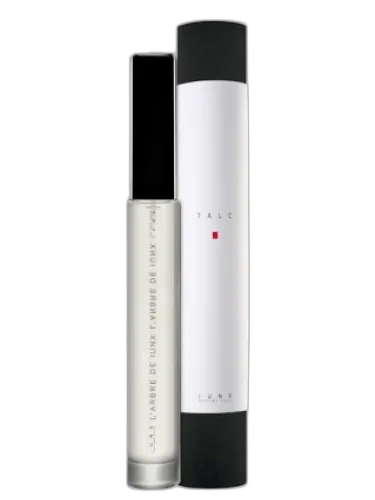
IUNX
Talc Iunx
Shared accords: aromatic, earthy, floral
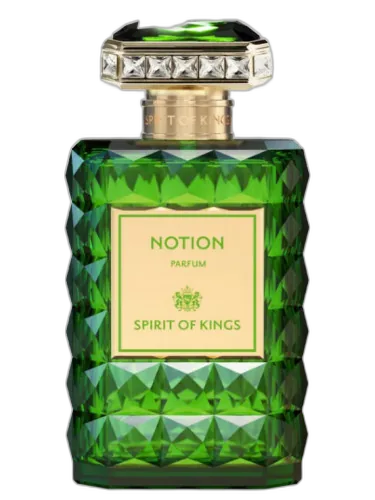
Spirit Of Kings
Notion Spirit Of Kings
Shared accords: aromatic, earthy, floral
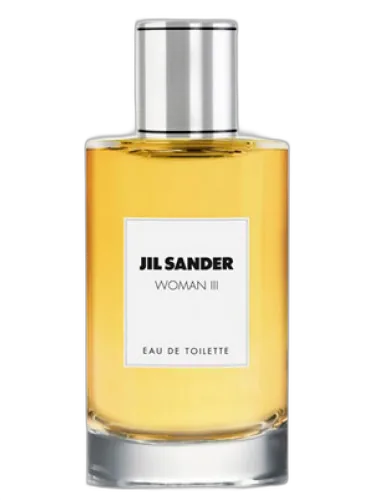
Jil Sander
The Essentials Woman Iii Jil Sander
Shared accords: aromatic, earthy, floral
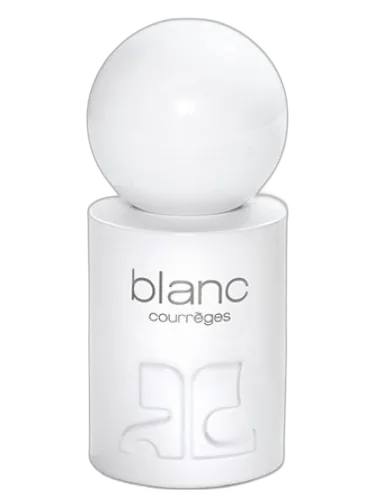
Courrèges
Blanc De Courregès Courrèges
Shared accords: earthy, floral, iris