
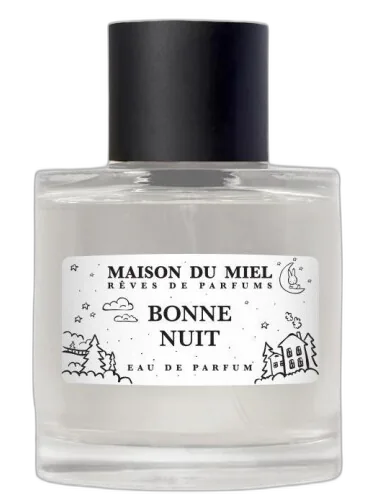

Bonne Nuit Maison Du Miel
At a glance
Is Bonne Nuit Maison Du Miel worth trying?
Bonne Nuit by Maison Du Miel is a fragrance for women and men.
- Best match
- Evening wear in Fall
- Performance feel
- Good longevity with Moderate sillage
- Signature profile
- iris, lavender, powdery with Lavender, Iris, Ice
The first impression
Bonne Nuit by Maison Du Miel is a fragrance for women and men. This is a new fragrance. Bonne Nuit was launched in 2025. Top notes are Lavender and Iris; middle notes are Ice and Mimosa; base notes are Skin and Sandalwood.
What shapes the scent
The perfumer behind it

Unknown Perfumer
Notes pyramid
Top Notes
First impression · 15-30 min
 Lavender
 Iris
Iris
Heart Notes
Core character · 2-4 hours
 Ice
Ice
 Mimosa
Base Notes
Lasting impression · 4+ hours
 Skin
Skin
 Sandalwood
The mood it creates
The Bonne Nuit Maison Du Miel Archetype: Portrait of Bonne Nuit Maison Du Miel
Essence
This person is defined by the Mystic archetype, a seeker of hidden truths and ephemeral beauty. They are drawn to the liminal-the spaces between waking and dreaming, the sacred and the mundane. Bonne Nuit Maison Du Miel, with its honeyed warmth and nocturnal whispers, mirrors their essence: a soul who finds solace in the quiet magic of twilight.
The Mystic does not merely wear fragrance; they commune with it. The scent-ambered, sweet, yet shadowed-becomes an extension of their inner world, a veil between the seen and the unseen. They are not content with surfaces; they crave the nectar beneath the skin of existence.
Style & Aesthetic
Their wardrobe is a study in quiet opulence. They favor fabrics that whisper-cashmere, silk, linen softened by time. Their colors are muted but rich: deep burgundy, slate gray, the faintest blush of rose. They wear jewelry sparingly, but when they do, it is always symbolic: a moonstone ring, an antique key pendant, something that hints at a story untold.
In art and music, they are drawn to the hauntingly beautiful. They might lose themselves in Chopin’s nocturnes, the films of Tarkovsky, or the poetry of Rilke. They do not seek entertainment but resonance-art that lingers like a fragrance long after the source is gone.
Philosophy & Values
Their life is an experiment in aesthetic depth. They prefer the understated over the obvious, the half-light over harsh illumination. Their home is a sanctuary of textures-velvet, aged wood, the faintest flicker of candlelight. They collect objects not for their utility but for their aura: a tarnished silver locket, a book of forgotten poetry, a vial of dried lavender.
Philosophically, they are neither optimist nor pessimist but a melancholic realist. They understand that sweetness, like honey, is fleeting-yet this impermanence does not sadden them. Instead, it sharpens their appreciation. They believe in the sacredness of small things: the way steam curls from a teacup, the weight of silence between lovers, the scent of rain on warm pavement.
Relationships
They are not the type to love lightly or loudly. Their relationships are slow-burning, built on shared silences as much as words. They attract those who sense their depth but are often misunderstood by those who mistake their reserve for coldness.
In love, they are loyal but demanding. They do not give their heart in fragments; when they commit, it is total. Yet they expect the same intensity in return-a mirror to their own devotion. This can become their undoing, for not all souls are built for such depth. Their shadow emerges when their idealism curdles into disillusionment, when they withdraw into solitude rather than face the imperfections of human connection.
Shadow
The Mystic’s greatest strength-their depth-can also be their cage. When unbalanced, they risk escapism, retreating so far into their inner sanctum that the outer world grows dim. They may become overly attached to nostalgia, to the ghosts of past loves or lost moments, refusing to engage with the present.
Their sensitivity, while a gift, can also manifest as fragility. They are prone to melancholy, to periods of inertia where the weight of existence feels too heavy. At their worst, they may indulge in self-pity, romanticizing their solitude instead of transcending it.
Conclusion
To wear Bonne Nuit Maison Du Miel is to embrace the poetry of the unseen. This person is neither fully of this world nor entirely apart from it. They are the quiet observer at the edge of the party, the one who leaves just as the night reaches its peak-not out of disdain, but because they already carry the essence of it within them.
They are flawed, yes, but their flaws are the price of their depth. And in a world that often mistakes noise for meaning, their presence is a rare gift: a reminder that the most profound truths are often whispered, not shouted.
If you like this, try these
Fragrances with a comparable profile - shared accords, notes, and character.
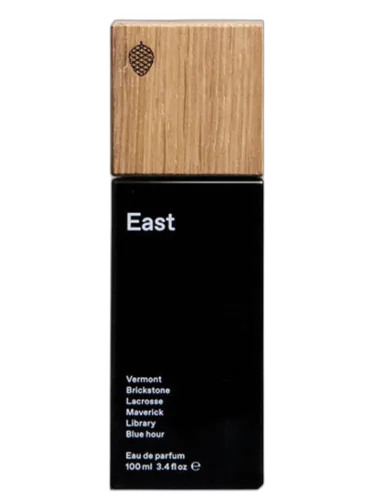
Favorit & Co
East Favorit & Co
Shared top notes: iris, lavender

Fueguia 1833
Halo Lunar Fueguia 1833
Shared top notes: lavender

AXE
Pulse Axe
Shared top notes: lavender

L'Artisan Parfumeur
Bucoliques De Provence L'artisan Parfumeur
Shared top notes: iris, lavender

Floraïku
My Shadow On The Wall Floraïku
Shared heart notes: mimosa