
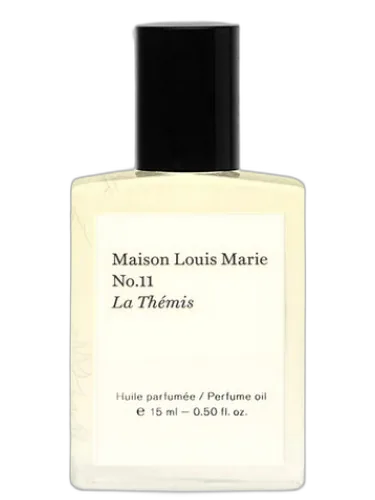

No.11 La Themis Maison Louis Marie
Fragrance Story
No.11 La Themis by Maison Louis Marie is a fragrance for women and men. Top notes are Mint, Green Leaves and Eucalyptus; middle notes are Wintergreen and Mint; base note is Tonka Bean.
Composition Profile
About the Perfumer

Unknown Perfumer
Fragrance Notes
Top Notes
First impression · 15-30 min
 Mint
Mint
 Green Leaves
 Eucalyptus
Heart Notes
Core character · 2-4 hours
 Wintergreen
Mint
Wintergreen
Mint
Base Notes
Lasting impression · 4+ hours
 Tonka Bean
Character Profile
The No Archetype: Portrait of No.11 La Themis Maison Louis Marie
Essence
This person is, above all, a seeker of truth-not in the rigid, dogmatic sense, but in the way of one who distills wisdom from experience. Their archetype is The Sage, the thinker who values clarity, depth, and the quiet power of observation. Like La Thémis itself-a fragrance of smoky vetiver, amber, and crisp citrus-they are both warm and detached, inviting yet enigmatic. The Sage does not rush to conclusions; they let ideas steep like tea leaves, extracting meaning slowly.
Yet, no archetype exists without its shadow. The Sage risks becoming the Hermit, retreating too far into the mind, mistaking contemplation for living. They may grow overly critical, dissecting emotions until they lose their pulse. Their challenge is to balance intellect with presence, to let wisdom guide but not imprison them.
Style & Aesthetic
They rise early, not out of obligation but because dawn is when the world feels most lucid. Their rituals are sacred-morning coffee in a well-worn mug, a walk through the park where they notice the way light filters through leaves. They work with focus but not obsession, valuing mastery over hustle.
Yet their discipline can harden into rigidity. They may scorn those who live more spontaneously, dismissing them as frivolous, when in truth, they envy their ease. The Sage must remember that wisdom is not only found in books but also in laughter, in mistakes, in the unplanned detours of life.
Philosophy & Values
They believe in principles, not platitudes. Justice, to them, is not an abstract ideal but a daily practice-a matter of small, consistent choices. They despise hypocrisy, though they are not immune to it themselves. (No one is.) Their moral compass is internal, not dictated by trends or tribalism.
Yet this very independence can make them seem aloof. They may mistake detachment for objectivity, forgetting that wisdom without compassion is sterile. Their shadow whispers that they are above petty human concerns, when in truth, they are as vulnerable as anyone-they simply armor themselves in reason.
Relationships
They do not collect friends; they cultivate them. Their circle is small but deep, bound by shared curiosity rather than mere proximity. In love, they seek a partner who is both confidant and equal-someone who can spar with them intellectually but also coax them out of their head and into the warmth of touch, of shared silence.
Yet their flaw here is the same as their strength: they analyze love before surrendering to it. They may dissect a lover’s words for hidden meanings, mistrusting simplicity. Their challenge is to trust the body as much as the mind, to let passion be irrational sometimes.
Conclusion
Their tastes are deliberate, never accidental. They prefer the weight of linen and wool over flashy synthetics, the texture of handmade paper over glossy screens. Their home is a sanctuary of muted tones-soft grays, warm woods, the occasional deep green-where books are not decorations but companions. They read philosophy, yes, but also poetry, because they understand that truth often hides in metaphor.
Music is an extension of their inner world: perhaps the structured complexity of Bach, or the raw, unfiltered honesty of Leonard Cohen. They do not dance often, but when they do, it is with a quiet intensity, as if movement were another form of thought.
Similar Fragrances
Fragrances with a comparable profile - shared accords, notes, and character.

Molton Brown
Wild Mint & Lavandin Molton Brown
Shared accords: aromatic, fresh spicy, green
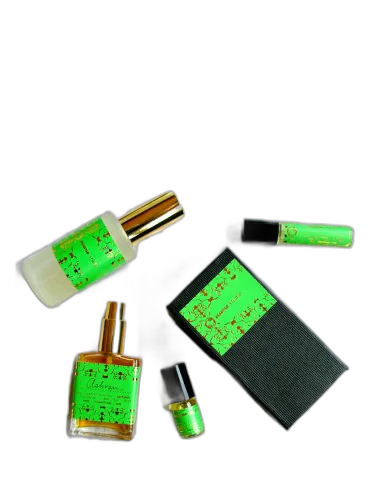
DSH Perfumes
Refresh Dsh Perfumes
Shared accords: aromatic, fresh spicy, green

Biotherm
Aqua Sport Biotherm
Shared accords: aromatic, fresh spicy, green
Pascal Morabito
Rugby Pascal Morabito
Shared accords: aromatic, fresh spicy, green

Holynose Parfums
Восход Sunrise Holynose Parfums
Shared accords: aromatic, fresh spicy, green