


Lost In Translation Maison Matine
At a glance
Is Lost In Translation Maison Matine worth trying?
Lost In Translation by Maison Matine is a Woody Aquatic fragrance for women and men.
- Best match
- Casual wear in Any
- Performance feel
- Good longevity with Moderate sillage
- Signature profile
- woody, fresh spicy, aquatic with Violet Leaves, Juniper, Water Notes
The first impression
Lost In Translation by Maison Matine is a Woody Aquatic fragrance for women and men. Lost In Translation was launched in 2021. The nose behind this fragrance is Laurent Marrone. Top notes are Violet Leaves, Juniper and Water Notes; middle notes are Palisander Rosewood, White Tea and Black Pepper; base notes are Leather, Patchouli, Tobacco, Dry Wood and Musk.
What shapes the scent
The perfumer behind it

Laurent Marrone
Laurent Marrone is a perfumer whose work spans both niche and commercial labels. He crafted fragrances such as Brocard's Sweet Home and Chris Collins' Harlem Nights. His style often incorporates bold and contemporary accords, evident in Maison Matine's Lost in Translation.
Notes pyramid
Top Notes
First impression · 15-30 min
 Violet Leaves
 Juniper
Water Notes
Juniper
Water Notes
Heart Notes
Core character · 2-4 hours
 Palisander Rosewood
White Tea
Black Pepper
Palisander Rosewood
White Tea
Black Pepper
Base Notes
Lasting impression · 4+ hours
 Leather
 Patchouli
 Tobacco
 Dry Wood
 Musk
Musk
The mood it creates
The Dreamer Archetype: Portrait of Lost In Translation Maison Matine
Essence
To wear Lost in Translation by Maison Matine is to embrace the scent of fleeting moments-a fragrance that lingers between memory and possibility, like the last light of dusk or the first whisper of dawn. The person who chooses this scent is not merely drawn to its notes of fig, coconut, and sandalwood; they are seduced by its essence of transience, its promise of something just beyond reach. They are, at their core, a Wanderer-an archetype defined by curiosity, restlessness, and an insatiable hunger for the undiscovered.
The Wanderer is both liberated and haunted by their own nature. They see the world in layers, in possibilities, in what-ifs. But the price of such vision is the occasional ache of rootlessness, the knowledge that no single place or person will ever contain them entirely.
And yet-would they have it any other way? To be lost, after all, is not always to be adrift. Sometimes, it is simply to be in translation, moving between worlds, never fully here nor there, but always, beautifully, on the way.
Shadow
Yet, the Wanderer is not without their burdens. Their greatest strength-their refusal to be anchored-can also be their deepest flaw. They may struggle with commitment, not out of indifference, but because the act of choosing one path means forsaking all others. They fear stagnation more than failure, and so they may leave things-relationships, projects, even versions of themselves-unfinished.
There is a melancholy beneath their free spirit, a quiet loneliness that comes from always being slightly out of sync with the world. They may romanticize solitude to the point of self-sabotage, convincing themselves that they are meant to be fleeting, that depth is synonymous with entrapment. At their worst, they become ghosts in their own lives, present but never fully grounded, always half-dreaming of another place, another self.
Conclusion
This is someone who moves through life with an artist’s eye and a philosopher’s mind. They are not content with the well-trodden path; they crave detours, side streets, and uncharted territories, whether in thought or in geography. Their tastes are eclectic-perhaps a bookshelf lined with Haruki Murakami and Rebecca Solnit, a wardrobe that blends vintage silk with minimalist linen, a playlist that drifts from jazz to ambient electronica. They are drawn to textures, contrasts, and the spaces in between.
Their philosophy is one of fluidity. They believe in the beauty of impermanence, in the way a moment can be both profound and passing. They do not cling to rigid ideologies but instead adapt, evolve, and absorb. Relationships, for them, are like seasons-some brief and intense, others slow-burning and enduring. They are not afraid of goodbyes because they understand that every departure is also an arrival somewhere new.
In conversation, they are listeners first, observers always. They ask questions that linger, that make others pause and reconsider. Their presence is magnetic not because they dominate a room, but because they seem to carry an entire world within them-one they are willing to share, piece by piece, with those patient enough to follow their winding thoughts.
If you like this, try these
Fragrances with a comparable profile - shared accords, notes, and character.

Contém 1g
66 Contém 1g
Shared top notes: juniper

Avatim
Seleto Herbo Avatim
Shared top notes: juniper, violet leaves
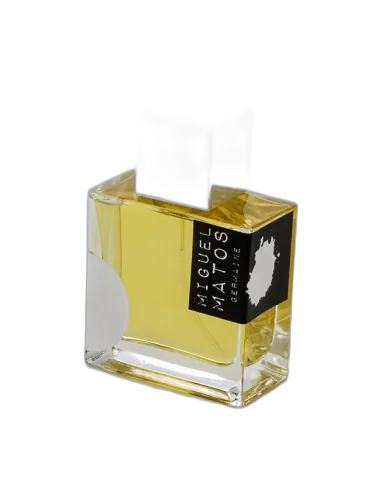
Miguel Matos
Germaine Miguel Matos
Shared top notes: juniper

Gucci
Gucci Guilty Pour Homme Parfum Gucci
Shared top notes: juniper

La Closerie des Parfums
Rose Cardamome La Closerie Des Parfums
Shared top notes: violet leaves