
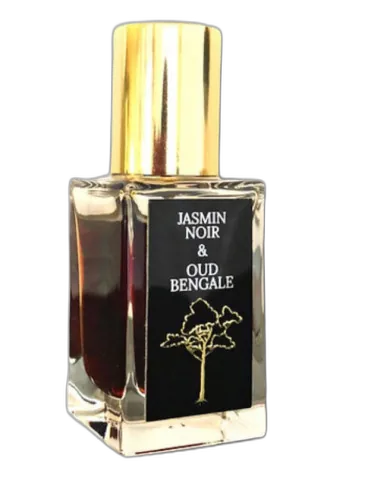
Jasmin Noir & Oud Bengale Marble Oud
At a glance
Is Jasmin Noir & Oud Bengale Marble Oud worth trying?
Jasmin Noir & Oud Bengale by Marble Oud is a fragrance for women and men.
- Best match
- Evening wear in Fall
- Performance feel
- Excellent longevity with Strong sillage
- Signature profile
- vanilla, oud, white floral with Balsamic Notes, Jasmine Sambac, Vanilla
The first impression
Jasmin Noir & Oud Bengale by Marble Oud is a fragrance for women and men. Jasmin Noir & Oud Bengale was launched in 2021. The nose behind this fragrance is Alp Veliogullari. Top note is Balsamic Notes; middle notes are Jasmine Sambac, Vanilla and Tonka Bean; base note is Agarwood (Oud).
What shapes the scent
The perfumer behind it

Alp Veliogullari
Alp Veliogullari is a perfumer known for his work with Katana Parfums, Marble Oud, and Poème Parfumé. His style often blends rich, exotic notes like oud, vanilla, and floral elements to create complex, opulent compositions. Notable creations include Fleur De Oud, Orange Cordoue, and Jasmin Noir & Oud Bengale, which showcase his skill in balancing bold ingredients with refined elegance.
Notes pyramid
Top Notes
First impression · 15-30 min
 Balsamic Notes
Heart Notes
Core character · 2-4 hours
 Jasmine Sambac
 Vanilla
 Tonka Bean
Base Notes
Lasting impression · 4+ hours
 Agarwood (Oud)
The mood it creates
The Alchemist Archetype: Portrait of Jasmin Noir & Oud Bengale Marble Oud
Essence
To wear Jasmin Noir and Oud Bengale Marble Oud is to embrace the paradox of light and shadow, the delicate and the primal. This person is an alchemist of the soul, one who transmutes the raw materials of existence into something richer, darker, and more intoxicating. Their essence is not easily defined, for they dwell in the liminal space between enchantment and severity, between the seductive and the austere.
Above all, they are a Mystic-a seeker of hidden truths, drawn to the enigmatic and the esoteric. Like the night-blooming jasmine, they reveal their depths only in darkness, when others retreat into the mundane. The oud, with its smoky, animalic depth, speaks of their connection to the primal and the sacred. They are not content with surface meanings; they crave the unseen, the whispered, the forbidden.
Yet the Mystic is not merely a dreamer-they are a force of transformation. They do not shy away from the harshness of life but instead distill it into something potent, much like the oud’s resinous intensity. Their presence is both alluring and unsettling, for they see what others refuse to acknowledge.
Style & Aesthetic
Their tastes are an interplay of contrasts-opulence and restraint, decadence and discipline. They favor textures that evoke depth: velvet that catches the light, aged leather that bears the marks of time, dark woods polished to a quiet sheen. Their wardrobe is not loud but deliberate, each piece chosen for its ability to suggest rather than declare.
In art, they are drawn to the baroque and the surreal-Caravaggio’s chiaroscuro, the haunting symbolism of Odilon Redon. Music for them is an invocation: the mournful strains of a cello, the hypnotic pulse of Middle Eastern percussion, the whispered incantations of dark jazz. They do not consume culture passively; they commune with it, allowing it to shape their inner world.
They move through the world as both participant and observer. Their home is a sanctuary, filled with incense, rare books, and artifacts that carry personal meaning. They may practice rituals-whether formal or self-invented-to mark transitions, to honor the unseen, to remind themselves that life is more than mere routine.
Professionally, they are drawn to fields that allow for depth and introspection: psychology, perfumery, writing, occult studies, or even high-stakes professions like diplomacy or investigative journalism, where reading between the lines is essential. They thrive in roles where intuition and intellect must merge.
Philosophy & Values
They believe in the alchemical power of suffering-not as something to be avoided, but as the crucible in which the self is refined. Their philosophy is one of sacred tension: the understanding that beauty and pain are inseparable, that wisdom is born from wrestling with the unknown.
They value authenticity above all, but their version of authenticity is not the simplistic "be yourself" of popular discourse. For them, authenticity is a relentless excavation-peeling back layers of illusion, confronting the shadow, and emerging both shattered and renewed. They have little patience for platitudes or hollow optimism.
Relationships
Their relationships are intense but few. They do not offer their trust lightly, for they know how easily intimacy can be trivialized. When they do choose to let someone in, it is with a depth that can be overwhelming-conversations that stretch into the early hours, confessions that feel like rituals.
Yet their shadow here is a tendency toward emotional alchemy-turning love into a test, a crucible in which others must prove their worth. They may withdraw without explanation, leaving others bewildered by their sudden coldness. Their fear is not of abandonment, but of being truly known and found lacking.
Shadow
Their greatest strength is also their greatest flaw: their self-sufficiency. In their quest for wisdom, they may become the solitary oracle, convinced that no one else can truly understand them. This can lead to a subtle arrogance, a belief that their depth exempts them from the messiness of ordinary connection.
At their worst, they may indulge in emotional austerity, mistaking detachment for enlightenment. They must remember that wisdom untempered by compassion becomes a prison, not a liberation.
If you like this, try these
Fragrances with a comparable profile - shared accords, notes, and character.
Jousset Parfums
Trat Treat Jousset Parfums
Shared heart notes: vanilla
Paolo Pecora Milano
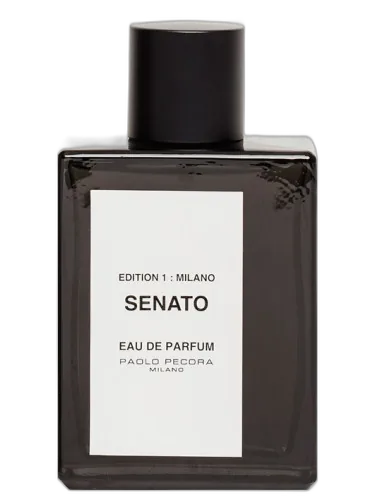
Senato Paolo Pecora Milano
Shared heart notes: tonka bean
Emirates Pride Perfumes
Violet Emirates Pride Perfumes
Shared heart notes: vanilla
Oryn House
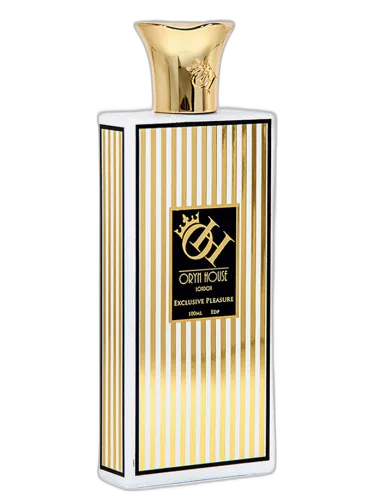
Exclusive Pleasure Oryn House
Shared heart notes: vanilla
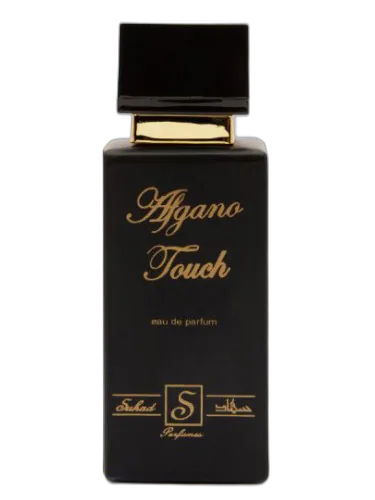
Suhad Perfumes
Afgano Touch Suhad Perfumes
Shared top notes: balsamic notes