
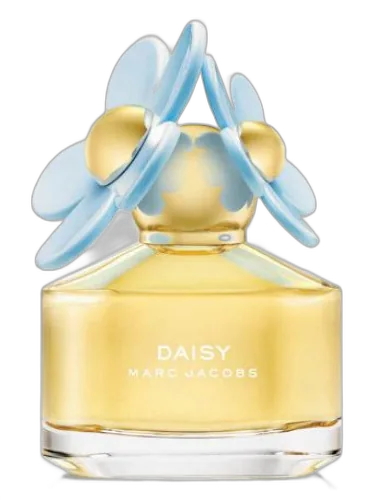

Daisy Garland Marc Jacobs
At a glance
Is Daisy Garland Marc Jacobs worth trying?
Daisy Garland by Marc Jacobs is a Floral fragrance for women.
- Best match
- Casual wear in Spring
- Performance feel
- Moderate longevity with Moderate sillage
- Signature profile
- floral, violet, powdery with Floral Notes, Violet
The first impression
Daisy Garland by Marc Jacobs is a Floral fragrance for women. Daisy Garland was launched in 2010. The nose behind this fragrance is Alberto Morillas.
What shapes the scent
The perfumer behind it

Alberto Morillas
Alberto Morillas is a master perfumer based in Geneva, Switzerland, and a longtime collaborator with Firmenich. His style is known for refined, luminous compositions that balance natural elegance with modern clarity. He created the bold leather and spice of Amouage Opus VII - Reckless Leather, the fresh citrus depth of Acqua di Parma Colonia Intensa, and the woody warmth of Aedes de Venustas Palissandre D'or. His work has shaped contemporary perfumery across both niche and luxury houses.
Notes pyramid
All Notes
Complete scent profile
 Floral Notes
 Violet
The mood it creates
The Innocent Archetype: Portrait of Daisy Garland Marc Jacobs
Essence
To wear Daisy Garland by Marc Jacobs is to embrace a fragrance that is light, playful, and unburdened by heaviness-a scent that lingers like the memory of a sunlit meadow. The person who chooses this fragrance is not merely drawn to its floral sweetness but embodies an archetype that thrives on purity, optimism, and an unshakable belief in the goodness of the world. They are, at their core, The Innocent-a figure who seeks harmony, simplicity, and beauty in all things.
Yet, as with all archetypes, the shadow lurks beneath the petals. The Innocent’s refusal to dwell in darkness can become a refusal to acknowledge it at all, leaving them vulnerable to disillusionment when life proves less idyllic than they imagine.
Style & Aesthetic
Their world is one of soft edges and gentle contrasts. They favor airy fabrics, delicate pastels, and designs that evoke nostalgia-perhaps a vintage sundress, a loosely knit cardigan, or a pair of worn-in ballet flats. Their style is not ostentatious but quietly intentional, as if every choice were a small act of self-expression.
They are drawn to art that captures fleeting beauty: Impressionist paintings, haiku poetry, the way sunlight filters through leaves. Music, for them, is often acoustic, melodic, and tinged with nostalgia-Joni Mitchell, Sufjan Stevens, or the lighter works of Fleetwood Mac. Their home is filled with dried flowers, mismatched teacups, and well-loved books with dog-eared pages.
They thrive in environments that feel safe and nurturing-coffee shops with big windows, countryside retreats, gardens in full bloom. Their career may lean toward creative or caregiving roles: teaching, art therapy, floral design, or writing. They are not driven by ambition in the traditional sense but by the desire to create beauty and meaning in everyday life.
Yet their aversion to complexity can make them passive in the face of challenge. They may avoid difficult decisions, hoping problems will resolve themselves. When forced to confront harsh realities, they may withdraw into fantasy rather than adapt.
Philosophy & Values
They believe, fundamentally, in kindness. The world may be flawed, but they see it through a lens of hope-every stranger is a potential friend, every setback a lesson in resilience. Their moral compass is guided by empathy; they abhor cruelty and avoid conflict whenever possible.
Yet this idealism is both their greatest strength and their most glaring weakness. They struggle to accept that some wounds do not heal with time, that some people are not as good as they wish them to be. Their optimism can blind them to harsh truths, leaving them unprepared when reality fails to match their expectations.
Relationships
In love, they are tender and devoted, often seeing their partner through rose-tinted glasses. They cherish small gestures-handwritten notes, picnics in the park, the way someone remembers how they take their coffee. Their relationships are built on warmth and mutual appreciation.
But their shadow emerges when disappointment strikes. If trust is broken, they may retreat into denial, refusing to acknowledge the cracks in their perfect vision. They may cling to fading connections out of fear that disillusionment will shatter their worldview entirely.
Shadow
The greatest danger for this archetype is the refusal to integrate darkness. Life, in all its rawness, cannot always be softened with petals and sunlight. When their optimism is tested-by betrayal, loss, or failure-they risk collapsing into naivety or cynicism, swinging from blind faith to sudden despair.
To grow, they must learn that true strength lies not in ignoring pain but in facing it without losing their light. The most mature version of The Innocent is not one who denies suffering but one who endures it with grace, still believing-despite everything-in the possibility of joy.
If you like this, try these
Fragrances with a comparable profile - shared accords, notes, and character.

LabSolue
30 Robinia Labsolue
Shared top notes: violet

Aroma M
Geisha Violet Roll-on Perfume Oil Aroma M
Shared top notes: floral notes, violet

Benetton
Stimulating Aqua Benetton
Shared top notes: floral notes, violet

Companhia da Terra
Violeta Companhia Da Terra
Shared top notes: violet
L.T. Piver
Violette De Parme L.t. Piver
Shared top notes: violet