
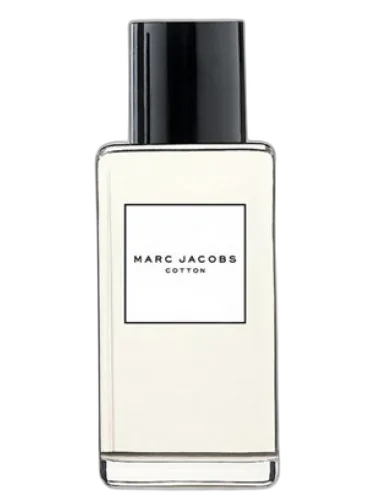

Marc Jacobs Splash Cotton Marc Jacobs
At a glance
Is Marc Jacobs Splash Cotton Marc Jacobs worth trying?
Marc Jacobs Splash Cotton by Marc Jacobs is a Floral Woody Musk fragrance for women.
- Best match
- Casual wear in Spring
- Performance feel
- Moderate longevity with Moderate sillage
- Signature profile
- powdery, woody, citrus with White Peach, Bergamot, Mandarin Orange
The first impression
Marc Jacobs Splash Cotton by Marc Jacobs is a Floral Woody Musk fragrance for women. Marc Jacobs Splash Cotton was launched in 2006. The nose behind this fragrance is Carlos Viñals. Top notes are White Peach, Bergamot, Mandarin Orange and Orange; middle notes are Cotton Flower, Lavender and Lily-of-the-Valley; base notes are Musk, White Woods, White Suede and Sandalwood.
What shapes the scent
The perfumer behind it

Carlos Viñals
Carlos Viñals is a Spanish perfumer known for his work with major houses including Dior, Avon, and Antonio Puig. His style often balances fresh, energetic accords with warm, sensual undertones, evident in creations like Dior Higher Energy and Avon Luck Limitless For Him. He has also crafted accessible fragrances for mass-market brands such as Cyzone and Beyoncé, demonstrating versatility across luxury and commercial lines.
Notes pyramid
Top Notes
First impression · 15-30 min
 White Peach
 Bergamot
 Mandarin Orange
 Orange
Heart Notes
Core character · 2-4 hours
 Cotton Flower
 Lavender
 Lily-of-the-Valley
Base Notes
Lasting impression · 4+ hours
 Musk
White Woods
White Suede
Musk
White Woods
White Suede
 Sandalwood
The mood it creates
The Innocent Archetype: Portrait of Marc Jacobs Splash Cotton Marc Jacobs
Essence
The person who cherishes Marc Jacobs Splash Cotton is most closely aligned with the Innocent-an archetype defined by purity, simplicity, and an enduring faith in goodness. Like the fragrance itself-clean, airy, uncomplicated-they embody an almost childlike trust in the world’s benevolence. They are not naive, but they choose to see beauty before cynicism, light before shadow. Their optimism is not ignorance; it is a deliberate philosophy, a refusal to let life’s harshness corrode their spirit.
Yet, like all archetypes, the Innocent has a shadow. Their insistence on purity can become fragility, their idealism can blind them to necessary truths, and their avoidance of conflict may leave them adrift in a world that demands confrontation.
Philosophy & Values
They do not seek grand gestures or dramatic transformations. Happiness, for them, is found in small rituals: the first sip of tea in the morning, the weight of a well-loved book in their hands, the scent of clean laundry drying in the sun. They are not escapists-they simply believe that meaning is woven into the ordinary.
But this very contentment can become stagnation. Their resistance to upheaval may keep them from growth. They must learn that purity does not mean avoiding life’s messiness-it means emerging from it unbroken.
Relationships
In love and friendship, they are the steady presence, the one who listens without judgment. Their relationships are built on trust, not intensity. They do not seek drama; they seek connection that feels like coming home. Their partners and friends are drawn to their calming energy, their ability to make even the most chaotic emotions feel manageable.
Yet, their aversion to discord can make them passive. They may avoid difficult conversations, smoothing over problems rather than addressing them. Their partners might crave more fire, more passion-something to disrupt the serene surface. But the Cotton Splash wearer fears turbulence. They would rather let a wound fester than risk the sting of confrontation.
Shadow
Their greatest strength-their unwavering belief in goodness-can also be their undoing. Life, in its relentless way, will test this faith. When betrayal or cruelty enters their world, they do not respond with anger; they retreat. Disillusionment wounds them more deeply than most because they have built their identity on the assumption that people are, at heart, kind.
Their shadow is a reluctance to engage with darkness-both in the world and within themselves. They may suppress their own frustrations, their own desires, if they fear they might disrupt the peace. This repression can lead to a quiet erosion of self, a slow fading into the background of their own life.
Conclusion
The lover of Splash Cotton is a study in contrasts: soft yet resilient, trusting yet quietly perceptive. They are not fragile-they have simply chosen gentleness as their armor. But true strength lies not in avoiding the storm, but in weathering it without losing their essence.
Perhaps, in time, they will learn that even the purest linen must sometimes endure the rain.
If you like this, try these
Fragrances with a comparable profile - shared accords, notes, and character.
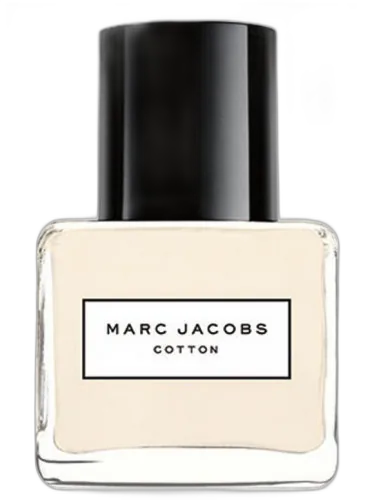
Marc Jacobs
Marc Jacobs Cotton Splash 2016 Marc Jacobs
Shared top notes: bergamot, mandarin orange, orange

Natura
Mamãe E Bebê Natura
Shared top notes: bergamot, mandarin orange

Cuarzo The Circle
Aquamarine Cuarzo The Circle
Shared top notes: bergamot, orange

Mila Schön
Mila Schön Lei Mila Schön
Shared top notes: bergamot, mandarin orange, orange

Phebo
Isolda Flor De Cajueiro Phebo
Shared top notes: bergamot, mandarin orange, orange