


Marc O'polo Midsummer Marc O'polo
Fragrance Story
Marc O'Polo Midsummer by Marc O'Polo is a Floral Fruity fragrance for women. Marc O'Polo Midsummer was launched in 2004. The nose behind this fragrance is Bernard Ellena. Top notes are Raspberry, Red Berries and Bergamot; middle notes are Nutmeg, Orchid, Freesia, Cyclamen, Jasmine and Lily-of-the-Valley; base notes are Sandalwood, Cedar, Patchouli, Vanilla and Musk.
Composition Profile
About the Perfumer

Bernard Ellena
Bernard Ellena has created fragrances for a wide range of brands, including Beloved Woman for Amouage, Simply Her for Avon, Colors De Benetton and Tribu for Benetton, Eau De Paradis and L'eau By Vanessa Bruno for Biotherm, Madeleine for Brocard, and About Men for Bruno Banani. His portfolio demonstrates versatility across floral, fresh, and woody genres. Ellena's compositions are known for their clarity and elegant simplicity.
Fragrance Notes
Top Notes
First impression · 15-30 min
 Raspberry
 Red Berries
 Bergamot
Heart Notes
Core character · 2-4 hours
 Nutmeg
 Orchid
 Freesia
 Cyclamen
 Jasmine
 Lily-of-the-Valley
Base Notes
Lasting impression · 4+ hours
 Sandalwood
 Cedar
Cedar
 Patchouli
 Vanilla
 Musk
Musk
Character Profile
The Marc O Archetype: Portrait of Marc O'polo Midsummer Marc O'polo
Essence
The person who gravitates toward Marc O'Polo Midsummer is most closely aligned with the Wanderer archetype-a seeker of freedom, spontaneity, and sensory delight. This is not the restless drifter, but the one who moves through life with an open heart, drawn by curiosity rather than escape. The fragrance itself-fresh, green, subtly floral with a touch of warmth-mirrors their essence: unburdened by rigid expectations, yet deeply attuned to the beauty of fleeting moments.
They are not bound by convention, nor do they reject it outright. Instead, they weave their own path, guided by intuition and an insatiable appetite for experience. The Wanderer thrives in the in-between spaces-where city meets wilderness, where structure dissolves into improvisation.
Style & Aesthetic
Their wardrobe is an extension of their spirit-light fabrics, natural textures, a palette of muted greens, soft whites, and sun-washed blues. They favor pieces that suggest movement: loose linen shirts, unstructured jackets, sandals worn just enough to show they’ve traveled. Their style is not careless, but carefree-each choice deliberate in its effortlessness.
In music, they lean toward acoustic melodies that evoke open roads, folk tales, or the hum of cicadas in late afternoon. They might collect vinyl records not as trophies, but as artifacts of mood, each one a vessel for nostalgia or daydreams. Their taste in literature drifts toward wanderlust-infused prose-Neruda’s odes, Kerouac’s highways, or the quiet introspection of W.G. Sebald.
They are not reckless, but they are allergic to routine. Their ideal day has no itinerary-only possibilities. They might wake early to watch the sunrise from a rooftop, spend an afternoon reading in a café, then follow the sound of live music into the night. They work to live, not the reverse, and gravitate toward careers that allow fluidity-freelance writing, photography, hospitality, or anything that lets them shape their own rhythm.
Travel is not an escape but a way of being. They are as content in a bustling market in Marrakech as they are on a quiet beach with nothing but a notebook. Home is wherever they can unpack their few cherished belongings-a well-worn book, a hand-thrown ceramic mug, a sprig of lavender tucked into a drawer.
Philosophy & Values
They reject the tyranny of productivity for its own sake. To them, life is not a ladder to climb but a landscape to wander. They measure success not in titles or possessions, but in the richness of their encounters-conversations that stretch into dawn, meals shared with strangers who become friends, the thrill of discovering a hidden alleyway in a foreign city.
Yet, their philosophy is not mere hedonism. They seek meaning in pleasure, depth in simplicity. They believe in the sacredness of small things: the scent of rain on hot pavement, the way sunlight filters through leaves, the weightlessness of a day with no obligations.
Relationships
In love and friendship, they are warm but elusive. They draw people in with their ease, their ability to make others feel seen-yet they resist confinement. Their relationships thrive on mutual freedom; they love deeply but refuse to be possessed. Partners who demand predictability will find them frustrating, while those who embrace spontaneity will be rewarded with loyalty and adventure.
Their friendships are constellations rather than orbits-connections that ebb and flow, sustained by shared moments rather than obligation. They are the friend who sends a postcard from an unexpected place, who remembers the perfect song for a mood, who listens without judgment.
Shadow
Yet, for all their charm, the Wanderer has a shadow. Their love of freedom can curdle into avoidance. When faced with conflict or emotional depth, they may retreat-physically or emotionally-into the next experience, the next horizon. Commitment frightens them not because they are cold, but because they fear stagnation more than loneliness.
Their spontaneity can become impulsiveness, leaving projects half-finished, promises unkept. They may romanticize their own rootlessness, mistaking motion for growth. And in quieter moments, when the music fades and the road ends, they might feel a hollowness-the price of never staying long enough to truly belong.
Conclusion
The wisest Wanderers learn that freedom is not the absence of ties, but the ability to choose them. They discover that depth is found not only in movement, but in stillness-in the courage to stay, to be vulnerable, to let a place or a person leave its mark on them.
And when they do, their lightness becomes not an evasion, but a gift-a reminder that life is best lived with open hands, ready to catch the wind, but strong enough to hold what matters.
Similar Fragrances
Fragrances with a comparable profile - shared accords, notes, and character.
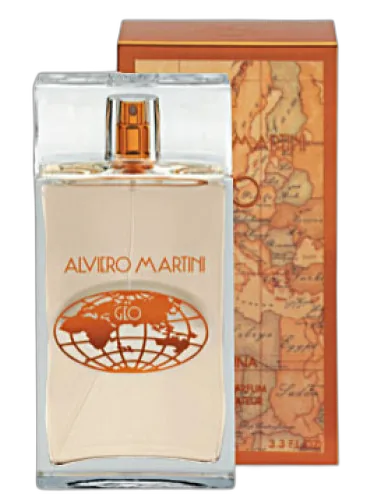
Alviero Martini
Geo Donna Alviero Martini
Shared accords: citrus, floral, fresh

Trussardi
Trussardi Ruby Red Trussardi
Shared accords: citrus, floral, fresh

Mahogany
La Fleur Mahogany
Shared accords: citrus, floral, fresh

Fiorucci
So Sexy! Fiorucci
Shared accords: citrus, floral, fresh
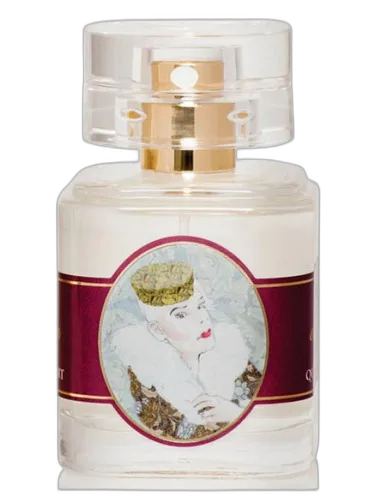
Lanoe
Queen Of Heart Lanoe
Shared accords: citrus, floral, fresh