
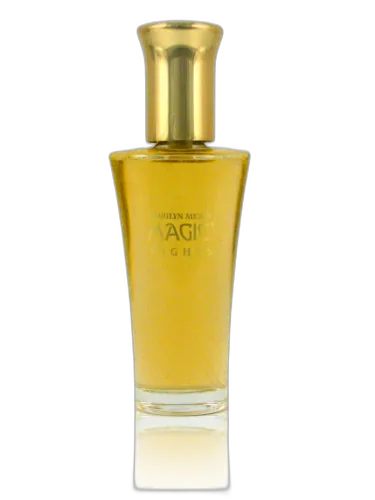

Magic Nights Marilyn Miglin
At a glance
Is Magic Nights Marilyn Miglin worth trying?
Magic Nights by Marilyn Miglin is a Floral Woody Musk fragrance for women.
- Best match
- Evening wear in Fall
- Performance feel
- Very Good longevity with Strong sillage
- Signature profile
- yellow floral, aromatic, green with Bergamot, Mandarin Orange, Black currant leaf
The first impression
Magic Nights by Marilyn Miglin is a Floral Woody Musk fragrance for women. Top notes are Bergamot, Mandarin Orange, Black currant leaf and Currant buds; middle notes are Narcissus, Ylang-Ylang, Cloves and Jasmine; base notes are Vetiver, Amber and Bourbon Vanilla.
What shapes the scent
The perfumer behind it

Marilyn Miglin
Marilyn Miglin is a perfumer and entrepreneur known for her glamorous and sensual fragrances. Her signature scent, Magic Nights, reflects her flair for creating luxurious, alluring perfumes. She often incorporates rich florals and warm spices into her compositions. Her work embodies a bold, confident style that resonates with fans of classic American perfumery.
Notes pyramid
Top Notes
First impression · 15-30 min
 Bergamot
 Mandarin Orange
 Black currant leaf
 Currant buds
Heart Notes
Core character · 2-4 hours
 Narcissus
 Ylang-Ylang
 Cloves
 Jasmine
Base Notes
Lasting impression · 4+ hours
 Vetiver
 Amber
Bourbon Vanilla
Amber
Bourbon Vanilla
The mood it creates
The Lover Archetype: Portrait of Magic Nights Marilyn Miglin
Essence
The one who chooses Magic Nights by Marilyn Miglin is no stranger to allure. This fragrance-opulent, intoxicating, a blend of dark florals and warm spices-belongs to the Seductress archetype, a figure who wields charm as both weapon and art. She is not merely interested in attraction; she thrives on transformation, drawing others into her orbit with effortless magnetism. Like Circe or Cleopatra, she understands the power of presence, the alchemy of scent and sensibility.
Yet the Seductress is not merely a temptress in the carnal sense. Hers is a deeper enchantment-an invitation to mystery, a promise of something beyond the mundane. She does not seduce for conquest, but for the sheer pleasure of shaping perception, of being both seen and unfathomable.
Shadow
Yet the Seductress walks a fine line between enchantment and artifice. Her mastery of allure can slip into performance, leaving even her unsure where the persona ends and the true self begins. There is a loneliness in this-the fear that if the mask slips, she will be found unremarkable.
Her resistance to vulnerability can harden into detachment. She may withdraw when emotions run too deep, preferring the safety of mystery over the messiness of raw connection. In love, she risks becoming a siren-luring others in but never allowing them to truly know her.
And then there is the danger of vanity. If she begins to believe too deeply in her own myth, she may grow brittle, mistaking admiration for meaning. The world becomes a stage, and she the perpetual actress, forgetting that the most profound magic lies in being, not seeming.
Conclusion
Her tastes are curated, deliberate. She prefers the richness of velvet and silk, deep jewel tones that catch the light just so. Her home is a sanctuary of dim lighting, plush textures, and art that suggests rather than declares-perhaps a Klimt print, a vintage perfume bottle displayed like a relic. She reads Colette and Anaïs Nin, not for scandal but for their understanding of feminine power as something both tender and ruthless.
Her philosophy is one of controlled revelation. She believes in the power of the unspoken, the slow unfurling of layers. In conversation, she listens more than she speaks, her responses measured, her laughter a low, knowing hum. She does not rush; time bends around her.
In relationships, she is neither possessive nor easily possessed. She enjoys the dance of courtship, the push and pull of intimacy, but resists being pinned down. Partners are drawn to her precisely because she remains slightly out of reach-a woman who belongs wholly to herself.
If you like this, try these
Fragrances with a comparable profile - shared accords, notes, and character.

Animale
Animale Instinct Femme Animale
Shared top notes: bergamot, mandarin orange
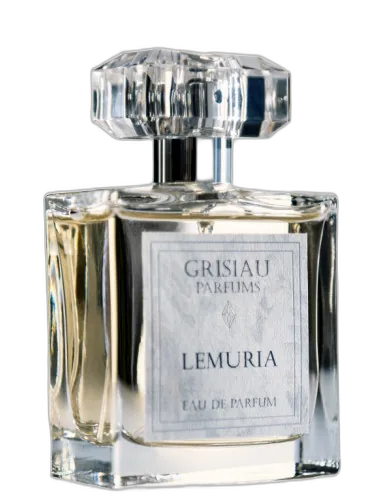
Grisiau
Lemuria Grisiau
Shared top notes: bergamot, mandarin orange
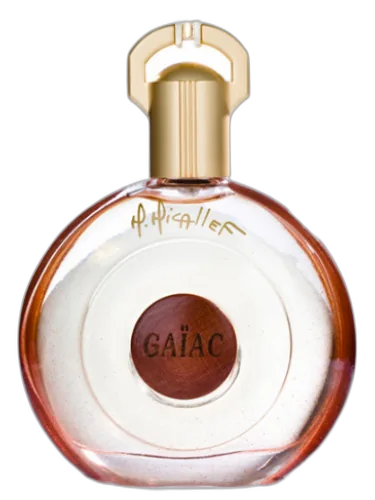
M. Micallef
Gaiac M. Micallef
Shared top notes: bergamot

Fresh
Love Fresh
Shared top notes: bergamot
SJA Perfumes
Tobacco Sja Perfumes
Shared top notes: bergamot