


Cry Baby Perfume Milk Melanie Martinez
At a glance
Is Cry Baby Perfume Milk Melanie Martinez worth trying?
Cry Baby Perfume Milk by Melanie Martinez is a Oriental Vanilla fragrance for women.
- Best match
- Casual wear in Spring
- Performance feel
- Moderate longevity with Moderate sillage
- Signature profile
- lactonic, fruity, powdery with Milk, Strawberry, Forest Fruits
The first impression
Cry Baby Perfume Milk by Melanie Martinez is a Oriental Vanilla fragrance for women. Cry Baby Perfume Milk was launched in 2016. The nose behind this fragrance is Catherine Selig. Top notes are Milk, Strawberry and Forest Fruits; middle note is Powdery Notes; base notes are Caramel and Woody Notes.
What shapes the scent
The perfumer behind it

Catherine Selig
Catherine Selig is a senior perfumer at Firmenich, known for her versatile work across designer and niche brands. Her style balances modern freshness with rich, textured accords, often blending floral, woody, and gourmand elements. She created the bold, spicy-woody Eilish No. 2 for Billie Yeish and the powdery elegance of Banana Republic’s Orris Vanille.
Notes pyramid
Top Notes
First impression · 15-30 min
 Milk
Milk
 Strawberry
 Forest Fruits
Heart Notes
Core character · 2-4 hours
 Powdery Notes
Base Notes
Lasting impression · 4+ hours
 Caramel
 Woody Notes
The mood it creates
The Eternal Child Archetype: Portrait of Cry Baby Perfume Milk Melanie Martinez
Essence
To wear Cry Baby Perfume Milk by Melanie Martinez is to embrace a scent that is at once nostalgic and unsettling-milky sweetness laced with a hint of something darker, like innocence dipped in melancholy. The person drawn to this fragrance is not merely a fan of Martinez’s music; they embody the archetype of the Eternal Child, one who resists the rigid structures of adulthood while simultaneously yearning for the safety of the cradle.
The Eternal Child, or Puer Aeternus in Jungian terms, is a figure suspended between two worlds: the boundless imagination of youth and the inevitable gravity of maturity. This individual thrives in the liminal space where fantasy and reality blur, where the past is not just memory but a living, breathing force. Their love for Cry Baby Perfume Milk is no accident-it is a declaration, a scent that evokes powdered skin, strawberry milk, and the faint metallic tang of a child’s bitten lip.
They are drawn to the aesthetics of softness and decay-pastel pinks and baby blues smudged with dirt, lace gloves torn at the seams, stuffed animals with one eye missing. Their style is a carefully curated rebellion against the mundane, a refusal to conform to the drabness of "grown-up" fashion. They wear their heart on their sleeve, often literally, in the form of oversized sweaters, knee-high socks, and chunky platform shoes that make them appear both larger and smaller than life.
Style & Aesthetic
Their living space is a shrine to whimsy-fairy lights strung haphazardly, shelves cluttered with trinkets, walls covered in Polaroids and dried flowers. They thrive in environments that feel like a perpetual childhood bedroom, where time is fluid and responsibilities can be postponed.
But the shadow of the Eternal Child is procrastination, a refusal to fully step into adulthood. They may struggle with discipline, chasing inspiration in bursts but abandoning projects when they require sustained effort. They romanticize freedom but sometimes mistake it for escape. The real challenge for them is not in dreaming, but in grounding those dreams in action-turning their fantasies into something tangible before they dissolve like sugar in milk.
Philosophy & Values
For the Eternal Child, the world is both enchanting and cruel. They believe in magic-not in the literal sense, but in the idea that beauty and meaning can be found in the smallest, most overlooked things. A cracked teacup is not trash; it is a relic. A forgotten lullaby is not just a song; it is a spell. Their philosophy is one of radical sensitivity, an insistence that feeling deeply is not weakness but a form of resistance against a world that demands emotional detachment.
Yet this refusal to harden comes at a cost. Their values are rooted in authenticity, but they often struggle with the weight of reality. They despise hypocrisy and cruelty, yet they sometimes retreat into fantasy when confronted with harsh truths. Their greatest fear is not death, but the slow erosion of wonder-the moment when life becomes a series of obligations rather than a playground of possibilities.
Relationships
In love, the Eternal Child is both tender and demanding. They crave a bond that feels like a storybook romance-intense, poetic, and unbreakable. They are the kind of lover who leaves handwritten notes in pockets, who whispers secrets into the curve of their partner’s neck, who believes in soulmates with the fervor of a medieval troubadour.
But their idealism can be their undoing. They are prone to disillusionment when reality fails to match their dreams. They may cling too tightly, suffocating their partners with their need for constant enchantment. Or, conversely, they may flee at the first sign of imperfection, always chasing the next fantasy rather than nurturing what is real. Their shadow emerges in their capriciousness-the way they can adore someone one day and grow distant the next, as if love were a game to be abandoned when it loses its shine.
Shadow
The greatest danger for the Eternal Child is stagnation. Their refusal to fully engage with adulthood can leave them stranded in a perpetual state of adolescence, where every responsibility feels like a betrayal of their true self. They may become self-indulgent, retreating into nostalgia to avoid the discomfort of growth. Their sensitivity, once a strength, can curdle into fragility-an inability to endure criticism or hardship without crumbling.
Yet, when balanced, their childlike wonder is not a flaw but a gift. They remind the world that joy does not have to be earned, that play is not just for the young, and that sometimes, the most revolutionary act is to stay soft in a world that wants to harden you.
Conclusion
Cry Baby Perfume Milk is more than a scent-it is a manifesto. It says: I remember what it was like to be small, and I refuse to forget. The person who wears it is not immature, but rather someone who has chosen to carry a piece of their childhood with them, not as a burden, but as a compass.
They are the dreamers, the artists, the ones who still believe in monsters under the bed-not because they are naive, but because they know that some fears (and some wonders) should never be outgrown.
If you like this, try these
Fragrances with a comparable profile - shared accords, notes, and character.

Gula
Fresa Láctea Gula
Shared top notes: forest fruits, milk, strawberry

Sphinx Fragrances
Strawbery Kiss Sphinx Fragrances
Shared top notes: forest fruits, strawberry
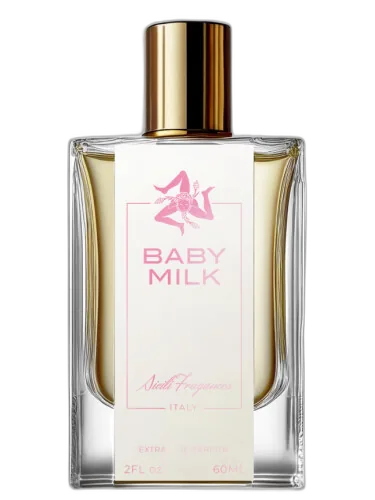
Sicili Fragances
Baby Milk Sicili Fragances
Shared top notes: milk, strawberry

Fray Ardens
Frau Fray Ardens
Shared heart notes: powdery notes

Maison Manël
Insolite Elixir Maison Manël
Shared heart notes: powdery notes