


Argentina Memo Paris
At a glance
Is Argentina Memo Paris worth trying?
Argentina by Memo Paris is a Oriental Floral fragrance for women and men.
- Best match
- Evening wear in Fall
- Performance feel
- Very Good longevity with Strong sillage
- Signature profile
- rose, floral, musky with Rose, Turkish Rose, Ambrette (Musk Mallow)
The first impression
Argentina by Memo Paris is a Oriental Floral fragrance for women and men. Argentina was launched in 2021. The nose behind this fragrance is Alienor Massenet.
What shapes the scent
The perfumer behind it

Alienor Massenet
Alienor Massenet is a French perfumer known for her work with major fragrance houses, including Givaudan. Her style balances modern elegance with subtle complexity, often highlighting floral and woody contrasts. Notable creations include the luminous Rose Lumiere for Armand Basi and the enigmatic Black Swan for Brocard.
Notes pyramid
All Notes
Complete scent profile
 Rose
Rose
 Turkish Rose
 Ambrette (Musk Mallow)
 Agarwood (Oud)
 Pink Pepper
Jasmine Sambac
Egyptian Jasmine
Pink Pepper
Jasmine Sambac
Egyptian Jasmine
 Magnolia
 Cypriol Oil or Nagarmotha
The mood it creates
The Wanderer Archetype: Portrait of Argentina Memo Paris
Essence
The person who chooses Argentina by Memo Paris is not one to be confined. This fragrance-a blend of leather, mate tea, and wild grasses-evokes vast landscapes, untamed horizons, and the restless spirit of the Explorer archetype. Like the gaucho riding across the pampas, this individual is driven by an insatiable curiosity, a need to roam both physically and intellectually. They are not content with the well-trodden path; they seek the road less traveled, the scent of adventure lingering in the air.
Yet, the Explorer is more than just a traveler-they are a seeker of meaning, one who believes that life’s essence is found in movement, in the friction between the known and the unknown. They do not merely visit places; they absorb them, letting each experience shape their identity like wind carving stone.
Style & Aesthetic
Their tastes are eclectic, a curated collection of the rare and the evocative. They prefer raw leather jackets over polished suits, well-worn boots over pristine sneakers. Their wardrobe is not just clothing but an archive of journeys-a scarf from Marrakech, a bracelet from Patagonia, each piece a silent testament to where they’ve been.
In art, they are drawn to the impressionistic, the unfinished-works that suggest rather than declare. A Turner seascape, where the horizon dissolves into mist, speaks to them more than a rigid Dutch still life. Music, too, follows this pattern: they favor the melancholic strum of a flamenco guitar, the improvisational flow of jazz, anything that refuses to be pinned down.
They thrive in environments that mirror their inner restlessness-a loft with maps on the walls, a suitcase always half-packed. They may work in fields that allow movement: travel writing, photography, freelance consulting. Even if tied to one place, their mind wanders, always planning the next escape.
Their greatest strength is their adaptability; their greatest weakness, their refusal to plant roots. They fear that if they stay too long, they will lose themselves-yet without grounding, they risk becoming a ghost, present everywhere but belonging nowhere.
Philosophy & Values
Their philosophy is one of radical autonomy. They distrust dogma, whether political, religious, or social, seeing it as a cage for the spirit. For them, truth is not a fixed point but a shifting landscape, best understood through direct experience. They value courage-not the loud, performative kind, but the quiet resolve to step into the unknown without guarantees.
Yet, this love of freedom has its paradoxes. They despise stagnation but sometimes mistake commitment for confinement. They fear routine like a slow death, yet without some structure, their life can become a series of fleeting impressions, never deepening into true wisdom.
Relationships
In love, they are passionate but elusive. They crave connection but resist possession, viewing relationships as shared journeys rather than eternal bonds. Their partners must understand that they are not to be anchored-at least, not for long. They are drawn to those who match their intensity but do not demand permanence.
This can make them exhilarating lovers but unreliable companions. Their shadow emerges here: a reluctance to face the mundane, the necessary work of building something lasting. They may leave just as things become real, mistaking depth for entrapment.
Shadow
Beneath the romantic veneer of the wanderer lies a more troubling truth: the fear of being known. Constant movement can be a defense, a way to avoid the vulnerability of staying. They may pride themselves on their independence, but true strength is not just in leaving-it is also in choosing to remain.
If they do not confront this shadow, they may find that the world, for all its vastness, begins to feel strangely empty. The true challenge for the Explorer is not to keep moving, but to discover what-or who-might finally make them want to stay.
If you like this, try these
Fragrances with a comparable profile - shared accords, notes, and character.
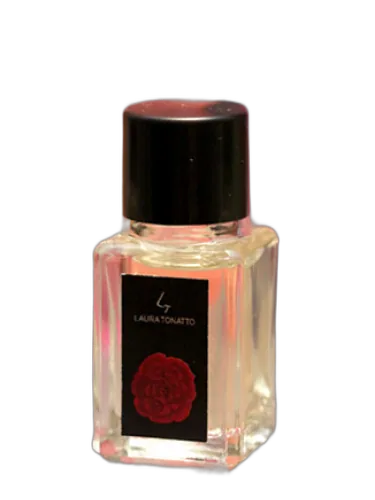
Tonatto Profumi
Rosso Tonatto Profumi
Shared top notes: agarwood (oud), rose
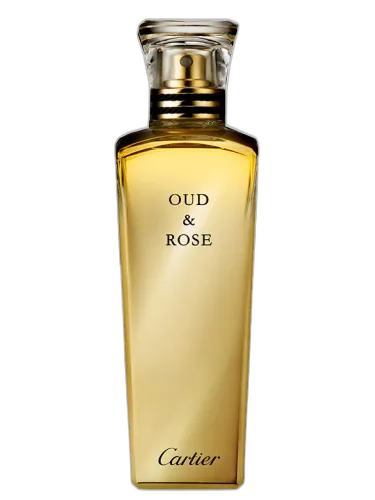
Cartier
Oud & Rose Cartier
Shared top notes: agarwood (oud), rose

SoOud
Kanz Sooud
Shared top notes: agarwood (oud), cypriol oil or nagarmotha, rose

The Dua Brand
Mukhallat The Dua Brand
Shared top notes: agarwood (oud), rose
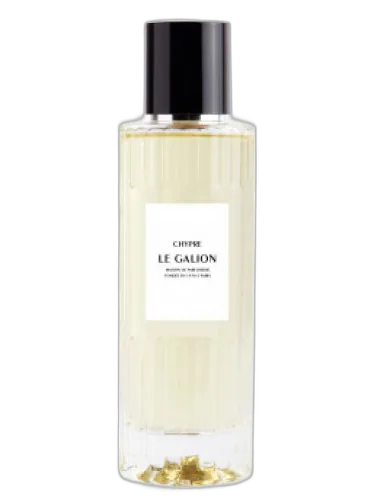
Le Galion
Chypre (2020) Le Galion
Shared top notes: egyptian jasmine, pink pepper, rose