
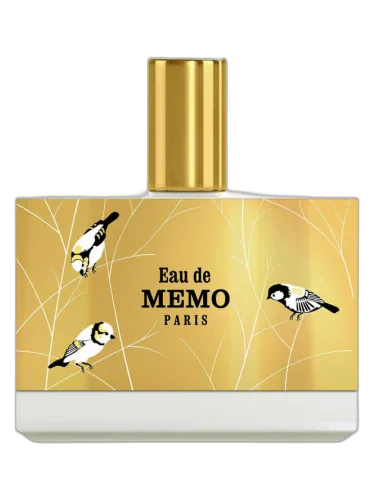

Eau De Memo Memo Paris
At a glance
Is Eau De Memo Memo Paris worth trying?
Eau de Memo by Memo Paris is a Oriental Floral fragrance for women and men.
- Best match
- Evening wear in Fall
- Performance feel
- Good longevity with Moderate sillage
- Signature profile
- citrus, leather, green with Green Tea, Bergamot, Lemon
The first impression
Eau de Memo by Memo Paris is a Oriental Floral fragrance for women and men. Eau de Memo was launched in 2017. The nose behind this fragrance is Alienor Massenet. Top notes are Green Tea, Bergamot and Lemon; middle notes are Jasmine, Iris and Saffron; base notes are Leather, Moss and White Musk.
What shapes the scent
The perfumer behind it

Alienor Massenet
Alienor Massenet is a French perfumer known for her work with major fragrance houses, including Givaudan. Her style balances modern elegance with subtle complexity, often highlighting floral and woody contrasts. Notable creations include the luminous Rose Lumiere for Armand Basi and the enigmatic Black Swan for Brocard.
Notes pyramid
Top Notes
First impression · 15-30 min
 Green Tea
 Bergamot
 Lemon
Lemon
Heart Notes
Core character · 2-4 hours
 Jasmine
 Iris
Iris
 Saffron
Base Notes
Lasting impression · 4+ hours
 Leather
Moss
White Musk
Leather
Moss
White Musk
The mood it creates
The Wanderer Archetype: Portrait of Eau De Memo Memo Paris
Essence
The person who cherishes Eau De Memo Memo Paris is, at their core, a Seeker-an archetype defined by an insatiable curiosity, a hunger for the undiscovered, and a refusal to be confined by convention. This fragrance, with its interplay of leather, tea, and spices, evokes a spirit of adventure, a scent that lingers like the memory of distant lands. The Seeker is not content with the mundane; they are drawn to the liminal, the spaces between cultures, ideas, and eras. Their life is a pilgrimage, not toward a fixed destination, but toward the act of seeking itself.
Relationships
In love and friendship, they are magnetic but elusive. They attract others with their depth and intensity, yet they resist being fully known. Their relationships thrive on mutual growth, on conversations that stretch into dawn, on shared journeys rather than domestic routines. They are not cruel, but they are often distant-not out of indifference, but because their nature demands movement. Their shadow here is a reluctance to commit, a fear that settling will dull their spirit.
Shadow
The Seeker’s greatest strength-their refusal to be stagnant-can also become their undoing. When unchecked, their wanderlust turns into rootlessness, a perpetual dissatisfaction that prevents them from ever truly arriving. They may romanticize transience to the point of self-sabotage, abandoning relationships or projects just as they deepen. Their independence, so vital to their identity, can harden into isolation.
Conclusion
Their tastes are eclectic, shaped by a refusal to settle into a single aesthetic. They might wear a tailored coat over a handwoven scarf, pairing vintage leather boots with a modern minimalist watch. Their home is an archive of curiosities-antique maps, well-thumbed books in multiple languages, a collection of small objects each holding a story. They prefer the patina of time over the sterile gleam of the new, finding beauty in what has been lived in, touched, and carried across borders.
Philosophically, they reject rigid dogma, favoring instead a fluid, evolving worldview. They are drawn to thinkers like Nietzsche himself, who saw truth as a mountain with many paths. They believe in self-creation, in the idea that identity is not inherited but forged through experience. Their values center on freedom-not as mere rebellion, but as the disciplined pursuit of authenticity.
If you like this, try these
Fragrances with a comparable profile - shared accords, notes, and character.

Guerlain
Cherry Blossom 2020 Millésime Guerlain
Shared top notes: bergamot, green tea

Phlur
Somebody Wood Phlur
Shared top notes: bergamot, lemon
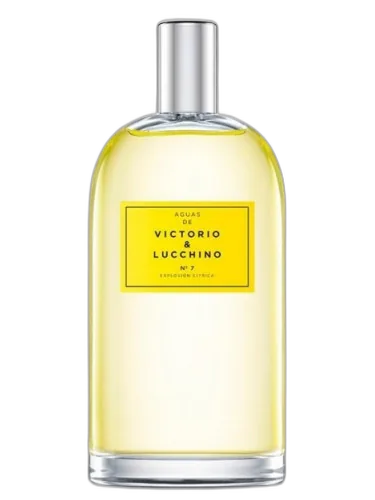
Victorio & Lucchino
Nº 7 Explosion Cítrica Victorio & Lucchino
Shared top notes: bergamot, green tea, lemon
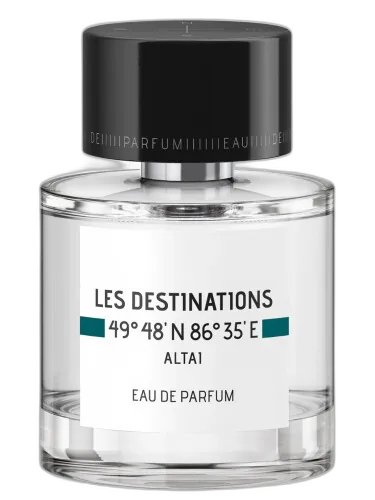
Les Destinations
Altai Les Destinations
Shared top notes: bergamot, lemon
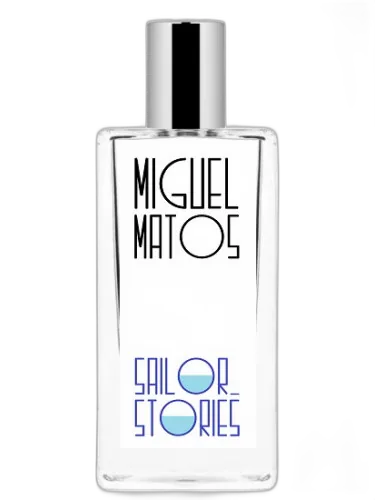
Miguel Matos
Sailor Stories Miguel Matos
Shared top notes: bergamot, lemon