


Library Visit Mgo Duftanker
At a glance
Is Library Visit Mgo Duftanker worth trying?
Library Visit by MGO Duftanker is a fragrance for women and men.
- Best match
- Evening wear in Fall
- Performance feel
- Very Good longevity with Moderate sillage
- Signature profile
- amber, woody, musky with Leather, Civet, Tobacco
The first impression
Library Visit by MGO Duftanker is a fragrance for women and men. The nose behind this fragrance is Hans Georg Staudt. Top notes are Leather, Civet, Tobacco and Heliotrope; middle notes are Saffron, Olibanum, Leather, Cedar, Amber, Woody Notes and Labdanum; base notes are White Musk, Olibanum, Musk, Benzoin, Oakmoss, Himalayan Cedar, Sandalwood and Soap.
What shapes the scent
The perfumer behind it

Hans Georg Staudt
Hans Georg Staudt is a German perfumer known for his work with Ecuación Natural and MGO Duftanker. His creations for Ecuación Natural include Mr. Magnolia and Pulupa, while for MGO Duftanker he composed Black Forest, Dubai, Green Absinthe, Just Relax 1990, Labdanum, and Library Visit. His fragrances often blend natural and abstract elements.
Notes pyramid
Top Notes
First impression · 15-30 min
 Leather
 Civet
Civet
 Tobacco
 Heliotrope
Heart Notes
Core character · 2-4 hours
 Saffron
 Olibanum
Leather
Olibanum
Leather
 Cedar
Cedar
 Amber
Amber
 Woody Notes
 Labdanum
Base Notes
Lasting impression · 4+ hours
White Musk
Olibanum
 Musk
Musk
 Benzoin
 Oakmoss
 Himalayan Cedar
 Sandalwood
 Soap
Soap
The mood it creates
The Library Visit Enthusiast Archetype: Portrait of Library Visit Mgo Duftanker
Essence
Their soul is steeped in the scent of old paper, leather bindings, and the faintest trace of incense-an olfactory invocation of wisdom and quiet contemplation. Library Visit by Mgo Duftanker is not merely a fragrance to them; it is an extension of their essence, a whispered confession of their deepest inclinations. They are the Scholar, an archetype that thrives in the liminal space between knowledge and introspection, where the past and the present converse in hushed tones.
The Scholar is drawn to the pursuit of understanding, not merely for utility but for the sheer intoxication of ideas. Their mind is a labyrinth of half-formed theories, half-read books, and half-answered questions-each more compelling than the last. They move through the world with a quiet intensity, observing, analyzing, and filing away impressions like a librarian cataloging rare manuscripts.
Their tastes are refined but not ostentatious. They prefer the weight of a well-bound book over the ephemeral glow of a screen, the texture of aged parchment over the sterility of modern stationery. Their wardrobe leans toward muted tones-deep browns, charcoal grays, the occasional burgundy-as if they are consciously dressing to blend into the shadows of a reading nook. They appreciate craftsmanship, the kind that reveals itself slowly, in the stitching of a leather satchel or the grain of a wooden desk.
Philosophically, they are drawn to systems of thought that reward patience-stoicism, existentialism, the slow unraveling of historical narratives. They do not seek answers so much as they seek better questions. Their values are rooted in intellectual honesty, curiosity, and a quiet defiance against the tyranny of superficiality.
Shadow
Yet the Scholar is not without their shadows. Their love of solitude can curdle into isolation, their reverence for thought can become a prison of indecision. They may retreat so deeply into their mind that the world outside begins to feel like an intrusion, a distraction from the purity of their inner dialogue.
Their skepticism, while often warranted, can harden into cynicism. They may dismiss what they cannot immediately dissect, mistaking ambiguity for ignorance. At their worst, they become the recluse, hoarding knowledge like a dragon guards gold-not for use, but for the mere possession of it.
Conclusion
The Scholar’s greatest strength is their ability to synthesize knowledge into meaning. They are not content with mere accumulation; they seek connections, patterns, the hidden threads that weave disparate ideas into coherence. Conversations with them are rarely small talk-they prefer discussions that meander through philosophy, history, and the odd tangent about the symbolism in 17th-century Dutch still lifes.
They are dependable in their solitude, finding richness in silence. Their relationships are few but profound, built on mutual respect for depth rather than the fleeting bonds of social convenience. To those who earn their trust, they offer insights that feel like rare gifts-precise, considered, and often startling in their clarity.
If you like this, try these
Fragrances with a comparable profile - shared accords, notes, and character.

Toni Cabal
Imaddiction Toni Cabal
Shared top notes: tobacco

Lumiere
Irina Lumiere
Shared top notes: leather, tobacco

Suhad Perfumes
Al-thouraya Suhad Perfumes
Shared heart notes: amber, leather, woody notes
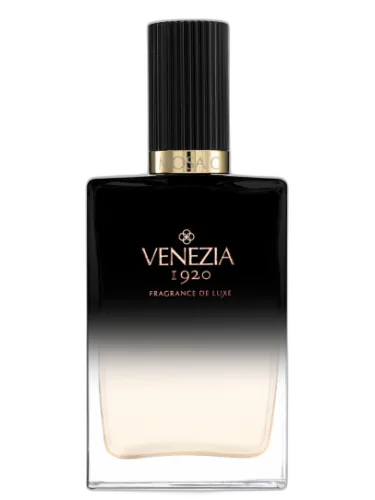
Venezia 1920
Mosaic Venezia 1920
Shared heart notes: leather, saffron

Pictor Parfum
Shadow Pictor Parfum
Shared top notes: tobacco