
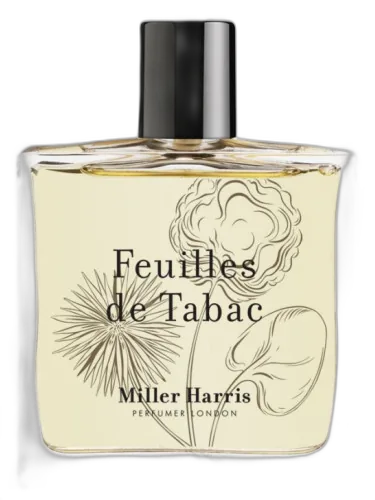

Feuilles De Tabac Miller Harris
At a glance
Is Feuilles De Tabac Miller Harris worth trying?
Feuilles de Tabac by Miller Harris is a Woody Chypre fragrance for women and men.
- Best match
- Evening wear in Fall
- Performance feel
- Good longevity with Moderate sillage
- Signature profile
- aromatic, woody, warm spicy with Pine needles, Sage, Bergamot
The first impression
Feuilles de Tabac by Miller Harris is a Woody Chypre fragrance for women and men. Feuilles de Tabac was launched in 2000. The nose behind this fragrance is Lyn Harris. Top notes are Pine needles, Sage and Bergamot; middle notes are Pimento and Allspice; base notes are Tobacco, Patchouli and Tonka Bean.
What shapes the scent
The perfumer behind it

Lyn Harris
Lyn Harris is a British perfumer known for her work with Claus Porto, where she created the Agua collection including Agua Clementina and Agua Flores. She also developed Le Parfum for the brand, demonstrating her expertise in crafting fresh and elegant fragrances. Harris’s style often balances classic and modern elements, resulting in accessible yet sophisticated scents.
Notes pyramid
Top Notes
First impression · 15-30 min
 Pine needles
 Sage
Sage
 Bergamot
Heart Notes
Core character · 2-4 hours
 Pimento
 Allspice
Base Notes
Lasting impression · 4+ hours
 Tobacco
 Patchouli
 Tonka Bean
The mood it creates
The Miller Harris Feuilles De Archetype: Portrait of Feuilles De Tabac Miller Harris
Essence
This person is, above all, a seeker of knowledge-not merely of facts, but of the textures of existence. The fragrance they choose, Feuilles De Tabac, is a scent of contemplation: dry tobacco leaf, warm spices, and a whisper of leather. It is not loud, not sweet, but rich with the weight of thought. The Sage archetype fits them perfectly, for they are drawn to the wisdom hidden in the mundane, the philosophy lingering in the scent of old libraries and autumn evenings.
Yet, like all archetypes, the Sage has its shadow-the risk of detachment, of becoming so lost in thought that the pulse of life passes them by.
Style & Aesthetic
Their tastes are deliberate, never accidental. They prefer the understated over the ostentatious, the well-worn over the pristine. Their wardrobe leans toward tailored but lived-in pieces-cashmere sweaters with faint traces of pipe smoke, leather shoes that have walked through many seasons. They appreciate the patina of time, whether in objects or ideas.
Books are their companions, but not just any books-they seek those that challenge, that unsettle. Philosophy, yes, but also obscure poetry, forgotten histories, and treatises on botany or alchemy. Their home is a sanctuary of quiet luxury: dark wood, deep armchairs, a record player spinning jazz or Baroque fugues. They do not decorate for others; their space is an extension of their mind.
They are not reclusive, but they need solitude to recharge. Their ideal evening is a glass of aged whiskey, a book, and the dim glow of a reading lamp. They indulge, but never excessively-pleasure is a ritual, not an escape.
They may travel, but not for postcard sights. They seek places with history, with stories embedded in the streets. A quiet café in Paris, a hidden bookstore in Lisbon, a forest where the trees seem to whisper secrets.
Philosophy & Values
They believe in depth, not speed. In a world that races toward distraction, they move deliberately, questioning everything. Their values are not dogmatic but fluid-shaped by experience, by the slow accumulation of insight. They distrust easy answers, preferring the tension of paradox.
Yet this very virtue can become their flaw. Their love of complexity sometimes paralyzes them; they see too many sides, too many possibilities. Action becomes difficult when every choice is weighed against an infinite web of consequences.
Relationships
They do not suffer fools, but they are not cruel-merely selective. Their closest relationships are built on mutual curiosity, on conversations that stretch into the early hours. They are not the type to offer empty comfort, but when they speak, their words carry weight.
Romantically, they are drawn to those who can match their intensity-someone who understands that passion is not always loud, that silence can be its own form of communion. Yet their shadow emerges here too: they can be so absorbed in their own mind that they forget to reach out, leaving others feeling like spectators to their solitude.
Shadow
The Sage’s greatest danger is the illusion of self-sufficiency. They may convince themselves that they need nothing but their own mind, that emotions are distractions from truth. This can harden into a kind of intellectual pride, a subtle condescension toward those who live more instinctively.
At their worst, they become the hermit, retreating so far into thought that the world fades into abstraction. Life is not a text to be analyzed-it must also be lived.
Conclusion
Feuilles De Tabac is their scent because it is not obvious, not fleeting. It lingers, like a thought that refuses to leave. They are the kind of person who leaves an impression not by force, but by depth.
They will never be the loudest in the room, but if you listen closely, you’ll hear the hum of a mind always turning, always questioning. And perhaps, if they allow it, they will learn that wisdom is not just in knowing-but in touching, in feeling, in being fully present before the mystery of existence.
If you like this, try these
Fragrances with a comparable profile - shared accords, notes, and character.

Zilli
Blue Titanium Zilli
Shared top notes: bergamot, sage

Coach
Coach Dreams Moonlight Coach
Shared top notes: bergamot
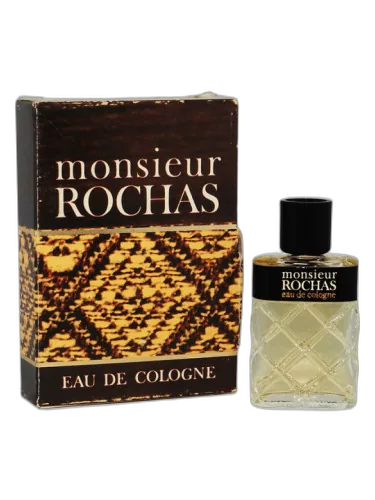
Rochas
Monsieur Rochas Eau De Cologne Rochas
Shared top notes: bergamot, sage
NasoProfumo
Verde Scuro Nasoprofumo
Shared top notes: bergamot, sage

4160 Tuesdays
Rome 1963 4160 Tuesdays
Shared top notes: bergamot