
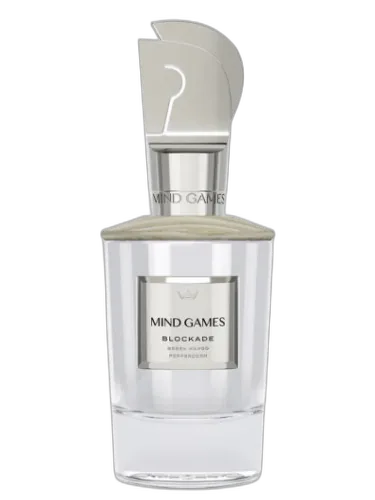

Blockade Mind Games
At a glance
Is Blockade Mind Games worth trying?
Blockade by Mind Games is a fragrance for women and men.
- Best match
- Casual wear in Spring, Summer
- Performance feel
- Good longevity with Moderate sillage
- Signature profile
- tropical, fruity, floral with Mango, Bergamot, Pink Pepper
The first impression
Blockade by Mind Games is a fragrance for women and men. This is a new fragrance. Blockade was launched in 2022. The nose behind this fragrance is Christelle Laprade. Top notes are Mango, Bergamot, Pink Pepper and Tomato Leaf; middle notes are Mango Blossom, Lavender, Watery Cyclamen and Star Anise; base notes are Amber, Agarwood (Oud), Suede and Patchouli.
What shapes the scent
The perfumer behind it

Christelle Laprade
Christelle Laprade is a French perfumer who has worked for major brands like Avon, Banana Republic, and Christian Siriano. Her creations include Luiza Brunet Intensa, Wild Country, Midnight Hour, Monday Rose, Tuberose Overdose, Velvet Pomegranate, Bullet, and Silhouette. Her style ranges from fresh and floral to rich and fruity.
Notes pyramid
Top Notes
First impression · 15-30 min
 Mango
Mango
 Bergamot
 Pink Pepper
 Tomato Leaf
Heart Notes
Core character · 2-4 hours
 Mango Blossom
 Lavender
 Watery Cyclamen
 Star Anise
Base Notes
Lasting impression · 4+ hours
 Amber
Amber
 Agarwood (Oud)
 Suede
Suede
 Patchouli
The mood it creates
The Magician Archetype: Portrait of Blockade Mind Games
Essence
To wear Blockade Mind Games is to embrace the scent of contradiction-an olfactory paradox that shifts between allure and evasion, sweetness and sharpness. This fragrance, with its interplay of dark spices, smoky woods, and unexpected gourmand twists, is not for the passive or the predictable. It belongs to the one who thrives in ambiguity, who dances on the edge of perception, always keeping others-and perhaps even themselves-slightly off-balance.
Philosophy & Values
Their philosophy is one of fluidity. They distrust absolutes, seeing dogma as the death of thought. Instead, they embrace paradox, believing that truth is often found in contradiction. They quote Nietzsche’s "You must have chaos within you to give birth to a dancing star" not as a platitude but as a lived principle.
They value intelligence, but not in the sterile academic sense-they prize wit, the ability to turn an argument inside out, to expose hidden assumptions. They are drawn to games-chess, poker, even psychological experiments-because life, to them, is a series of maneuvers. They respect those who can match their mental agility but grow bored with those who take things at face value.
Yet, beneath the playful exterior, there is a deeper hunger: the need to matter. The Trickster does not merely want to entertain-they want to change minds, to leave an imprint on the world, even if it’s through disruption rather than creation.
Relationships
In love and friendship, they are magnetic but elusive. They draw people in with charm and intellect, but just as someone feels close, they retreat-not out of cruelty, but out of an instinctive fear of being fully known. They crave connection but distrust permanence.
Romantically, they are drawn to partners who challenge them, who refuse to be mere spectators in their psychological theater. A relationship with them is never dull, but it is also never entirely stable. They may test boundaries, push buttons, not out of malice but because they cannot resist the thrill of the game.
Their friendships are alliances of wit-they collect brilliant misfits, artists, and iconoclasts, people who understand the value of a well-placed provocation. But they struggle with vulnerability. To admit need is to surrender control, and the Trickster fears nothing more than being predictable.
Shadow
The brilliance of the Trickster is also their flaw. Their refusal to be pinned down can become a refusal to commit-to ideas, to people, to themselves. They risk becoming perpetual spectators of their own lives, always analyzing, never fully living.
Their wit can turn corrosive. What begins as playful banter may become a weapon, leaving others feeling toyed with or manipulated. They may justify it as intellectual honesty, but the truth is simpler: they fear being outmaneuvered, so they strike first.
At their worst, they become the agent of chaos without purpose, disrupting for disruption’s sake. Without a higher aim, their games grow hollow, leaving them isolated in a self-made labyrinth of irony.
Conclusion
The dominant archetype here is the Trickster, the eternal shape-shifter who defies fixed definitions. This person is neither fully the hero nor the villain but exists in the liminal space between roles, playing with expectations like a master strategist. They are the provocateur in conversation, the one who dismantles rigid ideologies with a smirk, the individual who refuses to be pinned down by convention.
Their life is a series of calculated moves and spontaneous detours. They dress with deliberate irony-luxury paired with irreverence, vintage with futurism. Their style is a puzzle, a way to provoke curiosity without revealing too much. They might wear a tailored coat over a graphic tee featuring an obscure philosophical quote, or pair an elegant watch with scuffed boots, as if to say: I contain multitudes, and you will never fully map them.
If you like this, try these
Fragrances with a comparable profile - shared accords, notes, and character.
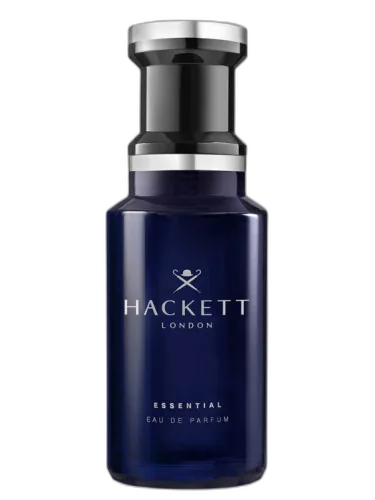
Hackett London
Essential Hackett London
Shared top notes: bergamot, pink pepper
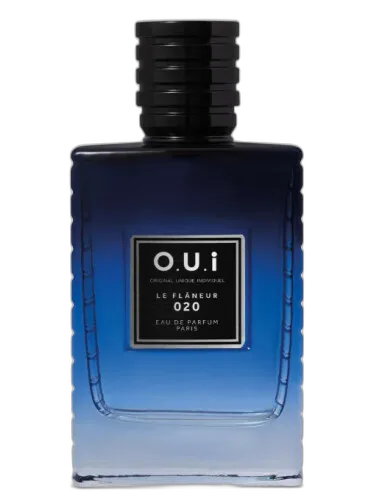
O.U.i Original Unique Individual
Le Flâneur 020 O.u.i Original Unique Individual
Shared top notes: bergamot, pink pepper

Sospiro Perfumes
Allegro Sospiro Perfumes
Shared top notes: bergamot, pink pepper
CALIFAH
Tonka Amber Califah
Shared top notes: bergamot, pink pepper

Crusita
Deep Mountain Crusita
Shared top notes: bergamot, pink pepper