


Driftwood Mirus Fine Fragrance
At a glance
Is Driftwood Mirus Fine Fragrance worth trying?
Driftwood by Mirus Fine Fragrance is a Oriental Woody fragrance for women and men.
- Best match
- Casual wear in Any
- Performance feel
- Good longevity with Moderate sillage
- Signature profile
- amber, woody, animalic with Ambergris, Olibanum, Virginia Cedar
The first impression
Driftwood by Mirus Fine Fragrance is a Oriental Woody fragrance for women and men. Driftwood was launched in 2016. The nose behind this fragrance is Neal Peters.
What shapes the scent
The perfumer behind it

Neal Peters
Neal Peters is a perfumer known for his work with Beau Kwon and Mirus Fine Fragrance. He created Iristrio for Beau Kwon and multiple scents for Mirus, including Amber & Oud, Ceremony, and Citrea. His portfolio spans a range of styles from fresh citrus to deep, woody compositions.
Notes pyramid
All Notes
Complete scent profile
 Ambergris
 Olibanum
Virginia Cedar
Olibanum
Virginia Cedar
 Mountain Air
 Sandalwood
Sea water
Sandalwood
Sea water
 Pink Pepper
 Vanilla
The mood it creates
The Wanderer Archetype: Portrait of Driftwood Mirus Fine Fragrance
Essence
Driftwood is a scent of paradox-both weathered and enduring, transient yet deeply rooted. It carries the salt of the sea, the roughness of sun-baked wood, and the quiet melancholy of forgotten shores. The person who chooses this fragrance does not seek the obvious or the ornate; they are drawn to the raw, the unfinished, the whispers of time and tide. Their soul is not polished marble but driftwood-shaped by forces beyond their control, yet still bearing the marks of their own journey.
Above all, they embody the Wanderer, an archetype that rejects stagnation in favor of perpetual motion. The Wanderer is not merely a traveler in the physical sense but a seeker of truths, a collector of experiences, a soul in dialogue with the unknown. They are not bound by convention, nor do they crave permanence-instead, they find meaning in the act of movement itself.
Yet, like all archetypes, the Wanderer has its shadow. The relentless pursuit of the next horizon can become a form of evasion, a refusal to commit, to sink roots. The very freedom they cherish may, at times, leave them untethered, adrift in a sea of possibilities without ever truly arriving.
Style & Aesthetic
Their aesthetic mirrors their spirit: unpolished elegance. They prefer natural textures-linen, raw denim, worn leather-over anything too refined. Their home, if they have one, is filled with found objects: seashells, old maps, a piece of driftwood on the mantel. They do not decorate to impress but to remind themselves of where they have been.
In art and music, they are drawn to the melancholic and the atmospheric-ambient soundscapes, black-and-white photography, poetry that speaks of longing. They appreciate beauty that is imperfect, transient, slightly frayed at the edges.
Philosophy & Values
Their philosophy is one of fluid authenticity-they believe in being true to themselves, but their "self" is not a fixed point. It is a shifting landscape, shaped by each new encounter, each fleeting moment of insight. They are drawn to thinkers like Nietzsche, who praised the necessity of self-overcoming, and Camus, who found beauty in the absurdity of the search.
They do not worship stability, nor do they fear chaos. Instead, they see life as a series of currents-some gentle, some violent-and they have learned to navigate rather than resist. Their values are not rigid doctrines but evolving principles, tested and refined through experience.
Relationships
Their relationships are deep but often brief, like ships passing in the night. They do not love lightly, but neither do they love possessively. They are drawn to those who understand the value of solitude, who do not demand permanence but cherish presence.
Yet this very freedom can be their undoing. Some who love them feel abandoned when the wind shifts and they move on. Their shadow is the Avoidant, the one who flees before intimacy can take root. They may convince themselves that they are simply "exploring," but at times, exploration is merely a noble word for escape.
Shadow
The greatest danger for the Wanderer is not the road itself but the illusion that the road is all there is. In their quest for freedom, they may forget that some things-love, purpose, home-require stillness to grow. They may mistake restlessness for enlightenment, movement for progress.
But when balanced, they are neither rootless nor trapped. They learn to carry home within them, to find depth in transience. The scent of driftwood lingers not because it resists the waves, but because it has learned to move with them.
Conclusion
To love driftwood is to love what endures through change. The person who wears this fragrance does not fear erosion-they understand that to be worn down is also to be shaped. Their life is not a monument but a journey, not a fixed point but a series of tides.
And though they may never settle, they are never truly lost. For the Wanderer knows that the search itself is the destination.
If you like this, try these
Fragrances with a comparable profile - shared accords, notes, and character.

Lush
Shade Lush
Shared top notes: olibanum, sandalwood
Sarah Horowitz Parfums
What Comes From Within: Peace Sarah Horowitz Parfums
Shared top notes: sandalwood, sea water
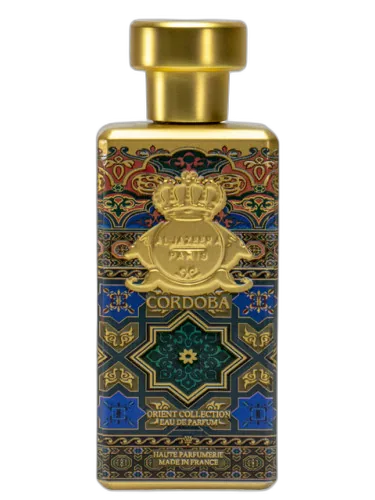
Al-Jazeera Perfumes
Cordoba Al-jazeera Perfumes
Shared top notes: ambergris, sandalwood, vanilla

UERMI
Ab ± Cashmere Uermi
Shared top notes: ambergris, olibanum, sandalwood

Elegantes
Royal Vetiver Elegantes
Shared top notes: pink pepper