
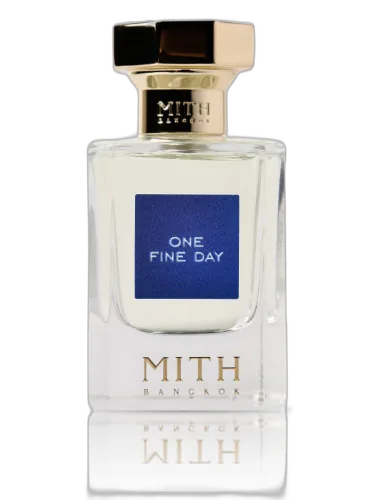

One Fine Day Mith
At a glance
Is One Fine Day Mith worth trying?
One Fine Day by Mith is a fragrance for women and men.
- Best match
- Casual wear in Fall
- Performance feel
- Good longevity with Moderate sillage
- Signature profile
- fresh, tropical, fruity with Pitahaya, Ice, Bergamot
The first impression
One Fine Day by Mith is a fragrance for women and men. Top notes are Pitahaya, Ice and Bergamot; middle note is White Tea; base notes are Cedar, Musk and Sandalwood.
What shapes the scent
The perfumer behind it

Unknown Perfumer
Notes pyramid
Top Notes
First impression · 15-30 min
 Pitahaya
 Ice
Ice
 Bergamot
Heart Notes
Core character · 2-4 hours
 White Tea
Base Notes
Lasting impression · 4+ hours
 Cedar
Cedar
 Musk
Musk
 Sandalwood
The mood it creates
The Archetype Archetype: Portrait of One Fine Day Mith
Essence
The fragrance One Fine Day Mith-soft, introspective, with whispers of spice and warmth-belongs to one who is neither fully here nor there, always in pursuit of something just beyond reach. This person is the Seeker, the wanderer of the soul’s landscape, driven by curiosity and a quiet discontent with the mundane. They do not crave chaos, but they cannot settle for stagnation. Their life is a pilgrimage toward meaning, and their scent-subtle yet lingering-mirrors this journey.
Shadow
Yet the Seeker’s virtue is also their vice. Their constant searching can become evasion-a way to avoid commitment, to flee before anything becomes too familiar. They mistake motion for progress, and their idealism can sour into disillusionment when reality fails to match their vision.
Their independence, so carefully cultivated, can harden into isolation. They may dismiss others as shallow, not realizing that depth is sometimes found in the ordinary. Their fear of stagnation can make them impatient with those who are content with simplicity. And in their quest for meaning, they may overlook the meaning already present in the moment.
Conclusion
Their tastes are refined but never ostentatious. They prefer the understated elegance of raw linen, unpolished wood, and the muted tones of dusk. Their home is a sanctuary of books, half-finished sketches, and objects collected from travels-each carrying a memory, a story. They drink tea slowly, savoring the ritual, and their music is the kind that demands attention rather than filling silence.
Philosophy is not an abstract exercise for them; it is lived. They question everything, not out of cynicism, but because they believe truth must be earned. They value authenticity above all else, and their relationships are few but deep. They do not suffer fools, yet they are patient with those who share their hunger for understanding.
If you like this, try these
Fragrances with a comparable profile - shared accords, notes, and character.
Holynose Parfums
Нейлон Nylon Holynose Parfums
Shared heart notes: white tea
Charriol
Young For Ever Charriol
Shared top notes: bergamot

Heidi Klum
Shine Blue Heidi Klum
Shared top notes: bergamot

Nautica
Nautica Blue Nautica
Shared top notes: bergamot
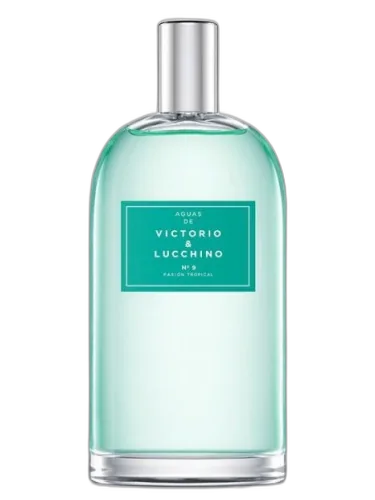
Victorio & Lucchino
Nº 9 Passion Tropical Victorio & Lucchino
Shared top notes: bergamot