
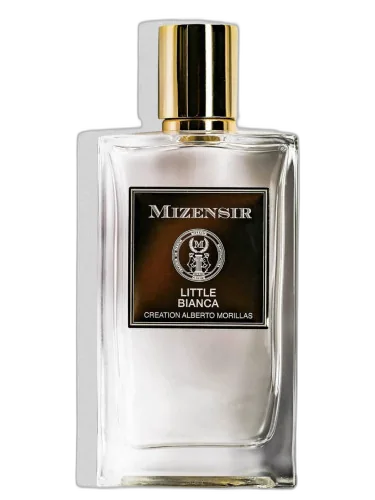

Little Bianca Mizensir
At a glance
Is Little Bianca Mizensir worth trying?
Little Bianca by Mizensir is a fragrance for women and men.
- Best match
- Evening wear in Spring
- Performance feel
- Good longevity with Moderate sillage
- Signature profile
- citrus, aromatic, woody with Bergamot, Mandarin Orange, Bulgarian Rose
The first impression
Little Bianca by Mizensir is a fragrance for women and men. Little Bianca was launched in 2016. The nose behind this fragrance is Alberto Morillas. Top notes are Bergamot and Mandarin Orange; middle note is Bulgarian Rose; base note is Vetiver.
What shapes the scent
The perfumer behind it

Alberto Morillas
Alberto Morillas is a master perfumer based in Geneva, Switzerland, and a longtime collaborator with Firmenich. His style is known for refined, luminous compositions that balance natural elegance with modern clarity. He created the bold leather and spice of Amouage Opus VII - Reckless Leather, the fresh citrus depth of Acqua di Parma Colonia Intensa, and the woody warmth of Aedes de Venustas Palissandre D'or. His work has shaped contemporary perfumery across both niche and luxury houses.
Notes pyramid
Top Notes
First impression · 15-30 min
 Bergamot
 Mandarin Orange
Heart Notes
Core character · 2-4 hours
 Bulgarian Rose
Base Notes
Lasting impression · 4+ hours
 Vetiver
The mood it creates
The Lover Archetype: Portrait of Little Bianca Mizensir
Essence
To wear Little Bianca by Mizensir is to embrace an olfactory paradox-soft yet enduring, delicate yet unignorable. This fragrance, with its whispers of white flowers, vanilla, and musk, is not for those who seek to dominate a room with brute force, but for those who draw others in with an almost magnetic allure. The person who chooses this scent is, at their core, an embodiment of The Lover archetype-one who finds meaning in beauty, connection, and the sensual pleasures of existence.
Style & Aesthetic
This is a person for whom life is not merely lived but felt. Their surroundings are curated with an instinctive eye for harmony-a home where textures, colors, and scents are chosen not for trend but for resonance. They might favor linen drapes that catch the light just so, or a single stem of peony in a slender vase, placed where its presence can be fully appreciated. Their wardrobe is understated but intentional: fabrics that move with the body, cuts that flatter without straining for attention.
Their philosophy is one of sensual wisdom-they understand that the body is not merely a vessel but an instrument of perception. They savor the warmth of sunlight on skin, the slow pleasure of a perfectly brewed tea, the way certain music seems to vibrate in the chest. For them, beauty is not frivolous; it is a necessity, a way of honoring the fleeting nature of existence.
Shadow
Yet, like all archetypes, The Lover has their darkness. Their sensitivity, while a gift, can also be a wound. They are prone to periods of luxurious despair-moments where beauty is not enough, where the ephemeral nature of their joys becomes a source of sorrow. They may, at times, retreat into a self-created world of aesthetic perfection, using it as a shield against life’s harsher edges.
There is also the risk of passive seduction-not in the crude sense, but in the way they may unconsciously draw others into orbits of unspoken expectation. They inspire devotion easily, but they do not always know what to do with it. Their charm can become a reflex rather than a genuine exchange, leaving admirers feeling vaguely unfulfilled.
Conclusion
The Lover’s greatest strength is their ability to make others feel seen. They listen with an intensity that is rare, their attention undivided, their responses attuned to the subtleties of emotion. In relationships, they are neither possessive nor indifferent-they cherish intimacy but understand its fragility. Their love is not a cage but an invitation.
They are drawn to art that stirs something wordless within them-poetry that lingers like perfume, paintings that seem to breathe. Their taste in literature leans toward the lyrical, the introspective, the works that explore the intersections of desire and melancholy. They might adore Rilke’s Letters to a Young Poet or the films of Wong Kar-wai, where longing is rendered in saturated hues.
If you like this, try these
Fragrances with a comparable profile - shared accords, notes, and character.

Perroy
Ivorysky Perroy
Shared top notes: bergamot
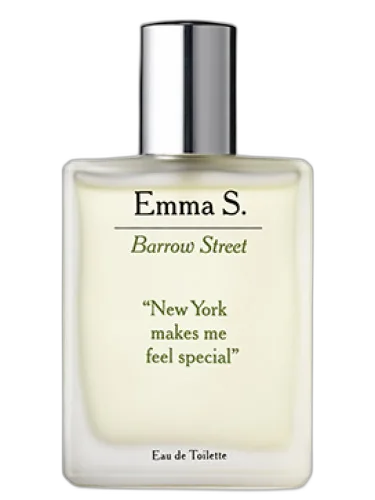
Emma S.
Barrow Street Emma S.
Shared top notes: bergamot, mandarin orange
Giorgio Armani
Vétiver D'hiver (vetiver Babylone) Giorgio Armani
Shared top notes: bergamot, mandarin orange

Floraïku
Cricket Song Floraïku
Shared top notes: bergamot
Charme Essência
Vetiver Pour Moi Charme Essência
Shared top notes: bergamot