


Tubereuse Mona Di Orio
At a glance
Is Tubereuse Mona Di Orio worth trying?
Tubereuse by Mona di Orio is a Oriental Floral fragrance for women and men.
- Best match
- Evening wear in Spring, Summer
- Performance feel
- Good longevity with Moderate sillage
- Signature profile
- tuberose, white floral, powdery with Pink Pepper, Bergamot, Indian Tuberose
The first impression
Tubereuse by Mona di Orio is a Oriental Floral fragrance for women and men. Tubereuse was launched in 2011. The nose behind this fragrance is Mona di Orio. Top notes are Pink Pepper and Bergamot; middle notes are Indian Tuberose and Heliotrope; base notes are Cashmeran and Benzoin.
What shapes the scent
The perfumer behind it

Mona di Orio
Mona di Orio was a French perfumer known for her eponymous brand, which includes Ambre, Amyitis, Carnation, Cuir, Eau Absolue, Lux, Musc, and Nuit Noire. Her style blended classical French perfumery with bold, artistic interpretations of raw materials. She focused on rich, complex compositions that highlighted the beauty of natural ingredients.
Notes pyramid
Top Notes
First impression · 15-30 min
 Pink Pepper
 Bergamot
Heart Notes
Core character · 2-4 hours
Indian Tuberose
 Heliotrope
Base Notes
Lasting impression · 4+ hours
 Cashmeran
 Benzoin
The mood it creates
The Mystic Archetype: Portrait of Tubereuse Mona Di Orio
Essence
The Mystic seeks the divine in the earthly, the infinite in the finite. Tubereuse embodies this archetype through a flower that is both carnal and ethereal. The perfume opens with a spark of pink pepper and bergamot, a sharp inhalation before the plunge. Then comes the tuberose, not as a simple white flower but as a vision: creamy, intoxicating, almost overwhelming. Heliotrope adds a powdery, almond-like softness, while cashmeran and benzoin ground the experience in a warm, ambered darkness. This is a scent of trance and transcendence, a prayer made flesh.
Style & Aesthetic
The Mystic's style is one of intentional simplicity and spiritual resonance. They favor natural fibers: linen, cotton, wool, often in neutral or earth tones. Their clothing is loose and flowing, allowing the body to move freely. They might wear a single, meaningful piece of jewelry: a stone, a talisman, a simple band. Their aesthetic is not about fashion but about alignment. They are drawn to objects that carry history or energy: a worn prayer rug, a hand-thrown ceramic bowl, a book of poetry. Their presence is calm, centered, and quietly magnetic.
Philosophy & Values
The Mystic values presence, surrender, and the wisdom of the body. They believe that the sacred is not found in temples but in the ordinary: in breath, in touch, in the scent of a flower. They are drawn to practices that dissolve the ego: meditation, dance, chanting, deep immersion in nature. Their core belief is that separation is an illusion, that all is one. They seek not to acquire but to experience, not to understand but to be. They trust the intelligence of the heart and the wisdom of the senses.
Relationships
In relationships, the Mystic is a mirror and a sanctuary. They are deeply present, able to hold space for others without needing to fix or change them. They are drawn to those who are on their own spiritual path, who understand the value of silence and solitude. They are not possessive; their love is expansive, like the sky. They can be elusive, needing long periods of solitude to recharge. Their intimacy is not about words but about shared presence: a walk in the woods, a long gaze, a moment of wordless understanding.
Lifestyle
The Mystic's life is a series of sacred rituals. They might wake before dawn to meditate, or spend an hour in the garden tending to plants. They practice yoga or tai chi, moving with conscious breath. They eat simply, often vegetarian, and prepare their food with intention. They are drawn to water: baths, rivers, the sea. They might keep a journal of dreams or synchronicities. Their home is a quiet space, free of clutter, with an altar of meaningful objects. They seek to infuse every action, no matter how small, with awareness and gratitude.
Shadow
The Mystic's shadow is the danger of spiritual bypassing. They may use their practices to avoid the messiness of life, retreating into a blissful detachment that is really a form of disconnection. Their search for transcendence can lead them to neglect the body, the material world, and their own shadow. They may become dogmatic in their spirituality, judging those who are not on the same path. The shadow of the Mystic is the one who seeks the light so fervently they forget that the path to enlightenment runs through the darkness of the human heart.
Conclusion
Tubereuse is the scent of the Mystic who has found the sacred in the sensual. It is a perfume that does not deny the body but uses it as a vehicle for the spirit. The tuberose, with its heady, almost narcotic beauty, is a reminder that ecstasy is a path to the divine. To wear it is to embrace the paradox of the flesh and the spirit, to know that the most profound mysteries are often whispered in the language of scent, touch, and breath.
If you like this, try these
Fragrances with a comparable profile - shared accords, notes, and character.
The Naxos Apothecary
Yria The Naxos Apothecary
Shared top notes: bergamot, pink pepper

A Wing & A Prayer Perfumes
Bronte Perfume A Wing & A Prayer Perfumes
Shared top notes: bergamot, pink pepper
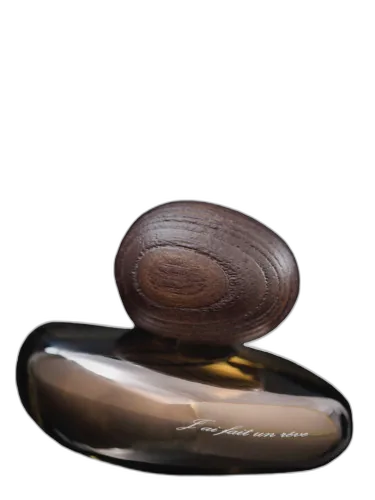
Majda Bekkali
J'ai Fait Un Rêve Obscur Majda Bekkali
Shared top notes: bergamot, pink pepper

Giorgio Armani
Ikat Bleu Giorgio Armani
Shared top notes: bergamot, pink pepper

O Boticário
Secret Blooming O Boticário
Shared top notes: bergamot, pink pepper