

Vermilion Wood Mona Di Orio
At a glance
Is Vermilion Wood Mona Di Orio worth trying?
Vermilion Wood by Mona di Orio is a Woody fragrance for women and men.
- Best match
- Evening wear in Fall
- Performance feel
- Very Good longevity with Strong sillage
- Signature profile
- fruity, fresh spicy, woody with Geranium, Dried Plum, Laotian Oud
The first impression
Vermilion Wood by Mona di Orio is a Woody fragrance for women and men. Vermilion Wood was launched in 2019. The nose behind this fragrance is Fredrik Dalman.
What shapes the scent
The perfumer behind it

Fredrik Dalman
Fredrik Dalman is a Swedish perfumer who has collaborated with the house of Mona di Orio. He has crafted a variety of scents including Bohea Bohème, Café Simien, and Mellifera. Dalman's work is characterized by a focus on natural ingredients and complex, artistic compositions.
Notes pyramid
All Notes
Complete scent profile
 Geranium
Dried Plum
Geranium
Dried Plum
 Laotian Oud
 Pomegranate
 Opoponax
The mood it creates
The Alchemist Archetype: Portrait of Vermilion Wood Mona Di Orio
Essence
To wear Vermilion Wood by Mona di Orio is to embrace a paradox-an opulent warmth that never surrenders to excess, a sensuality that remains refined. The fragrance itself is a study in contrasts: smoky woods laced with saffron, leather softened by vanilla, a richness that never veers into decadence. The person who chooses this scent is not merely selecting a perfume; they are declaring an allegiance to transformation, to the alchemical marriage of shadow and light.
This individual is, above all, an Alchemist-one who seeks to transmute the raw materials of existence into something finer, more meaningful. They are drawn to depth, to the hidden structures beneath surfaces, and they possess an innate understanding that beauty is not merely aesthetic but philosophical. Like the alchemists of old, they are both mystic and scientist, believing that the mundane can be elevated into the extraordinary.
Style & Aesthetic
Their taste is deliberate, never accidental. They favor textures that suggest history-worn leather, aged brass, linen softened by time. Their wardrobe is a curated archive of timeless pieces: a well-tailored blazer, a vintage watch, boots that have weathered years of use. They appreciate craftsmanship, but not ostentation; their luxury is understated, almost secretive.
In art and music, they are drawn to the baroque complexity of Bach, the haunting minimalism of Arvo Pärt, or the layered symbolism of Renaissance paintings. They prefer films and literature that demand interpretation-Tarkovsky’s slow meditations, Borges’ labyrinths, the dense prose of Hermann Broch.
Their daily life is a ritual. Mornings might begin with black coffee and Nietzsche, evenings with a single malt and jazz. They keep a journal, not for recording events, but for dissecting them-every experience must be metabolized into meaning. They travel not for escapism but for alchemy, seeking places thick with history or mystique: Kyoto’s temples, Marrakech’s spice markets, the misty highlands of Scotland.
Yet their discipline can tip into rigidity. The Alchemist, in their quest for perfection, may forget how to be spontaneous. They might mistake control for wisdom, refusing to surrender to chaos even when it is necessary for growth.
Philosophy & Values
Their worldview is one of synthesis-they reject binary thinking, preferring instead to dwell in the liminal spaces between opposites. They might admire Nietzsche’s amor fati, the love of fate, seeing life as a crucible in which suffering and joy are both necessary for refinement. They value wisdom over knowledge, experience over dogma, and authenticity over conformity.
Yet this very idealism can become their shadow. The Alchemist, in their relentless pursuit of transformation, may grow impatient with those who resist change. They might secretly disdain the unexamined life, viewing others as unrefined ore, failing to recognize that not everyone seeks-or needs-their kind of metamorphosis.
Relationships
They are not a person of casual connections. Their friendships are few but profound, built on mutual intellectual and emotional excavation. They disdain small talk, preferring conversations that spiral into philosophy, psychology, or the occult. Romantic partners must be their equal in curiosity, capable of matching their intensity without being consumed by it.
Yet here, too, the shadow lurks. Their exacting standards can make them seem distant, even elitist. They may withdraw when others fail to meet their depth, isolating themselves in a self-made ivory tower. Their love, though fierce, can be conditional-they expect others to evolve alongside them, and when they don’t, disillusionment sets in.
Shadow
The greatest danger for this individual is the belief that they alone possess the philosopher’s stone-that their way of seeing is superior. They may grow frustrated with the world’s refusal to transform at their pace, becoming cynical or withdrawn. Their brilliance, if unchecked, can curdle into condescension.
But when balanced, the Alchemist is a force of quiet revolution. They do not shout their truths; they embody them. Their presence alone suggests that life is richer, deeper, more mysterious than it appears. And in their finest moments, they remind others that even the basest elements can be turned to gold.
If you like this, try these
Fragrances with a comparable profile - shared accords, notes, and character.
Who is Elijah
Wall Street Who Is Elijah
Shared top notes: geranium

Gaia Parfums
Ruh Al Sultan Gaia Parfums
Shared top notes: laotian oud, opoponax

EXTRAitORDINAIRE by Createur 5 D’Emotions
Mi'raj Extraitordinaire By Createur 5 D’emotions
Shared accords: amber, aromatic, balsamic
Avon
U By Ungaro For Him Avon
Shared top notes: pomegranate
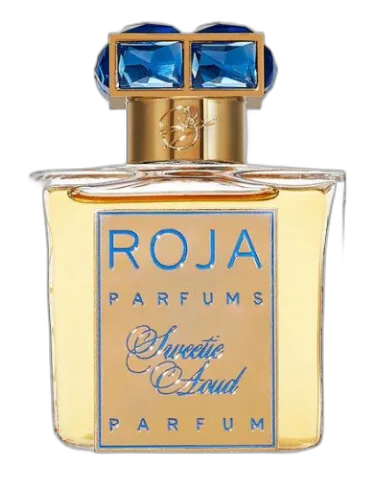
Roja Dove
Sweetie Aoud Roja Dove
Shared accords: amber, aromatic, balsamic