
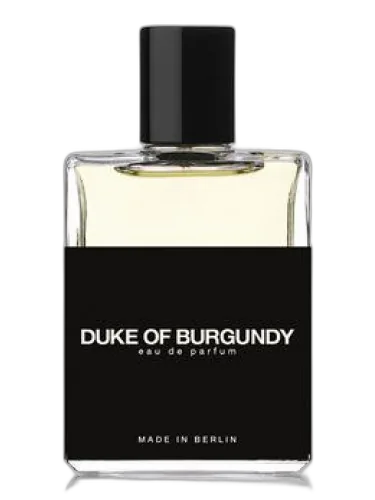

Duke Of Burgundy Moth And Rabbit Perfumes
At a glance
Is Duke Of Burgundy Moth And Rabbit Perfumes worth trying?
Duke of Burgundy by Moth and Rabbit Perfumes is a fragrance for women and men.
- Best match
- Evening wear in Fall
- Performance feel
- Good longevity with Moderate sillage
- Signature profile
- musky, powdery, animalic with Peach, Davana, Angelica
The first impression
Duke of Burgundy by Moth and Rabbit Perfumes is a fragrance for women and men. The nose behind this fragrance is Mark Buxton. Top notes are Peach, Davana, Angelica, Green Notes and Freesia; middle notes are Skin, Leather, Osmanthus, Jasmine and Cereals; base notes are Musk, Varnish Accord, Animal notes, Amber, Sandalwood, Heliotrope and Virginia Cedar.
What shapes the scent
The perfumer behind it

Mark Buxton
Mark Buxton is a renowned perfumer whose creations include Dead Air for .Oddity, Elixir De Bombe for 27 87, and Orchid Vanilla for 4711. His diverse portfolio spans avant-garde, woody, and floral scents for both niche and classic brands. He is celebrated for his innovative and unconventional style.
Notes pyramid
Top Notes
First impression · 15-30 min
 Peach
Peach
 Davana
 Angelica
 Green Notes
 Freesia
Heart Notes
Core character · 2-4 hours
 Skin
Skin
 Leather
 Osmanthus
 Jasmine
 Cereals
Base Notes
Lasting impression · 4+ hours
 Musk
Musk
 Varnish Accord
 Animal notes
 Amber
Amber
 Sandalwood
 Heliotrope
 Virginia Cedar
The mood it creates
The Duke Of Burgundy Moth And Archetype: Portrait of Duke Of Burgundy Moth And Rabbit Perfumes
Essence
This person is most closely aligned with the Sage-a seeker of wisdom, drawn to the hidden meanings of nature and the quiet revelations of the senses. The Duke of Burgundy Moth and Rabbit fragrance, with its earthy, mysterious, and subtly animalic notes, appeals to their contemplative spirit. They are not merely a passive observer of life but an interpreter, one who deciphers the world through intuition and quiet study.
Style & Aesthetic
Their appearance is understated yet deliberate-linen, wool, muted tones that suggest an affinity for the organic. They favor textures that age beautifully, as if their very clothing should tell a story over time. There is something timeless about them, as though they belong to no single era but drift between them, collecting fragments of beauty.
They are drawn to objects with history-antique books, dried botanicals, inkwells, and handwritten letters. Their home is a sanctuary of curiosities, a place where the past and present blur.
They rise early, not out of obligation but because dawn is when the world feels most alive to them. They may keep a journal, not for recording events but for tracing thoughts-like a naturalist cataloging species. They walk often, not for exercise but to notice: the way moss grows on stone, the scent of rain before it falls.
Their work, if they must have conventional employment, is something that allows for autonomy-writing, research, art, or conservation. Routine suffocates them; they thrive when given space to wander, mentally or physically.
Philosophy & Values
They believe in the unseen threads that connect all things-the way a moth is drawn to moonlight, the way scent lingers in memory. Their philosophy is not dogmatic but fluid, shaped by curiosity rather than rigid doctrine. They value knowledge, but not the sterile kind found in textbooks; they seek the kind that hums beneath the surface-myth, folklore, the secret life of plants and creatures.
Yet, their wisdom is not without its shadow. They can become lost in abstraction, mistaking contemplation for action. At times, they withdraw too deeply into their own mind, forgetting that some truths are only found in engagement with the world.
Relationships
They are not gregarious, but neither are they entirely solitary. Their relationships are few but profound, built on shared silences as much as conversation. They attract those who sense their depth, who are unafraid of the quiet spaces between words.
Yet, their introspective nature can make them elusive. Partners or friends may feel they are loved from a distance, that the Sage’s mind is always half-elsewhere, chasing some unseen truth. Their shadow is a tendency toward emotional detachment, mistaking solitude for wisdom when, at times, it is merely avoidance.
Shadow
The Sage’s greatest weakness is the illusion of self-sufficiency. They may convince themselves that they need no one, that their inner world is enough. But wisdom untested by human connection grows brittle. Their challenge is to step out of the library of their mind and into the messy, unpredictable world-to learn that some truths are only found in the eyes of another.
Conclusion
The Duke of Burgundy Moth and Rabbit is not a scent for those who seek to dominate a room. It is for those who listen more than they speak, who find meaning in the margins. This person is not a conqueror but a witness, a keeper of quiet truths. Their life is not loud, but it is deep-like roots beneath the earth, unseen but essential.
And yet, they must remember: even the most solitary moth is drawn to light.
If you like this, try these
Fragrances with a comparable profile - shared accords, notes, and character.

Andy Warhol
Andy Warhol Andy Warhol
Shared top notes: green notes, peach
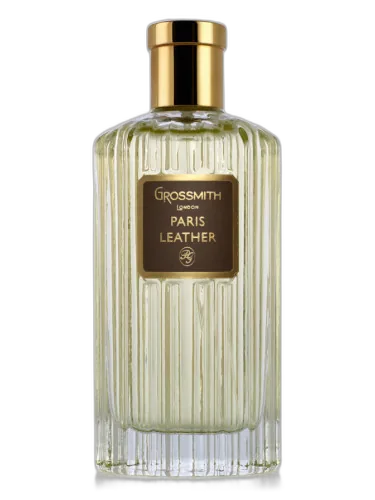
Grossmith
Paris Leather Grossmith
Shared heart notes: jasmine, leather
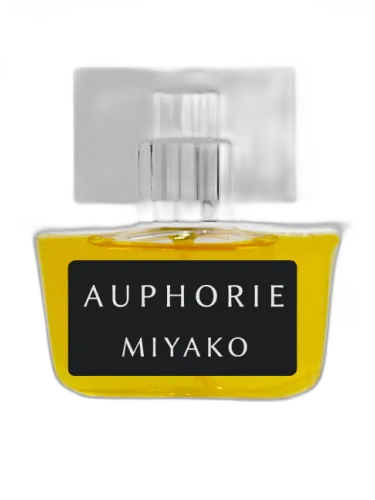
Auphorie
Miyako Auphorie
Shared top notes: peach
LINK
White Woods Link
Shared top notes: green notes
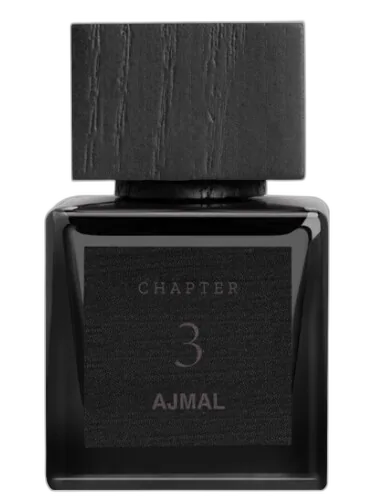
Ajmal
Chapter 3 Ajmal
Shared top notes: green notes, peach