
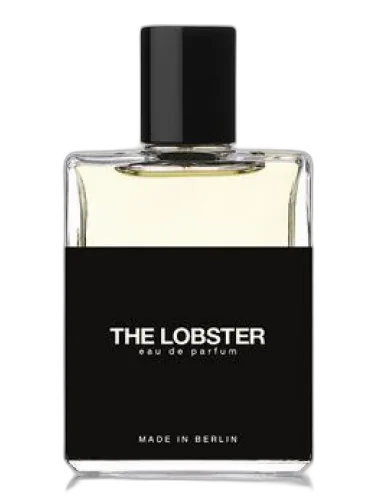

The Lobster Moth And Rabbit Perfumes
At a glance
Is The Lobster Moth And Rabbit Perfumes worth trying?
The Lobster by Moth and Rabbit Perfumes is a fragrance for women and men.
- Best match
- Casual wear in Spring
- Performance feel
- Moderate longevity with Moderate sillage
- Signature profile
- earthy, green, aquatic with Green Notes, Cypriol Oil or Nagarmotha, Lily-of-the-Valley
The first impression
The Lobster by Moth and Rabbit Perfumes is a fragrance for women and men. The nose behind this fragrance is Mark Buxton. Top notes are Green Notes, Cypriol Oil or Nagarmotha and Lily-of-the-Valley; middle notes are Green Leaves, Water Notes and Cedar; base notes are Earthy Notes, Moss, Arnica, Myrrh, Fenugreek and Animal notes.
What shapes the scent
The perfumer behind it

Mark Buxton
Mark Buxton is a renowned perfumer whose creations include Dead Air for .Oddity, Elixir De Bombe for 27 87, and Orchid Vanilla for 4711. His diverse portfolio spans avant-garde, woody, and floral scents for both niche and classic brands. He is celebrated for his innovative and unconventional style.
Notes pyramid
Top Notes
First impression · 15-30 min
 Green Notes
 Cypriol Oil or Nagarmotha
 Lily-of-the-Valley
Heart Notes
Core character · 2-4 hours
 Green Leaves
Water Notes
Green Leaves
Water Notes
 Cedar
Cedar
Base Notes
Lasting impression · 4+ hours
 Earthy Notes
Moss
Earthy Notes
Moss
 Arnica
 Myrrh
Myrrh
 Fenugreek
 Animal notes
The mood it creates
The Wanderer Archetype: Portrait of The Lobster Moth And Rabbit Perfumes
Essence
The Lobster embodies the Wanderer archetype: the one who drifts between worlds, finding beauty in the liminal and the overlooked. This fragrance is a walk along a misty shore, where land meets sea and the familiar becomes strange. The top notes of green notes, cypriol oil, and lily-of-the-valley are a damp, earthy opening, like the scent of crushed leaves and morning dew. The heart of green leaves, water notes, and cedar is a journey through a coastal forest, where the air is thick with salt and moss. The base of earthy notes, moss, arnica, myrrh, fenugreek, and animal notes is a deep, primal grounding, the scent of the earth itself.
Style & Aesthetic
The Wanderer’s style is eclectic and organic, favoring textures that feel natural and lived-in. They wear linen, wool, and leather, often in muted, earthy tones like moss green, slate grey, and driftwood brown. Their aesthetic is one of quiet beauty, drawn to the imperfect and the weathered. They might wear a coat with patched elbows, a scarf that smells of woodsmoke, or boots caked with mud. Their look is a story of places they have been, not a statement of fashion.
Philosophy & Values
The Wanderer values solitude, observation, and the wisdom of the natural world. They believe that meaning is found in the journey, not the destination, and that the most profound truths are often whispered in quiet places. Their philosophy is one of acceptance: they do not seek to conquer or change the world, but to move through it with reverence. They are drawn to the cycles of nature, the turning of the seasons, the ebb and flow of tides. For them, life is a slow, deliberate walk.
Relationships
In relationships, the Wanderer is gentle and elusive. They value deep, quiet connections over loud, crowded ones. They are good listeners, often more comfortable observing than speaking. Their friendships are built on shared silences and long walks, not constant conversation. In romance, they seek a companion for their journey, someone who understands their need for space and solitude. They are not possessive; they trust that those who are meant to stay will find their way back. Their love is a steady, quiet presence.
Lifestyle
The Wanderer’s life is one of simplicity and ritual. They might live in a small, cozy home near the water or the woods, with a garden and a stack of books. Their days are filled with slow, mindful activities: foraging, cooking simple meals, writing in a journal, or watching the clouds. They are early risers, enjoying the stillness of dawn. They travel lightly, both in possessions and in spirit, always ready to follow a new path. Their greatest luxury is time to wander.
Shadow
The Wanderer’s shadow is a tendency toward detachment and avoidance of commitment. They may use their love of solitude to hide from intimacy or responsibility. The damp, earthy scent of The Lobster can become isolating if the Wanderer drifts too far from human connection. Their challenge is to find a balance between the freedom of the open road and the warmth of a hearth. They must learn that wandering is not just about leaving, but also about returning, and that roots can be as beautiful as wings.
Conclusion
The Lobster is a portrait of the Wanderer: quiet, observant, and deeply connected to the earth. It is a fragrance for those who find solace in the in-between spaces, who listen to the whisper of the wind and the murmur of the tide. Like the Wanderer, it is a scent of gentle mystery and profound presence. To wear it is to step into a world of slow beauty, where every step is a meditation and every breath is a story.
If you like this, try these
Fragrances with a comparable profile - shared accords, notes, and character.

Wild Drops Parfums
Dirty Forest Wild Drops Parfums
Shared top notes: green notes
Новая Заря (The New Dawn)
Слава (slava) Новая Заря (the New Dawn)
Shared top notes: green notes, lily-of-the-valley

Monsoon
Monsoon (original) Monsoon
Shared top notes: green notes

Wilhelm Perfume
Das Rhein Rauschen Wilhelm Perfume
Shared top notes: green notes

Cartier
Pur Muguet Cartier
Shared top notes: green notes, lily-of-the-valley