
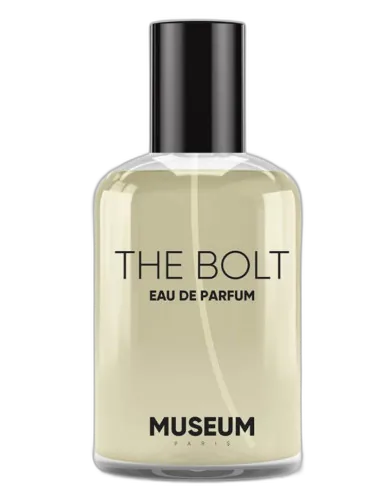

Museum The Bolt Museum Parfums
At a glance
Is Museum The Bolt Museum Parfums worth trying?
Museum The Bolt by Museum Parfums is a Floral Fruity fragrance for women and men.
- Best match
- Evening wear in Fall
- Performance feel
- Very Good longevity with Strong sillage
- Signature profile
- citrus, aromatic, woody with Bergamot, Sicilian Lemon, Grapefruit
The first impression
Museum The Bolt by Museum Parfums is a Floral Fruity fragrance for women and men. Museum The Bolt was launched in 2019. Top notes are Bergamot, Sicilian Lemon, Grapefruit, Peppertree, Litchi, Peach and Mint; middle notes are Lemon Verbena, Vetiver, Magnolia, Peony, Jasmine, Orange Blossom, Lavender and Patchouli; base notes are Musk, Oakmoss, Woody Notes, White Cedar Extract, Saffron and Agarwood (Oud).
What shapes the scent
The perfumer behind it

Unknown Perfumer
Notes pyramid
Top Notes
First impression · 15-30 min
 Bergamot
 Sicilian Lemon
 Grapefruit
 Peppertree
 Litchi
 Peach
Peach
 Mint
Mint
Heart Notes
Core character · 2-4 hours
 Lemon Verbena
 Vetiver
 Magnolia
 Peony
Peony
 Jasmine
 Orange Blossom
 Lavender
 Patchouli
Base Notes
Lasting impression · 4+ hours
 Musk
Musk
 Oakmoss
 Woody Notes
White Cedar Extract
Woody Notes
White Cedar Extract
 Saffron
 Agarwood (Oud)
The mood it creates
The Alchemist Archetype: Portrait of Museum The Bolt Museum Parfums
Essence
This person is most closely aligned with the Alchemist archetype-a seeker of transformation, drawn to the mysterious interplay of intellect and intuition. Like the alchemists of old, they are fascinated by the hidden connections between art, science, and the sublime. Museum The Bolt, with its metallic sharpness and enigmatic depth, mirrors their essence: a fusion of precision and poetry, structure and spontaneity.
They are not content with surface impressions; they crave the alchemy of meaning. Their mind is a crucible where ideas are refined, where the mundane is transmuted into something extraordinary. The fragrance’s bold, industrial elegance speaks to their love of paradox-how can something so cold (metallic, mineral) also feel so alive? This tension defines them.
Style & Aesthetic
Their style is deliberate, a curated blend of avant-garde and timelessness. They favor architectural silhouettes-structured blazers, asymmetrical cuts, monochrome palettes with sudden flashes of deep color. Their wardrobe is not about trends but about statements; each piece is chosen for its ability to provoke thought.
They are drawn to spaces that blur the line between art and function-modernist lofts, Brutalist galleries, dimly lit bookshops where philosophy and fiction intermingle. Their home is a sanctuary of contrasts: raw concrete softened by velvet, a sleek steel desk cluttered with handwritten notes. They collect objects not for their monetary value but for their symbolic weight-an antique compass, a fragment of meteorite, a first edition of a surrealist manifesto.
Their taste in art leans toward the cerebral yet visceral-Kandinsky’s abstractions, the stark geometries of Malevich, the haunting installations of Anselm Kiefer. Music is an intellectual experience as much as an emotional one: post-rock soundscapes, avant-garde jazz, the disquieting beauty of Arvo Pärt.
Philosophy & Values
They believe in the transformative power of ideas. Truth is not static but something forged in the friction of debate, in the alchemical process of questioning. They are not dogmatic but fiercely curious, willing to dismantle their own beliefs if a better argument emerges.
In relationships, they seek intensity-not melodrama, but depth. Superficial connections bore them; they crave conversations that spiral into the metaphysical, that leave both parties slightly altered. Their love language is intellectual sparring, the exchange of books with underlined passages, the shared silence of mutual understanding.
Yet, their standards are exacting. They despise complacency, and this can make them impatient with those who do not share their hunger for meaning. Their friendships are few but profound, built on mutual respect for each other’s minds. Romantic partners must be both muse and equal-someone who can match their intellectual fervor without being intimidated by it.
Shadow
For all their brilliance, they are not without flaws. Their relentless pursuit of transformation can tip into restlessness-an inability to be satisfied with the present. They may disdain the ordinary to the point of alienation, forgetting that wisdom is also found in simplicity.
Their idealism can harden into elitism. They may dismiss those who do not "get it," mistaking their own esoteric tastes for universal truths. At their worst, they become the solitary sage on the mountaintop, brilliant but isolated, mistaking solitude for superiority.
And then there is the danger of the unfinished experiment. The Alchemist is always in flux, always refining, but this can lead to paralysis-an endless cycle of becoming without ever arriving. They may fear commitment, not out of cowardice but out of a terror of stagnation.
Conclusion
Yet, when balanced, they are extraordinary. They remind us that life is not fixed but fluid, that identity is not a statue but a sculpture in progress. Their presence is magnetic because they embody possibility-the sense that reality is richer, stranger, and more malleable than we assume.
Museum The Bolt is their scent because it, too, defies easy categorization. It is not warm, not cold, but something beyond binaries-an olfactory paradox that lingers in the mind long after the first encounter. Just as the fragrance leaves an indelible impression, so too does this person: a thinker, a seeker, an alchemist of the self.
They do not merely wear a fragrance-they inhabit it, as they inhabit their own evolving myth.
If you like this, try these
Fragrances with a comparable profile - shared accords, notes, and character.
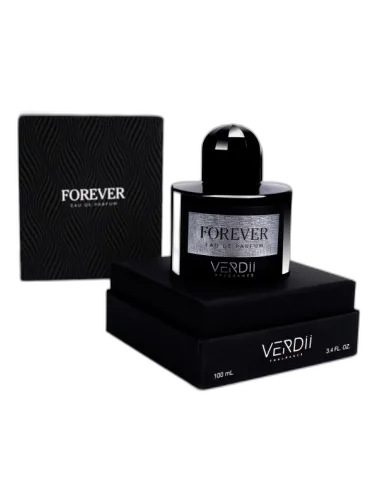
Verdii Fragrance
Forever Verdii Fragrance
Shared top notes: bergamot, litchi, peach

Scents of Man
Sky Hill Scents Of Man
Shared top notes: bergamot, grapefruit

Bruno Acampora
Mentuccia Romana – Eau De Parfum Bruno Acampora
Shared top notes: bergamot
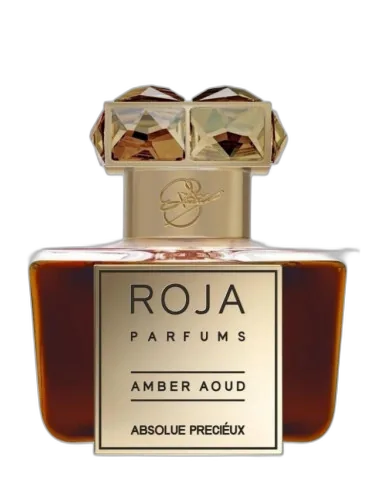
Roja Dove
Amber Aoud Absolue Precieux Roja Dove
Shared top notes: bergamot

First Edition
One Day One Night First Edition
Shared top notes: bergamot, litchi