
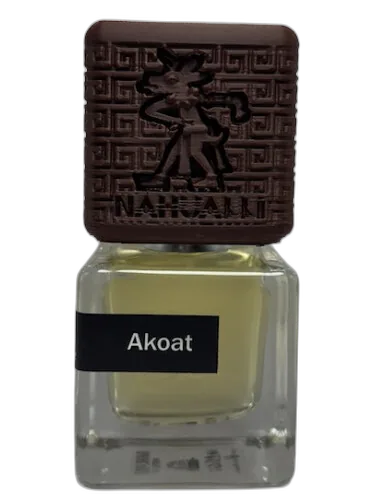

Akoat Nahualli
At a glance
Is Akoat Nahualli worth trying?
Akoat by Nahualli is a fragrance for women and men.
- Best match
- Evening wear in Fall
- Performance feel
- Very Good longevity with Strong sillage
- Signature profile
- lavender, sweet, fruity with Lavender, Wild Strawberry, Lemon
The first impression
Akoat by Nahualli is a fragrance for women and men. This is a new fragrance. Akoat was launched in 2024. Akoat was created by Manuel Alejandro Bojorquez Segovia and Israel Moreno. Top notes are Lavender, Wild Strawberry, Lemon, Bergamot, Mandarin and Green Apple; middle notes are Sweet Notes, Jasmine, Lemon and Red Fruits; base notes are Cardamom, Sandalwood, Sugar, Biscuit, Lemon, Condensed Milk, Strawberry and Vanilla.
What shapes the scent
The perfumer behind it

Israel Moreno
Israel Moreno is a Mexican perfumer and founder of Nahualli. His creations include Akoat, Black Mikki, and Charro Negro, often drawing on Mexican cultural and natural themes. His style is bold and dark with rich resinous and woody notes.
Notes pyramid
Top Notes
First impression · 15-30 min
 Lavender
 Wild Strawberry
 Lemon
Lemon
 Bergamot
 Mandarin
Green Apple
Mandarin
Green Apple
Heart Notes
Core character · 2-4 hours
Sweet Notes
 Jasmine
Lemon
Jasmine
Lemon
 Red Fruits
Base Notes
Lasting impression · 4+ hours
 Cardamom
 Sandalwood
 Sugar
Sugar
 Biscuit
Lemon
Biscuit
Lemon
 Condensed Milk
 Strawberry
 Vanilla
The mood it creates
The Archetype Archetype: Portrait of Akoat Nahualli
Essence
To wear Akoat Nahualli is to embrace duality-the scent itself is a paradox of smoke and earth, fire and shadow. It is not for those who seek comfort in the familiar but for those who walk the liminal spaces, where the self dissolves and reforms. The person who chooses this fragrance is drawn to the unknown, the untamed, the mythic. They are not merely an individual but a living archetype-the Shapeshifter.
The Shapeshifter is fluid, elusive, and transformative. They do not conform to a single identity but instead move between roles, adapting yet never fully belonging. Like the trickster gods of old, they challenge illusions, revealing truths through disruption. The wearer of Akoat Nahualli embodies this archetype-not out of deception, but out of necessity. They understand that identity is not fixed, that the self is a story constantly rewritten.
Style & Aesthetic
Their aesthetic is one of controlled chaos-structured yet unpredictable. They favor dark, layered textures: leather, aged wood, oxidized metals. Their wardrobe is neither entirely modern nor vintage but exists outside time, borrowing from different eras to create something uniquely theirs. They appreciate craftsmanship but disdain excess; every object they own carries weight, meaning.
In art, they are drawn to the surreal, the symbolic-Dali’s melting clocks, Kahlo’s fractured self-portraits, the dissonant harmonies of experimental music. They do not seek beauty in the traditional sense but in the tension between order and entropy.
They thrive in environments that allow fluidity-cities with hidden corners, remote landscapes where the rules dissolve. Their home is a sanctuary of ritual: incense burning, candles flickering, books stacked in precarious towers. They may work in creative fields-writing, design, psychology-or in roles that demand adaptability, like diplomacy or investigative journalism.
They are nocturnal by nature, finding clarity in the quiet hours when the world sleeps. Moonlight suits them better than daylight; it reveals what the sun obscures.
Philosophy & Values
They reject dogma, seeing truth as a shifting landscape. To them, morality is not black and white but a spectrum of grays, shaped by context. They value autonomy above all-freedom to change, to explore, to defy expectations. Yet this independence comes at a cost. Their refusal to be pinned down can make them seem unreliable, even to those closest to them.
They believe in transformation-not as self-improvement, but as self-reinvention. Life, to them, is an alchemical process: burning away the old to reveal something new. This philosophy makes them resilient but also restless, always seeking the next metamorphosis.
Relationships
Their connections are deep but transient. They do not love lightly, but neither do they love permanently. They are drawn to those who mirror their complexity-people who are not afraid of shadows, who understand that intimacy is not possession but mutual evolution.
Yet their shapeshifting nature can unsettle others. Partners may feel they are chasing a ghost, never quite grasping the real person beneath the masks. They are not cruel-they simply do not believe in static love. To them, relationships, like identities, must evolve or die.
Shadow
The Light: They are fearless in their pursuit of authenticity, even if that authenticity is ever-changing. They inspire others to question, to grow, to shed outdated skins. Their presence is magnetic-people are drawn to their depth, their refusal to be categorized.
The Shadow: Their fluidity can become evasion. They may avoid commitment not out of wisdom but fear-fear of being known too deeply, of being trapped. Their adaptability can turn into rootlessness, leaving them untethered, drifting. The very masks they wear to protect themselves may eventually obscure who they truly are.
Conclusion
The wearer of Akoat Nahualli is neither hero nor villain but something far more intriguing-a being in flux. They do not seek answers but better questions. Their life is not a straight path but a spiral, circling deeper into mystery. They are the Shapeshifter, the one who reminds us that identity is not a prison but a choice-and that sometimes, to find oneself, one must first become someone else.
If you like this, try these
Fragrances with a comparable profile - shared accords, notes, and character.
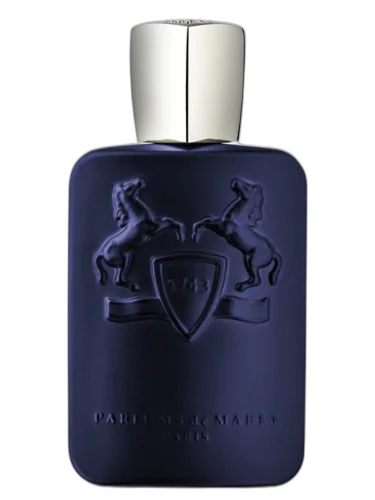
Parfums de Marly
Layton Parfums De Marly
Shared top notes: bergamot, lavender
Mavroki
Virtus Mavroki
Shared top notes: bergamot, lavender, lemon
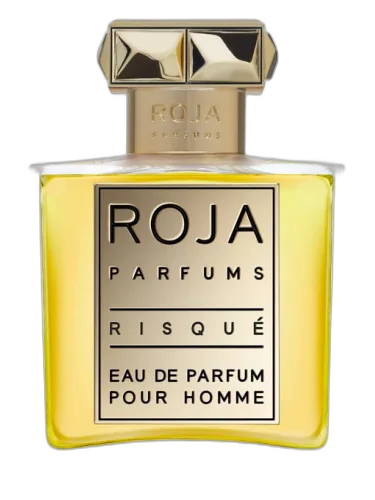
Roja Dove
Risque Pour Homme Roja Dove
Shared top notes: bergamot, lavender, lemon
Brocard
Whirlwind Brocard
Shared top notes: bergamot, lavender, lemon
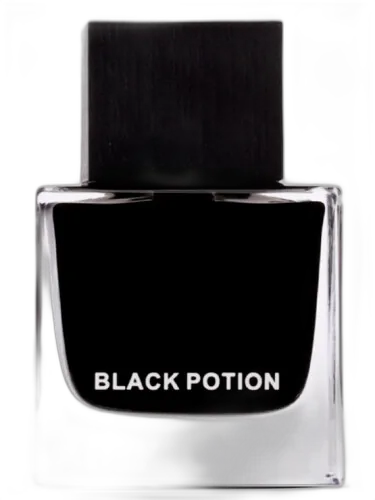
Aurora Scents
Black Potion Aurora Scents
Shared top notes: bergamot, lavender, mandarin