
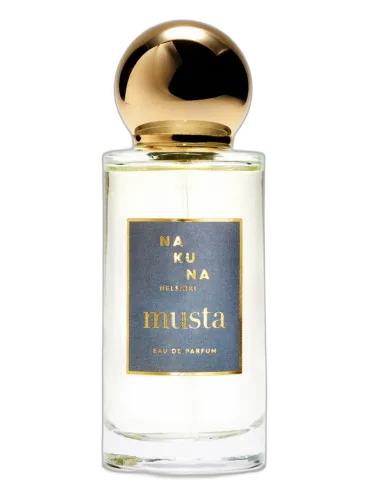
Musta Nakuna Helsinki
At a glance
Is Musta Nakuna Helsinki worth trying?
Musta by Nakuna Helsinki is a Oriental Spicy fragrance for women and men.
- Best match
- Evening wear in Fall
- Performance feel
- Very Good longevity with Strong sillage
- Signature profile
- amber, warm spicy, balsamic with Leather, Spices, Coal Tar
The first impression
Musta by Nakuna Helsinki is a Oriental Spicy fragrance for women and men. Musta was launched in 2020. The nose behind this fragrance is Yann Vasnier. Top notes are Leather and Spices; middle notes are Coal Tar, Incense and Musk; base notes are Myrrh, Vanilla, Amber and Patchouli.
What shapes the scent
The perfumer behind it

Yann Vasnier
Yann Vasnier is a French perfumer who has contributed to a wide range of international fragrance houses. His catalog includes works for Adam Levine, Apothia, Arquiste, Attar Collection, Bvlgari, Carine Roitfeld, and Coolife. Vasnier is recognized for his versatility, creating both commercial and niche scents with refined, complex structures.
Notes pyramid
Top Notes
First impression · 15-30 min
 Leather
 Spices
Heart Notes
Core character · 2-4 hours
 Coal Tar
 Incense
 Musk
Musk
Base Notes
Lasting impression · 4+ hours
 Myrrh
Myrrh
 Vanilla
 Amber
Amber
 Patchouli
The mood it creates
The Archetype Archetype: Portrait of Musta Nakuna Helsinki
Essence
This person is most closely aligned with the Wanderer-an archetype defined by independence, curiosity, and a refusal to be confined by convention. The Wanderer seeks meaning beyond the ordinary, driven by a need to explore the unseen, the unconventional, and the intellectually or aesthetically uncharted. Musta Nakuna Helsinki, with its dark, smoky, yet unexpectedly fresh and mineralic character, mirrors this duality: a soul that thrives in the tension between shadow and light, between the known and the mysterious.
Style & Aesthetic
Their appearance is deliberate but never ostentatious-structured yet fluid, like the fragrance itself. They favor minimalist, well-tailored clothing in muted tones, with occasional flashes of texture or asymmetry that hint at hidden depths. Their style is not about fashion but about intention; every choice is a quiet rebellion against the disposable nature of modern aesthetics.
They are drawn to raw, unfinished beauty-concrete lofts, aged leather, the patina of well-worn objects. Their home is a sanctuary of contrasts: stark white walls against dark wood, a single bold artwork in an otherwise restrained space. They prefer environments that feel lived-in, where time has left its mark, rather than sterile perfection.
They thrive in cities-places dense with possibility, where anonymity and stimulation coexist. Helsinki, Berlin, Tokyo-cities that balance order with an undercurrent of wildness. They are nocturnal by inclination, finding clarity in the quiet of late hours.
Their work is likely creative or analytical, something that allows them to explore ideas without rigid constraints. They may be a writer, an architect, a perfumer, or a philosopher-any vocation that merges intellect with artistry. Routine suffocates them, so they structure their days loosely, following inspiration rather than schedules.
They are a connoisseur of subtle pleasures: single-malt whisky, vinyl records, the weight of a well-made pen. They appreciate craftsmanship, the human touch in an age of mass production.
Philosophy & Values
They reject dogma in all forms, whether cultural, political, or spiritual. Their philosophy is one of probing inquiry-they do not seek answers so much as they savor the act of questioning. Truth, to them, is not fixed but an evolving dialogue between self and world.
They value authenticity above all else, despising pretense and empty gestures. Their friendships are few but deep, reserved for those who share their disdain for superficiality. They are drawn to people who challenge them, who force them to reconsider their own assumptions.
Yet beneath this intellectual rigor lies a quiet romanticism-a belief in the sublime, in moments of unexpected beauty that pierce through the mundane. They are not cynical, but they are wary of unchecked idealism.
Relationships
They are not a social butterfly, nor do they wish to be. Their presence in gatherings is measured-they observe before engaging, preferring meaningful exchanges over small talk. When they speak, it is with precision, often laced with dry wit.
Romantically, they are drawn to partners who are equally self-contained, who do not demand constant validation. They crave connection but resist dependency, fearing the loss of autonomy. Their love is intense but never suffocating; they give space as freely as they demand it.
Their greatest relational challenge is their reluctance to surrender control. Vulnerability does not come easily-they intellectualize emotions, dissecting them before allowing themselves to feel. This can make them seem distant, even cold, to those who do not understand their guarded nature.
Shadow
The Wanderer’s strength is also their flaw: their relentless pursuit of the new can become a form of evasion. When discomfort arises, they move-physically, emotionally, intellectually-rather than sit with it. This can lead to a rootlessness, a sense of never fully belonging anywhere.
Their independence, while admirable, can harden into isolation. They may mistake solitude for strength, refusing help even when needed. Their sharp mind can also turn inward, breeding overanalysis and detachment from the visceral reality of life.
At their worst, they become the Restless Ghost-always searching, never arriving. The smoky depth of Musta Nakuna Helsinki, which they love, is also a warning: too much wandering in the dark, and one may forget how to step into the light.
Conclusion
Musta Nakuna Helsinki is not merely a scent they wear; it is an extension of their essence. Its mineralic freshness speaks to their clarity of thought, its smokiness to their hidden depths. Like the fragrance, they are a study in contrasts-structured yet unpredictable, cerebral yet sensual.
They are not for everyone. But for those who understand them, they are a rare presence: a thinker who feels deeply, a wanderer who, in their finest moments, finds home within themselves.
If you like this, try these
Fragrances with a comparable profile - shared accords, notes, and character.

Montale
Dark Vanilla Montale
Shared top notes: spices
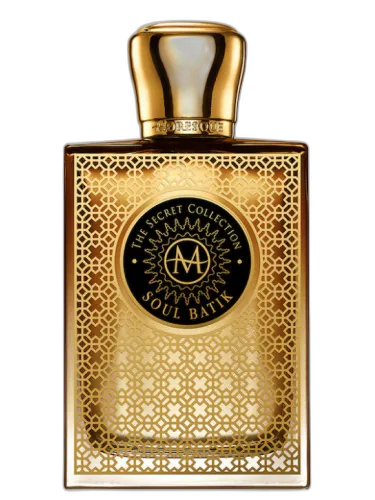
Moresque
Soul Batik Moresque
Shared heart notes: incense
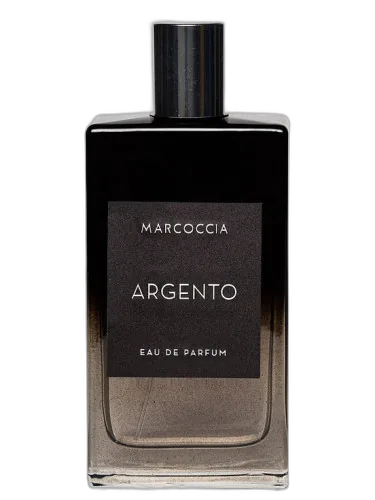
Marcoccia
Argento Marcoccia
Shared heart notes: incense
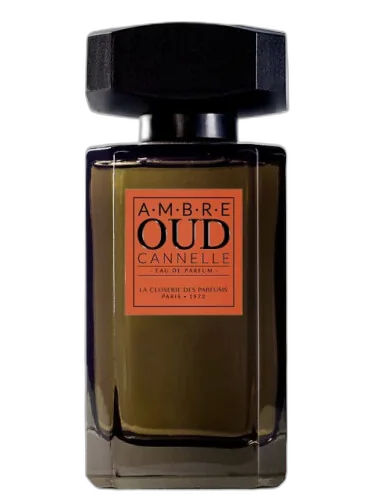
La Closerie des Parfums
Oud Cannelle La Closerie Des Parfums
Shared base notes: amber, myrrh, patchouli
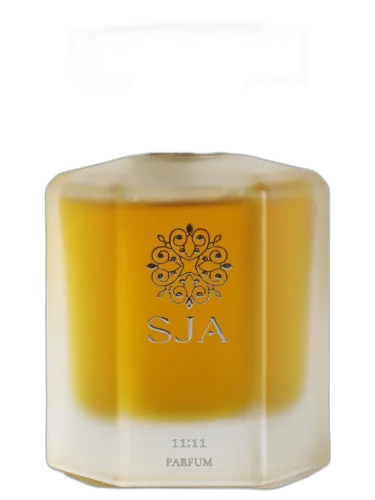
SJA Perfumes
11:11 Sja Perfumes
Shared heart notes: incense, musk