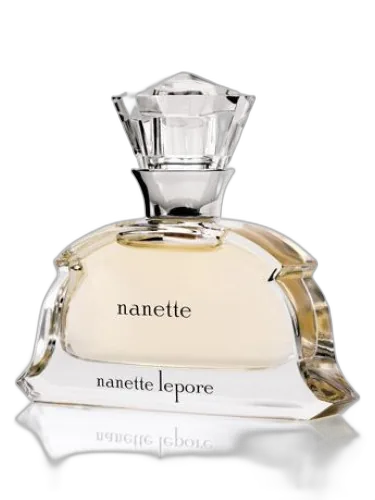

Nanette Nanette Lepore
At a glance
Is Nanette Nanette Lepore worth trying?
Nanette by Nanette Lepore is a Oriental Floral fragrance for women.
- Best match
- Evening wear in Fall
- Performance feel
- Good longevity with Moderate sillage
- Signature profile
- amber, rose, woody with Rose, Pink Pepper, Neroli
The first impression
Nanette by Nanette Lepore is a Oriental Floral fragrance for women. Nanette was launched in 2009. The nose behind this fragrance is Anne Flipo. Top notes are Rose, Pink Pepper and Neroli; middle notes are Violet and Lily-of-the-Valley; base notes are Amber, Incense and Virginia Cedar.
What shapes the scent
The perfumer behind it

Anne Flipo
Anne Flipo is a French perfumer and a master of delicate, luminous compositions, often working with IFF and known for her refined floral and woody accords. Her style balances transparency with depth, creating scents that feel both airy and substantial, as seen in the ethereal Pleine Lune and the sophisticated Serpent Bohème. Among her notable creations are the bold 212 Vip Black and the radiant Joyphoria, showcasing her versatility across modern and classic aesthetics.
Notes pyramid
Top Notes
First impression · 15-30 min
 Rose
Rose
 Pink Pepper
 Neroli
Heart Notes
Core character · 2-4 hours
 Violet
 Lily-of-the-Valley
Base Notes
Lasting impression · 4+ hours
 Amber
Amber
 Incense
 Virginia Cedar
The mood it creates
The Lover Archetype: Portrait of Nanette Nanette Lepore
Essence
The person who adores Nanette Lepore is, at their core, an embodiment of The Lover archetype-one who seeks beauty, sensuality, and deep emotional connection in all aspects of life. This fragrance, with its playful yet sophisticated blend of fruity florals and warm vanilla, mirrors their essence: vibrant, romantic, and unapologetically feminine. They are drawn to the intoxicating dance between sweetness and depth, just as they navigate life with both passion and refinement.
Style & Aesthetic
Their world is curated with intention-every object, every experience, is chosen for its ability to evoke delight. Their home is a sanctuary of soft textures, vintage trinkets, and fresh flowers, arranged with the care of someone who believes beauty is not frivolous but essential. They wear clothes that drape and flow, favoring delicate prints and fabrics that whisper rather than shout. Their taste in art leans toward the impressionistic, where emotion blurs into form, and their bookshelf is filled with poetry and novels that explore love in all its complexities.
They are not merely consumers of beauty but creators of it-perhaps through painting, writing, or simply the way they arrange a dinner table. Life, for them, is an ongoing act of aesthetic devotion.
Philosophy & Values
They believe in the transformative power of love-not just romantic love, but love as a universal force. Their philosophy is rooted in the idea that human connection is the highest form of meaning. They are drawn to people who feel deeply, who are unafraid of vulnerability, and who understand that joy and sorrow are two sides of the same coin.
Yet, this idealism has its shadows. They may struggle with disillusionment when others fail to meet their emotional intensity. Their desire for profound bonds can sometimes slip into possessiveness or an unwillingness to accept the imperfections of those they adore.
Relationships
In love, they are both muse and artist. They enchant effortlessly, drawing others in with their warmth and attentiveness. Their relationships are marked by grand gestures-handwritten letters, surprise picnics at sunset, lingering conversations that stretch into dawn. They do not love lightly; when they commit, it is with their whole being.
But this depth comes with a cost. They may mistake intensity for permanence, conflating passion with stability. Their shadow emerges when love fades-they can become melodramatic, clinging to what was rather than accepting what is. The same fervor that makes them extraordinary lovers can also make them reluctant to let go.
Shadow
The Lover’s greatest weakness is their tendency toward indulgence-not just in romance, but in all sensory pleasures. They may lose themselves in decadence, whether in rich foods, impulsive shopping, or relationships that burn too brightly to last. Their challenge is to temper their ardor with wisdom, to recognize that not every beautiful thing must be possessed.
At their worst, they may become vain, prioritizing aesthetics over substance, or manipulative, using charm as a tool rather than an offering. But these flaws are not inherent-they are the distortions of a soul that feels too much, loves too fiercely, and sometimes forgets that even the most exquisite perfume must fade with time.
Conclusion
To wear Nanette Lepore is to declare a creed: that life should be felt, savored, and adorned. This person is not merely alive-they are aflame, a living testament to the power of beauty and emotion. Their strength lies in their capacity to love, to create, to find wonder in the smallest details. Their weakness lies in their refusal to accept that not all love lasts, not all beauty endures.
Yet, even in their flaws, there is something noble-a refusal to live half-heartedly. They would rather be scorched by passion than untouched by it. And in that, they are undeniably, irresistibly human.
If you like this, try these
Fragrances with a comparable profile - shared accords, notes, and character.