
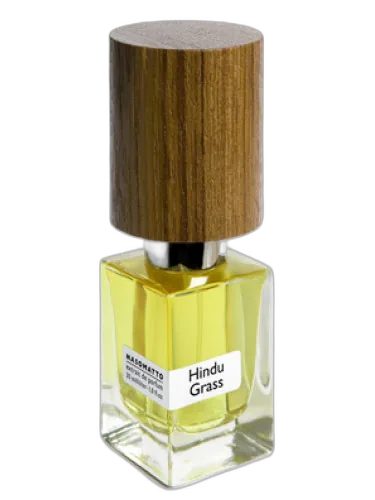

Hindu Grass Nasomatto
At a glance
Is Hindu Grass Nasomatto worth trying?
Hindu Grass by Nasomatto is a Aromatic Green fragrance for women and men.
- Best match
- Evening wear in Fall
- Performance feel
- Very Good longevity with Strong sillage
- Signature profile
- green, patchouli, woody with Patchouli, Green Notes, Grass
The first impression
Hindu Grass by Nasomatto is a Aromatic Green fragrance for women and men. The nose behind this fragrance is Alessandro Gualtieri.
What shapes the scent
The perfumer behind it

Alessandro Gualtieri
Alessandro Gualtieri is an Italian perfumer and founder of the Nasomatto brand, known for his bold, unconventional approach to fragrance. His olfactory style emphasizes raw materials and intense, often provocative compositions that challenge traditional perfumery. Notable creations from our catalog include Nasomatto’s Absinth, Baraonda, and Blamage, as well as the MariaLux series and L’essence de Mastenbroek, all reflecting his signature dramatic and unapologetic aesthetic.
Notes pyramid
All Notes
Complete scent profile
 Patchouli
 Green Notes
 Grass
Grass
 Tobacco
The mood it creates
The Wanderer Archetype: Portrait of Hindu Grass Nasomatto
Essence
To wear Hindu Grass by Nasomatto is to embrace the scent of paradox-earthy yet ethereal, meditative yet intoxicating. This fragrance, with its blend of cannabis, incense, and dry woods, evokes a soul who dwells at the crossroads of the sacred and the sensual. The person who cherishes this scent is not merely a wearer of perfume but a seeker of hidden truths, one who moves through life with the quiet intensity of a Sage archetype, yet whose shadow harbors the restlessness of the Wanderer.
Style & Aesthetic
Their appearance reflects their inner duality-bohemian yet refined, as if they could be equally at home in a Himalayan ashram or a Parisian salon. They favor natural fabrics-linen, raw silk, wool-in muted, earthy tones, but with an occasional flourish of deep indigo or saffron, a nod to the sacred. Their jewelry, if they wear any, is likely handmade, perhaps a single talisman imbued with personal meaning.
Their living space is a sanctuary of minimalism and intention: low lighting, incense burning, books stacked in careful disarray. They surround themselves with objects that feel alive-a well-worn leather journal, a smooth river stone, a vintage brass incense holder. Every item is chosen not for status but for its resonance with their inner world.
They thrive in environments that allow for both solitude and serendipity-a quiet cottage by the woods, a loft in an arts district, a nomadic existence between retreats and foreign cities. Routine suffocates them, yet they crave moments of stillness. They may work in creative or healing fields-writing, therapy, herbalism-anything that allows them to bridge the seen and unseen.
They are not materialistic, but they appreciate ritualistic luxury-a handcrafted tea set, a rare first edition, a bottle of Hindu Grass saved for moments of deep reflection. Their indulgences are never frivolous; each is a sacrament to the senses.
Philosophy & Values
This individual is drawn to the esoteric, the mystical, the things that lie just beyond the grasp of ordinary perception. They are not content with surface explanations; they crave depth, whether in philosophy, spirituality, or art. Their worldview is shaped by a blend of Eastern mysticism and Western existentialism-perhaps reading Alan Watts with the same fervor as Nietzsche, finding wisdom in both the detachment of Zen and the fiery individualism of the Übermensch.
They value freedom of thought above all else, resisting dogma in favor of personal revelation. Their spirituality is experiential rather than doctrinal-they may practice meditation, yoga, or ritual, but always on their own terms. They are not a follower but a solitary explorer, charting their own path through the wilderness of consciousness.
Relationships
They are not a person of casual connections. Their relationships are few but intense, built on shared depth rather than convenience. They attract others with their quiet magnetism, but they are selective-only those who can match their intellectual and spiritual curiosity earn their full presence.
Romantically, they are drawn to kindred wanderers, those who understand the need for both intimacy and independence. They are not possessive lovers; they believe in connection without chains. Yet this very idealism can become their shadow-they may flee when love becomes too mundane, mistaking routine for imprisonment. Their fear of stagnation can leave a trail of half-finished relationships, beautiful but unresolved.
Shadow
For all their wisdom, they are not immune to delusion. The same mind that seeks enlightenment can also retreat into fantasy, using spirituality as an escape from life’s harsher demands. They may rationalize detachment as transcendence, avoiding responsibility under the guise of "rising above" worldly concerns.
At their worst, they can become disconnected from reality, floating in a self-made realm of ideas while neglecting the tangible needs of those around them. Their pursuit of the infinite can make them impatient with the finite-they may dismiss ordinary joys as trivial, forgetting that wisdom must also be lived, not just contemplated.
If you like this, try these
Fragrances with a comparable profile - shared accords, notes, and character.

Subhi Khalilbayov
Happy Herbals Legal Green Subhi Khalilbayov
Shared top notes: grass, green notes, patchouli

fūm
Ramble On Fūm
Shared top notes: patchouli, tobacco

Slumberhouse
Jeke Slumberhouse
Shared top notes: patchouli, tobacco
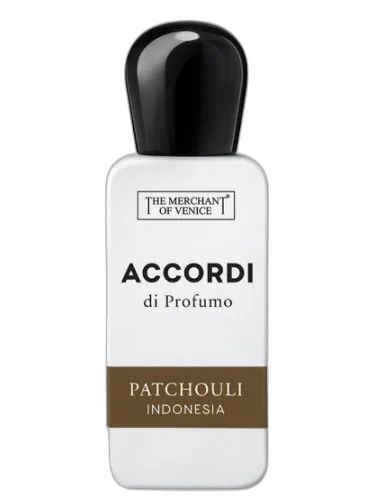
The Merchant of Venice
Patchouli Indonesia The Merchant Of Venice
Shared top notes: patchouli, tobacco

Imaginary Authors
Bull's Blood Imaginary Authors
Shared top notes: patchouli, tobacco