
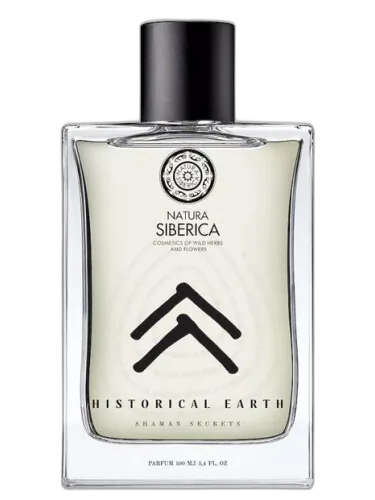

Historical Earth Natura Siberica
At a glance
Is Historical Earth Natura Siberica worth trying?
Historical Earth by Natura Siberica is a Oriental Woody fragrance for women and men.
- Best match
- Casual wear in Fall
- Performance feel
- Good longevity with Moderate sillage
- Signature profile
- green, woody, fruity with Black Currant, Bergamot, Lemon
The first impression
Historical Earth by Natura Siberica is a Oriental Woody fragrance for women and men. This is a new fragrance. Historical Earth was launched in 2024. Top notes are Black Currant, Bergamot and Lemon; middle notes are Tea, Violet and Lavender; base notes are Balsamic Notes, Birch and Vetiver.
What shapes the scent
The perfumer behind it

Unknown Perfumer
Notes pyramid
Top Notes
First impression · 15-30 min
 Black Currant
 Bergamot
 Lemon
Lemon
Heart Notes
Core character · 2-4 hours
 Tea
Tea
 Violet
 Lavender
Base Notes
Lasting impression · 4+ hours
 Balsamic Notes
 Birch
Birch
 Vetiver
The mood it creates
The Lover Archetype: Portrait of Historical Earth Natura Siberica
Essence
This person is most closely aligned with the Wise Old One-an archetype embodying deep knowledge, connection to nature, and an almost mystical understanding of time’s passage. They are not merely nostalgic but see history as a living force, woven into the present. The scent they choose-Historical Earth Natura Siberica-speaks to this: a fragrance of damp soil, aged wood, and herbal resilience, evoking endurance and quiet wisdom.
They do not seek to dominate the world but to understand it, to listen to its whispers. Their wisdom is not academic but intuitive, drawn from the cycles of nature and the silent lessons of forgotten things.
Style & Aesthetic
Their appearance reflects their philosophy. They favor natural fabrics-linen, wool, worn leather-in muted, earthy tones. Their clothing is not fashionable but timeless, as if it could belong to any era. They may wear a well-loved coat for decades, not out of frugality but because it has become part of them.
Their living space is similarly uncluttered but rich in texture: wooden furniture darkened with age, shelves lined with well-read books, perhaps a collection of stones or dried herbs. There is no ostentation, only the quiet dignity of objects that have earned their place.
They live deliberately, attuned to natural cycles. Their mornings may begin with tea brewed from foraged herbs; their evenings, with the slow unfurling of a book by firelight. They are likely drawn to practices that require patience-gardening, woodworking, meditation.
They do not resist modernity but use it sparingly. Technology is a tool, not a master. They may keep a journal in ink, walk rather than drive when possible, and prefer handwritten letters to hasty texts. Their life is not a rejection of progress but a refusal to be swept away by it.
Philosophy & Values
Their worldview is shaped by a reverence for what persists beneath the surface. They believe in the slow, inevitable rhythms of life-growth, decay, rebirth. Unlike those who chase novelty, they find solace in what has endured: ancient forests, weathered stone, the deep roots of tradition.
This does not make them a traditionalist in the rigid sense. Rather, they see tradition as a river-constantly moving, yet always fed by the same source. They distrust dogma but respect the wisdom of the past, filtering it through their own experience. Their values are simple but unshakable: authenticity, resilience, and harmony with the natural world.
Relationships
They are not the life of the party, nor do they wish to be. Their presence is steady, grounding. People come to them for counsel, not excitement. They listen more than they speak, but when they do, their words carry weight.
Their relationships are deep but few. They do not crave constant companionship but value those who understand silence as well as speech. Romantic partners must share their respect for solitude; they will not suffocate love with demands, but neither will they tolerate neediness. Their love is like the earth itself-patient, fertile, but unyielding to frivolity.
Shadow
Yet wisdom, when unchecked, can harden into rigidity. Their reverence for the past may blind them to the vitality of the new. They might dismiss innovation as frivolous, mistaking their own resistance for superiority.
Their self-sufficiency can become isolation. They may withdraw too deeply, forgetting that even the earth needs rain to soften it. Their silence, once a strength, may turn to detachment, leaving others feeling shut out.
And there is a quiet pride in their endurance-a belief that because they have weathered storms, they are somehow purer than those who seek easier paths. This is their greatest trap: the illusion that suffering confers virtue.
Conclusion
The ideal expression of this archetype is not a hermit but a guide-one who knows when to stand firm and when to bend. Their challenge is to remain open, to let their deep roots nourish new growth rather than choke it.
When they succeed, they become like the scent they love: a reminder that the earth is not just old but alive, that history is not just memory but the ground beneath our feet.
If you like this, try these
Fragrances with a comparable profile - shared accords, notes, and character.

Arno Sorel
Mitsy (2012) Arno Sorel
Shared top notes: bergamot, black currant, lemon

Zara Home
Tonka Wood Zara Home
Shared top notes: bergamot, black currant, lemon

Arno Sorel
Bonsoir De Paris Arno Sorel
Shared top notes: bergamot, black currant, lemon
Bjork and Berries
White Forest Bjork And Berries
Shared top notes: bergamot, lemon

Les Parfums de Rosine
Rose D'homme Les Parfums De Rosine
Shared top notes: bergamot, lemon