


Frescor De Buriti Natura
At a glance
Is Frescor De Buriti Natura worth trying?
Frescor de Buriti by Natura is a Floral Green fragrance for women and men.
- Best match
- Casual wear in Summer
- Performance feel
- Moderate longevity with Moderate sillage
- Signature profile
- citrus, fresh, fruity with Buriti, Mandarin Orange, Lemon
The first impression
Frescor de Buriti by Natura is a Floral Green fragrance for women and men. Frescor de Buriti was launched in 2012. The nose behind this fragrance is Verônica Kato. Top notes are Buriti, Mandarin Orange, Lemon, Apple and Pear; middle notes are Ginger, Lily-of-the-Valley, Pepper and Rose; base notes are Musk, Cedar and Amber.
What shapes the scent
The perfumer behind it

Verônica Kato
Verônica Kato is a perfumer associated with Natura, where she has crafted a range of fragrances including #urbano Noturno and the numbered series 379 Benjoim Cumaru, 505 Íris Priprioca, 679 Ambrette Copaíba, 740 Sândalo Breu Branco, and 875 Vetiver Capitiú. She also created Acerola E Hibisco for Natura. Her work often explores Brazilian ingredients and natural accords, reflecting a deep connection to local raw materials.
Notes pyramid
Top Notes
First impression · 15-30 min
 Buriti
 Mandarin Orange
 Lemon
Lemon
 Apple
Apple
 Pear
Pear
Heart Notes
Core character · 2-4 hours
 Ginger
 Lily-of-the-Valley
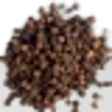 Pepper
 Rose
Rose
Base Notes
Lasting impression · 4+ hours
 Musk
Musk
 Cedar
Cedar
 Amber
Amber
The mood it creates
The Lover Archetype: Portrait of Frescor De Buriti Natura
Essence
The person who chooses Frescor De Buriti Natura is most closely aligned with the Earth Mother archetype-a figure of nurturing warmth, sensuality, and deep connection to nature. This is not the passive, sentimental mother of cliché, but a vital force who embodies growth, fertility, and the cyclical rhythms of life. She is Demeter in her fullness, Persephone in her earthly joy, a woman who understands that beauty is not merely aesthetic but a living, breathing exchange between body and world.
Her fragrance-a blend of buriti oil, tropical fruits, and green notes-speaks of a soul that thrives in sunlight, in the richness of soil, in the slow unfurling of leaves. It is not a perfume of artifice or conquest, but one of immersion, of surrender to the senses.
Relationships
In love, she is both generous and demanding. She does not give herself lightly, for she understands the weight of intimacy. Her relationships are deep, sensual, and rooted in mutual growth-she is not interested in fleeting passion but in the kind of love that ripens over time.
Friendship, to her, is a form of nourishment. Her home is always open, her table always set for one more. She listens with her whole body, her laughter is rich and unguarded, and her advice is never abstract but grounded in lived wisdom. Yet she is no martyr-she expects reciprocity. Those who take without giving will find her warmth cooling into quiet distance.
Shadow
But the Earth Mother has her darkness. Her sensuality can tip into indulgence-the third glass of wine that blurs the edges of the evening, the reluctance to say no to pleasures that drain rather than fulfill. Her nurturing instinct can become smothering; she may mistake control for care, wrapping loved ones in expectations disguised as devotion.
Worse still is her occasional resistance to change. The Earth Mother thrives in cycles, but life sometimes demands rupture. When faced with necessary endings-a dying relationship, a career that no longer serves her-she may cling to what is familiar long past its time, mistaking stagnation for stability.
Conclusion
Her world is one of tactile pleasures and organic harmony. She surrounds herself with textures-linen, clay, woven baskets, the rough bark of potted olive trees in her sunlit apartment. Her taste leans toward the earthy and vibrant: ripe figs, dark honey, wine that tastes of the land it came from. She cooks with herbs she grows herself, not out of trend but because she cannot imagine food without the scent of rosemary between her fingers.
Her style is effortless, flowing, with an instinctive aversion to anything stiff or restrictive. She wears linen dresses in summer, wool in winter, always in colors that echo nature-ochre, moss green, the deep brown of wet earth. Jewelry, if she wears it, is raw and unpolished: amber, rough-cut turquoise, silver shaped by hand.
Philosophically, she rejects the modern cult of speed and detachment. She believes in slowness, in the intelligence of the body, in the wisdom of seasons. Her values are not preached but lived: sustainability is not a political stance but a natural extension of her being. She does not "reduce waste"; she simply finds wastefulness incomprehensible.
If you like this, try these
Fragrances with a comparable profile - shared accords, notes, and character.

Elizabeth Arden
Sunflowers Summer Air Elizabeth Arden
Shared top notes: apple, lemon

Oriflame
Friends World For Her Tropical Sorbet Oriflame
Shared top notes: lemon

Salvador Dali
Silver Sun Salvador Dali
Shared top notes: lemon, pear

Phebo
Amir Slama Matcha Phebo
Shared top notes: mandarin orange, pear

Tous
Floral Touch Tous
Shared top notes: lemon, mandarin orange