

Sacrebleu Nicolai Parfumeur Createur
At a glance
Is Sacrebleu Nicolai Parfumeur Createur worth trying?
Sacrebleu by Nicolai Parfumeur Createur is a Floral fragrance for women.
- Best match
- Evening wear in Fall
- Performance feel
- Very Good longevity with Strong sillage
- Signature profile
- warm spicy, fruity, amber with Fruits, Red Berries, Mandarin Orange
The first impression
Sacrebleu by Nicolai Parfumeur Createur is a Floral fragrance for women. Sacrebleu was launched in 1993. Sacrebleu was created by Patricia de Nicolai and François Robert. Top notes are Fruits, Red Berries and Mandarin Orange; middle notes are Tuberose, Cinnamon, Jasmine and Carnation; base notes are Vanilla, Tonka Bean, Olibanum, Peru Balsam, Sandalwood, Patchouli and Woody Notes.
What shapes the scent
The perfumer behind it

François Robert
François Robert is a perfumer who has created fragrances for Bex London, Charlotte Tilbury, and Friedemodin. His work for Bex London includes a series of scents named after London postal codes, such as Londoner EC2 and SW1X, each capturing a distinct urban character. Robert also composed Scent of a Dream for Charlotte Tilbury and the floral Jardin Mystique for Friedemodin, showing a range from sophisticated cityscapes to romantic gardens.
Notes pyramid
Top Notes
First impression · 15-30 min
 Fruits
 Red Berries
 Mandarin Orange
Heart Notes
Core character · 2-4 hours
 Tuberose
 Cinnamon
 Jasmine
 Carnation
Base Notes
Lasting impression · 4+ hours
 Vanilla
 Tonka Bean
Olibanum
Tonka Bean
Olibanum
 Peru Balsam
 Sandalwood
 Patchouli
 Woody Notes
The mood it creates
The Lover Archetype: Portrait of Sacrebleu Nicolai Parfumeur Createur
Essence
The one who chooses Sacrebleu by Nicolai Parfumeur Createur is not merely a wearer of fragrance but a seeker of transformation. This scent-an intricate dance of bergamot, lavender, and vanilla, both sacred and sensual-belongs to the Alchemist, an archetype that thrives on synthesis, refinement, and the pursuit of hidden meaning. The Alchemist does not accept the world as it appears; they seek to transmute the ordinary into the extraordinary, to distill chaos into harmony.
This person is drawn to the tension in Sacrebleu-its balance of sacred incense and human warmth, its duality of austerity and indulgence. They, too, embody paradoxes: disciplined yet passionate, intellectual yet deeply sensual, traditional yet rebellious in subtle ways.
Relationships
They do not love carelessly. Their relationships are deep but few, built on mutual recognition rather than need. They are drawn to those who mirror their own complexity-people who can discuss philosophy over wine but also lose themselves in music or the scent of rain on hot pavement. Their love is intense but never suffocating; they understand that true connection requires both presence and distance.
Yet, their restraint can be mistaken for coldness. They guard their inner world fiercely, revealing themselves in fragments, trusting only those who prove worthy. This can leave others feeling shut out, wondering if they are truly known.
Shadow
For all their wisdom, the Alchemist is not without flaw. Their obsession with refinement can become a prison-a fear of the messy, the unexamined, the imperfect. They may disdain what they perceive as vulgarity, withdrawing into elitism. At their worst, they become the Hermit, isolated by their own standards, mistaking solitude for superiority.
There is also the danger of endless seeking without finding. The Alchemist’s quest for meaning can become a form of evasion, a refusal to commit to any one truth. They may linger too long in contemplation, avoiding the raw, unpolished act of living.
Conclusion
Their tastes are deliberate, never accidental. They favor the understated elegance of well-tailored linen, the quiet luxury of aged leather, the patina of time on brass or wood. Their home is a sanctuary of curated objects-antique books, hand-thrown ceramics, a single bold painting that commands the room. They do not chase trends but cultivate an aesthetic that feels timeless, as though they have always existed slightly outside the present moment.
Philosophically, they are drawn to systems of thought that reconcile opposites-Hermeticism, Jungian psychology, the Tao. They believe in the unity of all things, in the hidden connections between the sacred and the profane. Their spirituality is not dogmatic but experiential; they seek epiphanies in the texture of a poem, the silence of an empty church, the first sip of bitter espresso at dawn.
If you like this, try these
Fragrances with a comparable profile - shared accords, notes, and character.
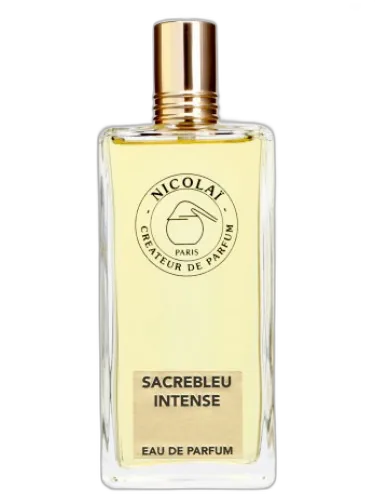
Nicolai Parfumeur Createur
Sacrebleu Intense Nicolai Parfumeur Createur
Shared top notes: mandarin orange, red berries

Tableau de Parfums
Loretta Tableau De Parfums
Shared top notes: fruits

Kenzo
Jeu D'amour L'elixir Kenzo
Shared top notes: mandarin orange
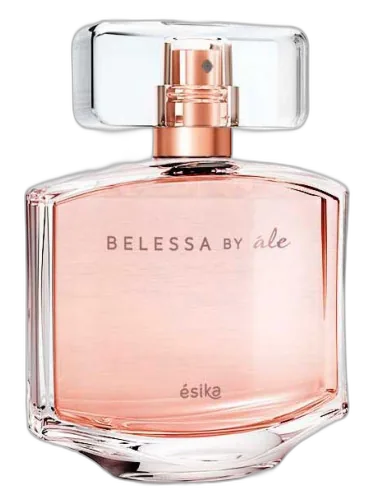
Ésika
Belessa By Ále Ésika
Shared top notes: mandarin orange

Bella Freud
Je T'aime Jane Bella Freud
Shared top notes: mandarin orange