
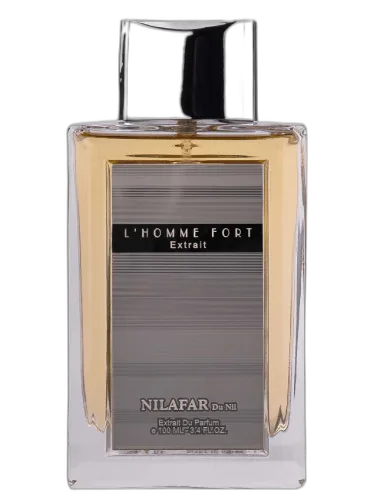
L’homme Fort Extrait Nilafar Du Nil
Fragrance Story
L’Homme Fort Extrait by Nilafar du Nil is a Oriental fragrance for men. L’Homme Fort Extrait was launched in 2021. Top notes are Creme Brulee, Sweet Notes, Myrrh and Pineapple; middle notes are Vanilla, Toffee and Cinnamon; base notes are Cardamom, Leather, Amber, Tonka Bean, Ambroxan and Patchouli.
Composition Profile
About the Perfumer

Unknown Perfumer
Fragrance Notes
Top Notes
First impression · 15-30 min
 Creme Brulee
Sweet Notes
Creme Brulee
Sweet Notes
 Myrrh
Myrrh
 Pineapple
Heart Notes
Core character · 2-4 hours
 Vanilla
 Toffee
 Cinnamon
Base Notes
Lasting impression · 4+ hours
 Cardamom
 Leather
 Amber
Amber
 Tonka Bean
 Ambroxan
 Patchouli
Character Profile
The Alchemist Archetype: Portrait of L’homme Fort Extrait Nilafar Du Nil
Essence
To wear L’homme Fort Extrait Nilafar Du Nil is to embody a paradox-an intoxicating blend of raw power and refined mystique. This fragrance, with its dark, smoky resins, leather, and earthy oud, speaks of a man who is not merely present but insistent. He does not ask for attention; he commands it, not through force alone, but through the quiet gravity of his being. His archetype is the Alchemist-the seeker who transmutes the base into the profound, the mundane into the sacred.
The Alchemist is not content with surface truths. He is drawn to the hidden, the esoteric, the things that require patience and depth to uncover. His mind is a crucible where ideas are tested, refined, and sometimes destroyed in pursuit of something greater. He does not fear intensity; he courts it, whether in thought, sensation, or experience.
His tastes are deliberate, often veering toward the unconventional. He prefers the weight of aged leather-bound books, the burn of a well-aged whiskey, the dim glow of candlelight over sterile brightness. His style is neither ostentatious nor careless-each garment is chosen with purpose, favoring textures that speak of history and endurance: supple leather, dense wool, the faintest hint of metallic sheen. He does not follow trends; he follows instinct.
Philosophically, he is drawn to the idea that life is a series of transformations. He believes in the necessity of struggle, not for its own sake, but because it forges something stronger. He admires Nietzsche’s concept of amor fati-the love of fate-and sees suffering not as an enemy but as a teacher. Yet, unlike the martyr, he does not glorify pain; he uses it.
Shadow
Yet, like all who dwell in the realm of transformation, the Alchemist carries a shadow. His certainty can curdle into arrogance. He may mistake his insights for infallibility, dismissing those who do not share his vision as blind or weak. His pursuit of depth can become a refusal to engage with the superficial, even when necessary-a disdain for the ordinary that borders on elitism.
His relationships may suffer from his expectation of alchemical perfection. Not everyone can withstand the heat of his scrutiny, and he may unintentionally burn those who love him by demanding they too be refined beyond human limits. His solitude, once a refuge, can become a fortress, isolating him from the very connections he secretly craves.
Conclusion
The Alchemist’s greatest strength is his ability to distill meaning from chaos. Where others see confusion, he sees patterns. He is the confidant who listens not just to respond but to decipher, the mentor who offers not platitudes but revelations. His presence is grounding, not because he is soft, but because he is unshakable.
In relationships, he is neither possessive nor indifferent. He values depth over quantity, seeking those who can match his intellectual and emotional intensity. His love is not gentle, but it is potent-a force that demands and gives in equal measure. He does not love lightly, and those who earn his loyalty will find it unbreakable.
His lifestyle reflects his inner world: disciplined yet indulgent, structured yet unpredictable. He may be drawn to solitary pursuits-writing, meditation, long nocturnal walks-but he is not a hermit. He understands the power of presence, knowing when to withdraw and when to impose himself upon the world.
Similar Fragrances
Fragrances with a comparable profile - shared accords, notes, and character.
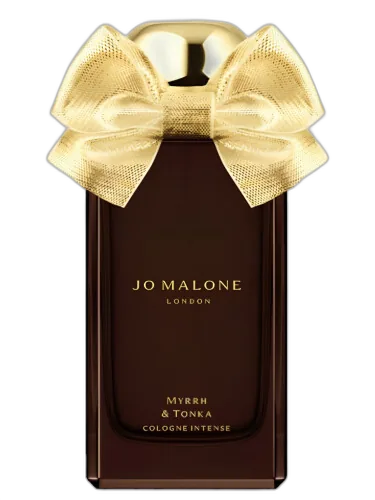
Jo Malone London
Myrrh & Tonka Limited Edition Jo Malone London
Shared accords: amber, aromatic, sweet

Cosmogony
Red Element Cosmogony
Shared accords: amber, aromatic, sweet
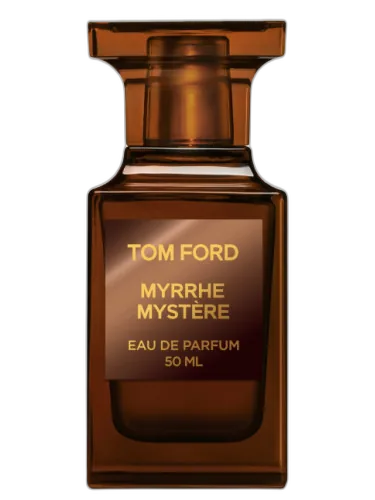
Tom Ford
Myrrhe Mystère Tom Ford
Shared accords: amber, aromatic, leather

Superz.
Mystery Saffron Superz.
Shared accords: aromatic, leather, sweet
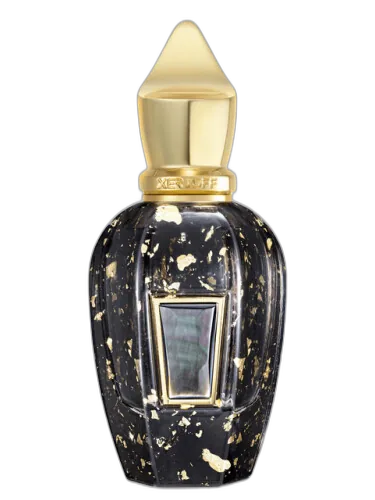
Xerjoff
Homme Anniversary Xerjoff
Shared accords: amber, aromatic, leather