
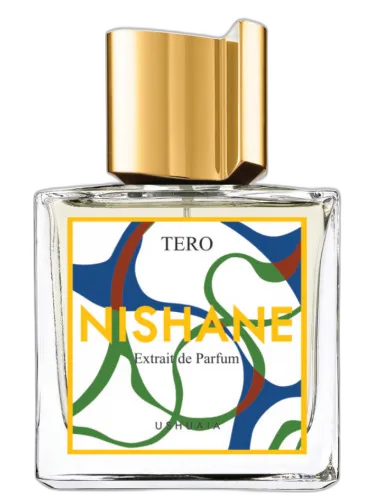

Tero Nishane
At a glance
Is Tero Nishane worth trying?
Tero by Nishane is a fragrance for women and men.
- Best match
- Evening, Special Occasion wear in Fall, Winter
- Performance feel
- Very Good longevity with Strong sillage
- Signature profile
- fresh spicy, caramel, warm spicy with Caramel, Sichuan Pepper, Black Pepper
The first impression
Tero by Nishane is a fragrance for women and men. This is a new fragrance. Tero was launched in 2022. The nose behind this fragrance is Carlos Benaïm. Top notes are Caramel, Sichuan Pepper, Black Pepper and Salt; middle notes are Patchouli and Cinnamon; base notes are Amber, Oak and Vetiver.
What shapes the scent
The perfumer behind it

Carlos Benaïm
Carlos Benaïm is a perfumer with a diverse portfolio spanning A Lab on Fire, Alfred Dunhill, and Aramis. He created Liquidnight for A Lab on Fire and Century for Alfred Dunhill. His work also includes Quorum for Antonio Puig and Havana Pour Elle for Aramis.
Notes pyramid
Top Notes
First impression · 15-30 min
 Caramel
 Sichuan Pepper
 Black Pepper
 Salt
Salt
Heart Notes
Core character · 2-4 hours
 Patchouli
 Cinnamon
Base Notes
Lasting impression · 4+ hours
 Amber
Amber
 Oak
Oak
 Vetiver
The mood it creates
The Alchemist Archetype: Portrait of Tero Nishane
Essence
The person who favors Tero by Nishane is an Alchemist-an individual who seeks transformation, depth, and the hidden meaning in all things. Like the fragrance itself-a bold, smoky, leathery composition with unexpected twists-they are drawn to complexity, the interplay of light and shadow, and the art of refining raw experience into something transcendent. They are not content with surface pleasures; they crave the alchemical process of turning the mundane into the extraordinary.
This archetype is rooted in the Jungian Magician, but with a darker, more introspective edge. The Alchemist does not merely manipulate reality; they dissolve and reconstitute it, testing the limits of perception. They are both creator and destroyer, always in flux, always seeking the philosopher’s stone-whether in art, thought, or personal evolution.
Philosophy & Values
They value depth over breadth, intensity over comfort. Their relationships are few but fiercely meaningful, built on shared intellectual sparring and unspoken understanding. They are not the type to fill a room with laughter, but when they speak, their words carry weight. Their love is not effusive but profound-a slow, smoldering devotion rather than a blazing passion.
Yet, their shadow looms large. The same intensity that makes them magnetic can render them distant, even cold. They risk becoming lost in their own labyrinth of thought, mistaking solitude for wisdom and detachment for strength. Their pursuit of transformation can tip into self-absorption, an endless refining of the self that never quite arrives at contentment.
Shadow
Their greatest flaw is their refusal of simplicity. They distrust ease, suspecting it to be a trick of the superficial. This can make them restless, always seeking the next revelation, the next layer of meaning-never fully present in the moment. Their relationships may suffer from their reluctance to accept imperfection; they demand alchemy from others as they do from themselves, and few can withstand such scrutiny.
At their worst, they become the Sorcerer’s Apprentice-a figure intoxicated by their own power, mistaking manipulation for mastery. They may grow cynical, seeing life as a series of experiments rather than a lived experience. The very depth they cherish can become a prison of their own making.
Conclusion
Their tastes are deliberate, almost ritualistic. They prefer the weight of aged leather-bound books to the ephemeral glow of a screen, the slow burn of a single-malt whiskey to the quick intoxication of a cocktail. Their wardrobe is a study in controlled tension: tailored yet slightly undone, structured fabrics softened by time, dark hues punctuated by the occasional flash of deep burgundy or oxidized bronze. They do not follow trends; they absorb and reinterpret them, making even the familiar seem enigmatic.
Philosophically, they are drawn to thinkers who embrace paradox-Nietzsche’s will to power tempered by Schopenhauer’s resignation, the existential defiance of Camus alongside the mystical surrender of Rumi. They believe life is not a problem to be solved but a mystery to be lived, and they are comfortable dwelling in uncertainty.
If you like this, try these
Fragrances with a comparable profile - shared accords, notes, and character.
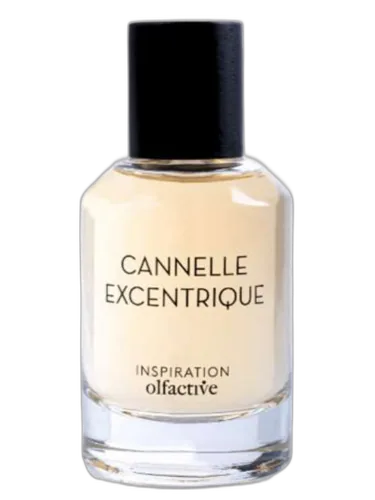
Inspiration Olfactive
Cannelle Excentrique Inspiration Olfactive
Shared heart notes: cinnamon, patchouli
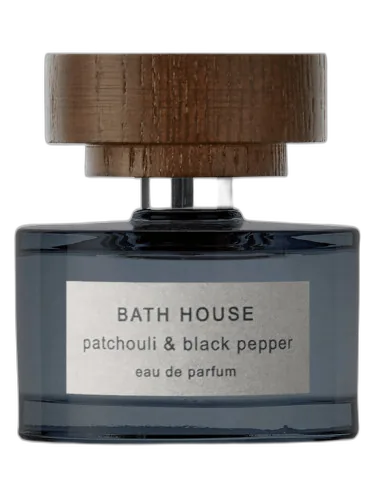
Bath House
Patchouli & Black Pepper Bath House
Shared top notes: black pepper
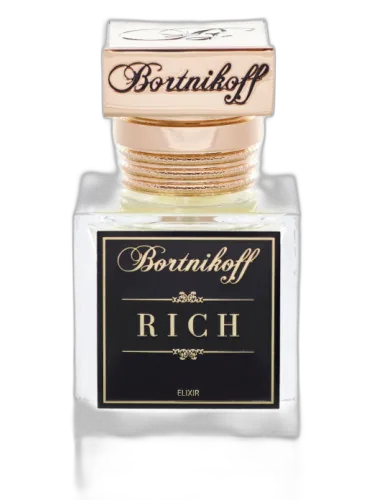
Bortnikoff
Rich Bortnikoff
Shared top notes: sichuan pepper
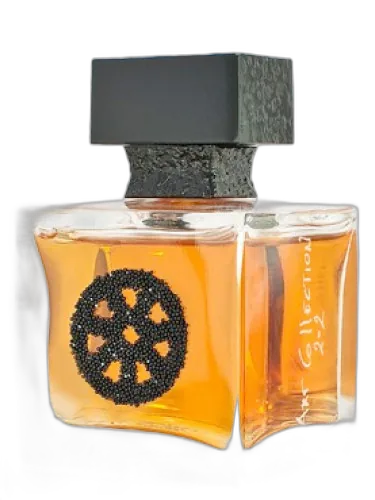
M. Micallef
Art Collection 202 Man M. Micallef
Shared heart notes: patchouli
BALR.
Class Balr.
Shared heart notes: patchouli