
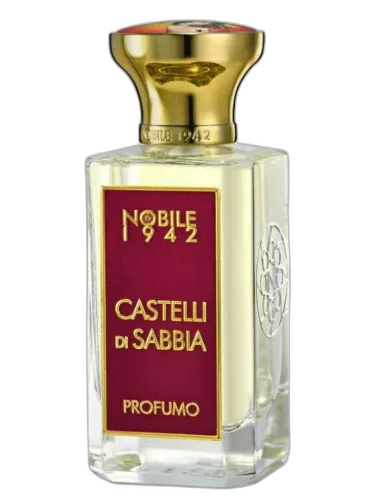

Castelli Di Sabbia Nobile 1942
At a glance
Is Castelli Di Sabbia Nobile 1942 worth trying?
Castelli Di Sabbia by Nobile 1942 is a Oriental Spicy fragrance for women and men.
- Best match
- Evening, Special Occasion wear in Fall, Winter
- Performance feel
- Very Good longevity with Strong sillage
- Signature profile
- warm spicy, woody, sweet with Dates, Cardamom, Cinnamon
The first impression
Castelli Di Sabbia by Nobile 1942 is a Oriental Spicy fragrance for women and men. Castelli Di Sabbia was launched in 2020. The nose behind this fragrance is Christian Carbonnel. Top note is Dates; middle notes are Cardamom, Cinnamon and Black Pepper; base notes are Cypriol Oil or Nagarmotha, Musk, Vanilla, Cedar and Vetiver.
What shapes the scent
The perfumer behind it

Christian Carbonnel
Christian Carbonnel is a prolific perfumer whose catalog includes diverse creations for ALYSONOLDOINI, Accendis, and Al Haramain Perfumes. His work ranges from the woody Bourbon Oud to the floral Bucato Royale, as well as the elegant Atifa Blanche and Atifa Noir. Carbonnel's style spans both niche and accessible markets, often blending traditional and modern elements.
Notes pyramid
Top Notes
First impression · 15-30 min
 Dates
Dates
Heart Notes
Core character · 2-4 hours
 Cardamom
 Cinnamon
 Black Pepper
Base Notes
Lasting impression · 4+ hours
 Cypriol Oil or Nagarmotha
 Musk
Musk
 Vanilla
 Cedar
Cedar
 Vetiver
The mood it creates
The Lover Archetype: Portrait of Castelli Di Sabbia Nobile 1942
Essence
This person is defined by The Lover archetype-an individual who seeks beauty, passion, and deep sensory experiences. They are drawn to the warmth of Castelli Di Sabbia, a fragrance that blends amber, vanilla, and woody notes into a rich, enveloping embrace. Like the scent itself, they are both radiant and grounding, a paradox of intensity and comfort. The Lover does not merely exist; they indulge in existence, savoring every texture, every fleeting moment of pleasure.
But the Lover is not just hedonism-it is a philosophy. To them, life must be felt, not just lived. They believe in the sacredness of touch, the poetry of taste, the intoxication of scent. Their world is one of heightened sensation, where even the mundane is an opportunity for enchantment.
Relationships
In love, they are both generous and demanding. They do not seek superficial connections; they crave fusion-the kind of bond where two souls dissolve into one another. Their relationships are marked by intensity, whether in romance or friendship. They remember the exact way someone laughs, the scent of their skin after rain, the weight of their hand in theirs.
But this depth comes at a cost. Their hunger for connection can border on possessiveness. They fear the erosion of passion, the slow death of routine. When love fades, they do not simply mourn-they rage against it, as if betrayal were a personal affront. Their shadow is jealousy, the fear that the beauty they cherish will be taken from them.
Shadow
The Lover’s greatest weakness is their refusal to accept imperfection. They are prone to disillusionment when reality fails to match their ideals. A flawed lover, a mediocre meal, a poorly blended scent-these are not just disappointments but existential failures.
At their worst, they become decadent, lost in the pursuit of sensation without meaning. They may hoard experiences like a dragon hoards gold, mistaking accumulation for fulfillment. They risk becoming prisoners of their own senses, unable to endure discomfort or mundanity.
Conclusion
Their tastes are deliberate, almost ceremonial. They prefer fabrics that whisper against the skin-cashmere, silk, fine linen. Their home is a sanctuary of textures: aged leather books, hand-thrown ceramics, the soft glow of candlelight. They do not merely drink wine; they study its legs, its bouquet, the way it lingers on the tongue.
Their philosophy is one of presence. They disdain the hurried, the mass-produced, the soulless. Instead, they cultivate slow pleasures-a handwritten letter, a meal prepared with care, the way sunlight filters through stained glass. They are not materialistic in the crude sense; rather, they see objects as vessels of meaning. A well-worn armchair is not just furniture-it is a relic of evenings spent in deep conversation.
If you like this, try these
Fragrances with a comparable profile - shared accords, notes, and character.
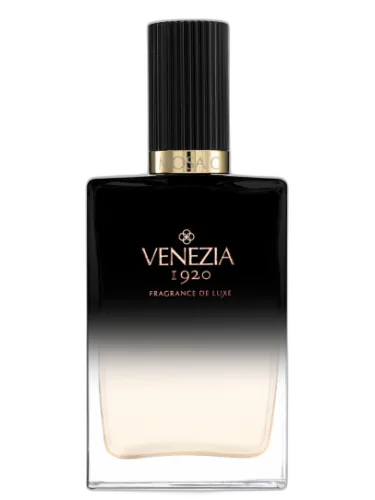
Venezia 1920
Mosaic Venezia 1920
Shared top notes: dates

Parfum d'Empire
Aziyade Parfum D'empire
Shared top notes: dates
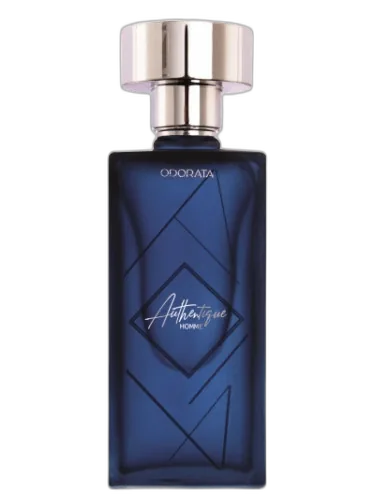
Odorata
Authentique Homme Odorata
Shared heart notes: cardamom, cinnamon

Reinvented
Pheromones Reinvented
Shared heart notes: cardamom
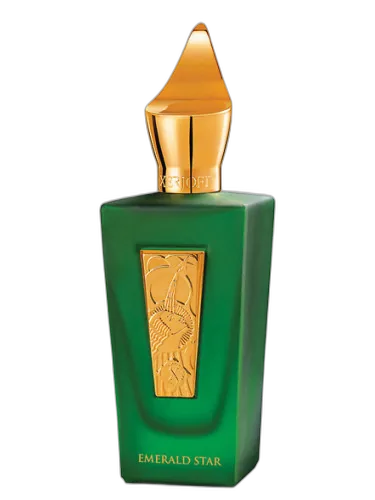
Xerjoff
Harrods Emerald Star Xerjoff
Shared top notes: dates