
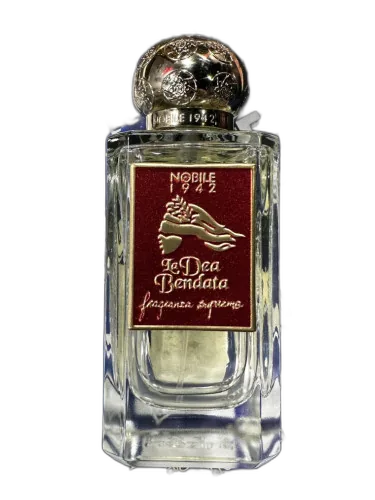

La Dea Bendata Nobile 1942
At a glance
Is La Dea Bendata Nobile 1942 worth trying?
La Dea Bendata by Nobile 1942 is a Woody Spicy fragrance for women and men.
- Best match
- Evening wear in Fall
- Performance feel
- Very Good longevity with Strong sillage
- Signature profile
- fresh spicy, citrus, white floral with Timur, Bitter Orange, Pink Pepper
The first impression
La Dea Bendata by Nobile 1942 is a Woody Spicy fragrance for women and men. This is a new fragrance. La Dea Bendata was launched in 2024. The nose behind this fragrance is Cristiano Canali. Top notes are Timur, Bitter Orange, Pink Pepper, Black Pepper and Marzipan; middle notes are Green Grape, Pomegranate, Orange Blossom, Lily-of-the-Valley and Turkish Rose; base notes are Cedarwood, Ambergris, Musk and Sandalwood.
What shapes the scent
The perfumer behind it

Cristiano Canali
Cristiano Canali is an Italian perfumer known for his work with brands like Alfa Romeo Perfumes, Artimique, and Azman. His creations range from the fresh and sporty Black Alfa Romeo Perfumes to the gourmand Coconut Blanket Artimique. He also crafted the floral Jasmine Gyokuro Artimique and the smoky Shower & Smoke Artimique, as well as the romantic Two Minutes After The Kiss Azman and its special edition. Canali's portfolio includes the ethereal Archangels Caeleste Parfums and the playful Swing My Room Dream Hotel.
Notes pyramid
Top Notes
First impression · 15-30 min
 Timur
Timur
 Bitter Orange
 Pink Pepper
 Black Pepper
 Marzipan
Heart Notes
Core character · 2-4 hours
 Green Grape
 Pomegranate
 Orange Blossom
 Lily-of-the-Valley
Turkish Rose
Lily-of-the-Valley
Turkish Rose
Base Notes
Lasting impression · 4+ hours
Cedarwood
 Ambergris
 Musk
Musk
 Sandalwood
The mood it creates
The Lover Archetype: Portrait of La Dea Bendata Nobile 1942
Essence
La Dea Bendata by Nobile 1942 is a fragrance of paradoxes-ethereal yet intoxicating, delicate yet commanding. With its blend of white flowers, vanilla, and powdery musk, it evokes the sacred and the sensual in equal measure. It is a scent for those who worship beauty, who seek to elevate the ordinary into the divine. The wearer of this fragrance is not merely drawn to aesthetics; they are devoted to them, as if beauty itself were a spiritual path.
At their core, this person is defined by the Lover archetype, one who experiences life through intensity of feeling, devotion, and a deep connection to pleasure and meaning. The Lover does not merely appreciate beauty-they are consumed by it, driven to seek it in all forms: art, relationships, nature, and even in the mundane. Their philosophy is one of passion, of finding the sacred in the sensuous.
Yet, like all archetypes, the Lover has a shadow. Their devotion can become obsession, their idealism can blind them to reality, and their pursuit of beauty can lead to indulgence or even escapism. They may struggle with the tension between their desire for transcendence and the earthly limitations of human experience.
Style & Aesthetic
Their tastes are refined but never sterile. They surround themselves with objects that tell a story-antique books with gilded edges, handcrafted ceramics, a wardrobe of flowing silks and soft cashmeres. They prefer the patina of age to the sheen of the new, seeing in worn surfaces the poetry of time. Their home is not a showroom but a sanctuary, where every object has been chosen with reverence.
In art, they are drawn to the Pre-Raphaelites for their mythic romanticism, to Klimt for his golden decadence, to Rumi for his ecstatic verses. Music is not mere background noise but a ritual-they might lose themselves in the haunting melodies of Debussy or the raw emotion of Jeff Buckley.
They move through the world with a quiet magnetism, drawing others in without overt effort. Their presence is felt before they speak. They might be found in candlelit cafés writing in a leather-bound journal, or wandering through an art gallery lost in thought.
Their daily rituals are sacred to them-morning tea in a porcelain cup, the careful selection of a scent, the slow savoring of a well-prepared meal. They reject the modern cult of speed, preferring the deliberate pace of one who knows that true richness lies in depth, not accumulation.
Philosophy & Values
For them, beauty is not a luxury but a necessity, almost a moral duty. They believe that to live without aesthetic depth is to live half-awake. Their philosophy is not one of rigid dogma but of felt truth-they trust intuition over cold logic, the heart’s whisper over the mind’s shout.
They value authenticity, but not in the crude modern sense of unfiltered expression. Their authenticity is curated, deliberate-like a poem polished to its essence. They despise vulgarity, not out of snobbery, but because they see it as a violation of life’s inherent grace.
Relationships
In love, they are both tender and demanding. They do not seek mere companionship but kindred spirits-those who understand the language of beauty, who can share in their devotion to the sublime. Their relationships are intense, often marked by deep emotional exchanges and a near-mystical sense of connection.
Yet, their idealism can be their undoing. They may romanticize partners, only to be disillusioned when reality fails to match their vision. Their shadow emerges when their longing for perfection makes them intolerant of human flaws-in others and in themselves.
Shadow
Their greatest strength-their capacity for deep feeling-can also be their downfall. When unbalanced, they may slip into hedonism, using beauty as an escape from life’s harsher truths. Their pursuit of the perfect moment can make them restless, always searching, never satisfied.
They may also struggle with melancholy, for the Lover is acutely aware of life’s fleeting nature. The ephemeral beauty of a sunset, the fading scent of a flower-these can bring both ecstasy and sorrow. If they do not temper their idealism with acceptance, they risk becoming prisoners of their own longing.
Conclusion
To wear La Dea Bendata is to declare oneself a pilgrim in the temple of beauty. This person is neither a mere dreamer nor a passive aesthete-they are an active participant in the art of living. Their life is a testament to the belief that beauty is not frivolous, but the highest form of truth.
Yet, like all who walk the path of the Lover, they must learn the hardest lesson: that perfection is not the absence of flaw, but the acceptance of it. Only then can their devotion become wisdom, and their passion, true grace.
If you like this, try these
Fragrances with a comparable profile - shared accords, notes, and character.
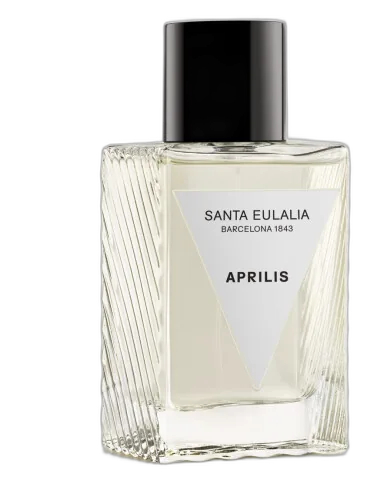
Santa Eulalia
Aprilis Santa Eulalia
Shared top notes: pink pepper
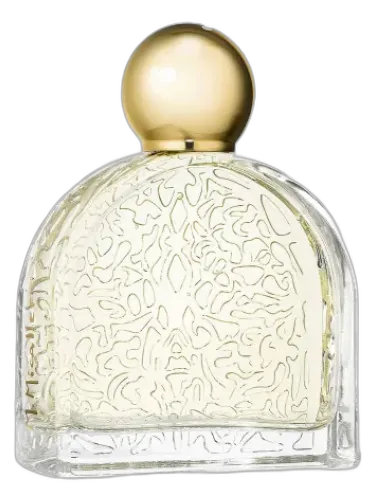
M. Micallef
Soleil Passion M. Micallef
Shared heart notes: lily-of-the-valley
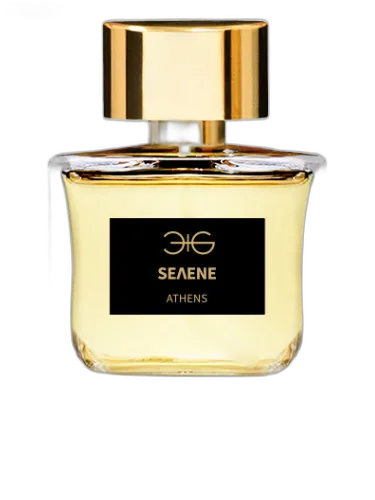
Manos Gerakinis
Selene (seλene) Manos Gerakinis
Shared heart notes: orange blossom
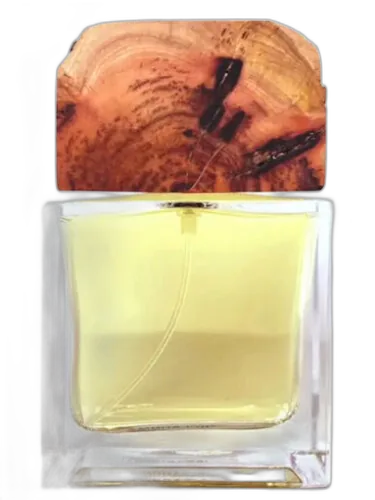
Bibi Bigler
Ambra Bibi Bigler
Shared base notes: ambergris, cedarwood, musk

L'acqua di Fiori
Ototemo Happy L'acqua Di Fiori
Shared heart notes: lily-of-the-valley, orange blossom