


Wood Dew Nomenclature
At a glance
Is Wood Dew Nomenclature worth trying?
Wood Dew by Nomenclature is a Floral Woody Musk fragrance for women and men.
- Best match
- Casual wear in Spring
- Performance feel
- Good longevity with Moderate sillage
- Signature profile
- powdery, woody, musky with White Musk, Violet, Australian Sandalwood
The first impression
Wood Dew by Nomenclature is a Floral Woody Musk fragrance for women and men. This is a new fragrance. Wood Dew was launched in 2022.
What shapes the scent
The perfumer behind it

Karl Bradl, Carlos Quintero
Karl Bradl is known for his work with Nomenclature, where he crafts fragrances that balance natural elements with modern sensibilities. His Wood Dew showcases a fresh, woody profile that feels both earthy and refined. Bradl's approach often highlights subtle contrasts between crispness and warmth. His compositions appeal to those who appreciate understated yet distinctive scents.
Notes pyramid
All Notes
Complete scent profile
White Musk
 Violet
 Australian Sandalwood
 Palo Santo
 Peach
Peach
 Pear
Turkish Rose
Pear
Turkish Rose
 Matcha Tea
 Peony
Peony
The mood it creates
The Sage Archetype: Portrait of Wood Dew Nomenclature
Essence
To wear Wood Dew is to carry the scent of quiet revelation-a fragrance that speaks of damp earth, tender green shoots, and the crisp, mineral clarity of morning mist clinging to bark. This is not the perfume of grand declarations or opulent indulgence, but of subtle awakening. The person who chooses it is drawn to the liminal, the spaces between things, where meaning is not shouted but whispered.
The Sage is a seeker of truth, not through dogma but through observation, contemplation, and the slow accumulation of insight. They are the one who listens more than they speak, who values depth over spectacle, and who finds wisdom in the natural world as much as in books. The Sage does not impose understanding but allows it to emerge, like dew forming in the predawn silence.
Shadow
Yet every strength has its inverse. The Sage’s love of solitude can slip into detachment, their contemplative nature into over-analysis. They may withdraw too deeply, mistaking observation for participation, wisdom for lived experience. At their worst, they become the Hermit-not the wise guide but the one who stands apart, watching life rather than living it.
Their reluctance to impose meaning can become a reluctance to act. They may hesitate too long, waiting for perfect clarity, when sometimes life demands decisive movement. Their quiet confidence can, in moments of doubt, curdle into self-doubt-if wisdom is their ideal, then ignorance (real or perceived) becomes their deepest fear.
Conclusion
Their tastes are refined but never ostentatious-a well-worn leather journal, a hand-thrown ceramic cup, the weight of linen over synthetic shine. They prefer the texture of raw wood to polished veneer, finding beauty in the grain, the knots, the imperfections that tell a story. Their home is a sanctuary of muted tones, filled with books, dried botanicals, and the faint scent of cedar lingering in the air.
Philosophy is not an abstraction for them but a lived practice. They are drawn to thinkers like Lao Tzu and Heraclitus, who understood the world as a process rather than a fixed thing. They believe in the intelligence of nature, in the wisdom of cycles-birth, decay, rebirth-and see themselves as part of that rhythm rather than separate from it.
In relationships, they are the steady presence, the listener who offers not solutions but space. They do not rush to fill silences; they understand that some truths can only be spoken in the quiet between words. Their love is patient, but it is not passive-when they commit, it is with quiet intensity, a devotion that does not need to announce itself.
If you like this, try these
Fragrances with a comparable profile - shared accords, notes, and character.
Burdin
Tinoutcha Burdin
Shared top notes: peach, pear

Ted Lapidus
Fantasme Ted Lapidus
Shared top notes: peach, violet
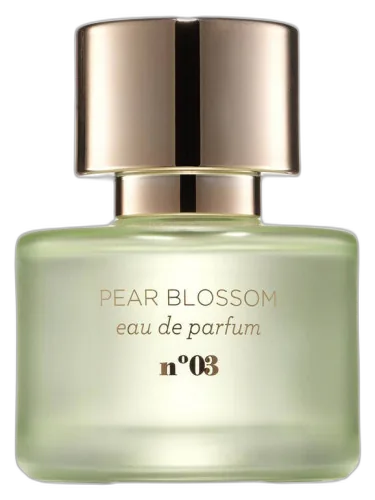
Mix:Bar
Pear Blossom Mix:bar
Shared top notes: pear, peony, white musk
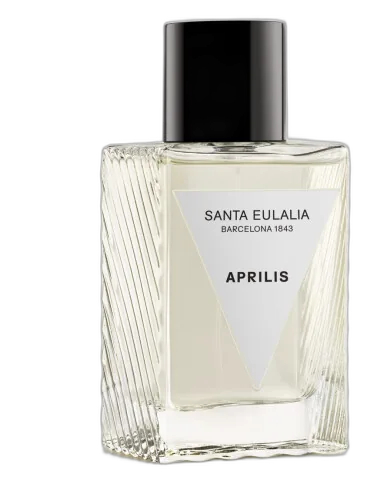
Santa Eulalia
Aprilis Santa Eulalia
Shared top notes: pear, peony
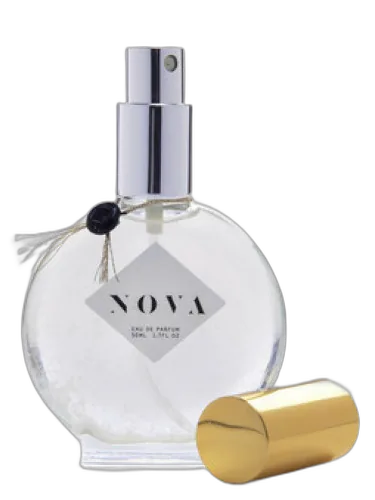
Nova
Moonstone Nova
Shared top notes: pear, violet, white musk