
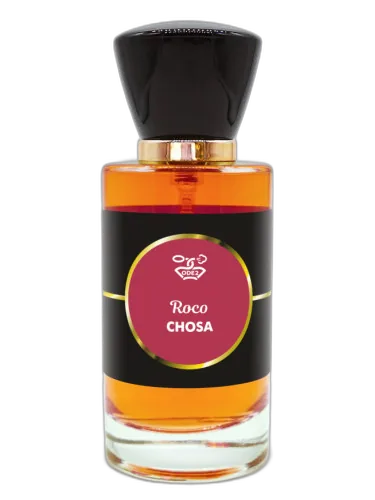

Roco Chosa Odetu
Fragrance Story
Roco Chosa by Odetu is a Oriental Vanilla fragrance for women and men. This is a new fragrance. Roco Chosa was launched in 2022. The nose behind this fragrance is Andrey Chibisov. Top notes are Liquor, Candied Orange and Davana; middle notes are Dark Chocolate, Cookie and Rose Jam; base notes are Vanilla, Coconut and Benzoin.
Composition Profile
About the Perfumer

Andrey Chibisov
Andrey Chibisov is a Russian perfumer known for his work with the niche brand Odetu, where he has created a diverse range of fragrances. His style often balances bold, contrasting notes, as seen in Odetu’s Black Coffee and Berry Berissimo, alongside more ethereal compositions like Aurora Borealis. He also contributed to Ladanika and Petrushka, demonstrating a versatility that spans from rich, woody scents to fresh, powdery accords.
Fragrance Notes
Top Notes
First impression · 15-30 min
 Liquor
 Candied Orange
 Davana
Heart Notes
Core character · 2-4 hours
 Dark Chocolate
 Cookie
 Rose Jam
Base Notes
Lasting impression · 4+ hours
 Vanilla
 Coconut
 Benzoin
Character Profile
The Lover Archetype: Portrait of Roco Chosa Odetu
Essence
The one who favors Roco Chosa Odetu is ruled by the Lover archetype, though not in its most obvious, hedonistic form. This is not a person lost in fleeting pleasures, but one who seeks beauty with a quiet intensity, who finds meaning in the textures of life-the scent of skin, the weight of silence, the slow burn of desire. The Lover is drawn to what stirs the senses, but also to what stirs the soul.
This fragrance-dark, earthy, yet unexpectedly delicate-mirrors their nature. It is not loud, but it lingers. It does not demand attention, but it is unforgettable.
Style & Aesthetic
Their surroundings are curated with an instinct for harmony. They prefer muted colors-deep greens, warm browns, the occasional flash of burgundy-but textures are paramount: worn leather, raw silk, unpolished wood. Their home is not sterile but lived-in, a place where objects carry history. A well-thumbed book of poetry, a half-empty glass of wine left on the table overnight, a single candle burned low.
They move through the world with a quiet magnetism, not because they seek to seduce, but because they understand the power of presence. Their style is understated but deliberate-a linen shirt left slightly undone, a single piece of antique jewelry, the faintest trace of fragrance on their collar.
Philosophy & Values
For them, beauty is not an ornament but a necessity. They believe that life is too short for the mediocre, the half-felt, the unlived. They are drawn to art that unsettles, to music that aches, to conversations that leave them altered. They do not fear melancholy; they see it as proof of depth.
Yet their philosophy is not one of indulgence without consequence. They understand that pleasure, when pursued without restraint, can hollow a person. Their love of the sensual is tempered by a quiet discipline-they know when to pull back, when to let desire remain unfulfilled, because absence, too, has its own kind of richness.
Relationships
They do not give themselves lightly. Their relationships are slow-burning, built on layers of shared silence as much as words. They are drawn to those who understand the language of touch, who know that a glance can be as revealing as a confession.
But their intensity can be overwhelming. Some mistake their depth for neediness, their passion for possessiveness. They are not afraid of entanglement, but they demand reciprocity-half-hearted lovers will find themselves discarded, not out of cruelty, but because they refuse to dilute what they value most.
Shadow
Their greatest strength is also their greatest peril. When unbalanced, their pursuit of beauty can turn into fixation. They may cling too tightly to a fading romance, chase an ideal that does not exist, or lose themselves in nostalgia for a moment that has passed.
At their worst, they become the Jealous Lover, the one who confuses possession with passion. They may grow resentful of those who do not feel as deeply as they do, or they may withdraw entirely, guarding their heart so fiercely that even genuine love cannot reach them.
Conclusion
To wear Roco Chosa Odetu is to embrace the paradox of the Lover-to know that pleasure is fleeting, yet to pursue it anyway; to understand that love is dangerous, yet to surrender to it all the same. They are not naive, but they refuse to live cautiously.
They are the kind of person who leaves an imprint-not because they shout the loudest, but because they feel the deepest. And when they are gone, their absence is a scent that lingers, a memory that refuses to fade.
Similar Fragrances
Fragrances with a comparable profile - shared accords, notes, and character.
Odetu
Roco Chosa Odetu
Shared accords: alcohol, chocolate, citrus

Jousset Parfums
Café Affogato Jousset Parfums
Shared accords: chocolate, sweet, vanilla
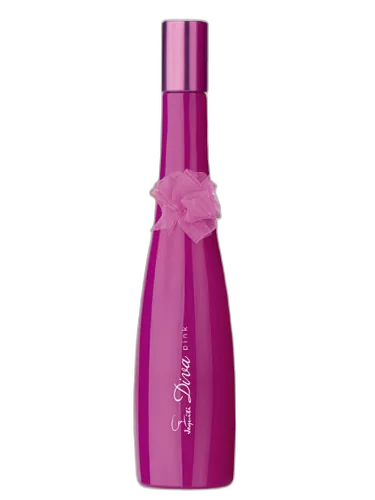
Jequiti
Diva Pink Jequiti
Shared accords: chocolate, citrus, rose
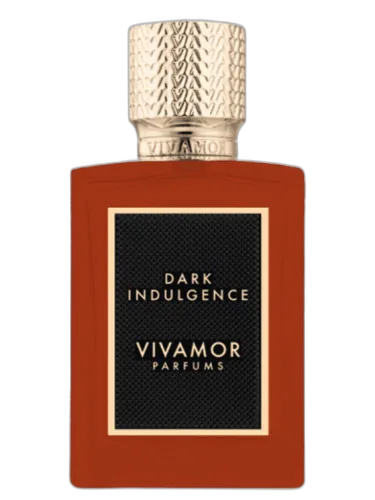
Vivamor Parfums
Dark Indulgence Vivamor Parfums
Shared accords: chocolate, citrus, sweet

Sweet Essentials
Caribbean Chocolate Sweet Essentials
Shared accords: chocolate, sweet, vanilla