


Capite O'driu
Fragrance Story
Capite by O'Driu is a Oriental fragrance for women and men. Capite was launched in 2021. The nose behind this fragrance is Angelo Orazio Pregoni.
Composition Profile
About the Perfumer

Angelo Orazio Pregoni
Angelo Orazio Pregoni is an Italian perfumer known for his work with the niche houses Bepolar and O'Driu. His creative signature blends raw, natural ingredients with unconventional, often avant-garde compositions that challenge traditional perfumery. Notable creations include the Bepolar series such as C21 Bepolar and Cin4 Bepolar, as well as O'Driu's 42 O'driu and Allegradonna O'driu, which reflect his experimental approach to scent.
Fragrance Notes
All Notes
Complete scent profile
 Coffee
 Cherry
 Fig
Fig
 Fenugreek
 Bread
Bread
 Violet
 Sandalwood
 Frankincense
 Carnation
 Jasmine
 Amber
Amber
 Mandarin Orange
Capite O'driu by O'Driu offers a distinctive olfactory experience that stands out from other fragrances in its category.
Crafted with the finest ingredients and a blend of traditional and modern perfumery techniques, this fragrance represents the pinnacle of the perfumer's art.
Capite O'driu embodies the distinctive style of O'Driu while adding a unique chapter to their fragrance portfolio.
Character Profile
The Alchemist Archetype: Portrait of Capite O'driu
Essence
To wear Capite O'driu is to embrace an olfactory paradox-a fragrance that is at once raw and refined, primal and intellectual. The person who chooses this scent is not merely selecting a perfume; they are declaring allegiance to an inner world where contradictions fuse into something greater than their parts. Their soul is a crucible, transforming the base materials of existence into gold. They are, above all, an Alchemist-Jung’s archetype of transformation, mystery, and the relentless pursuit of hidden truths.
This is someone who lives at the intersection of instinct and intellect. They are drawn to the obscure, the esoteric, the things that cannot be easily named. Their tastes are not conventional-they prefer the strange beauty of decay, the elegance of asymmetry, the poetry of imperfection. In art, they gravitate toward surrealism and symbolism; in music, toward compositions that defy structure yet evoke deep emotion. Their wardrobe is a carefully curated blend of textures-rough linens, aged leather, perhaps a hint of something metallic or iridescent. They do not follow trends; they follow intuition.
Their philosophy is one of metamorphosis. They believe that life is not static, that identity is fluid, and that the self must be continually destroyed and reborn. They are drawn to thinkers like Nietzsche, Jung, and Bataille-those who dared to explore the shadow without flinching. They see existence as an experiment, and they are both the scientist and the subject.
Shadow
Yet the Alchemist is not without their flaws. Their relentless pursuit of transformation can become a kind of self-annihilation-an endless cycle of tearing down and rebuilding that leaves them unmoored. They may struggle with commitment, always chasing the next revelation rather than grounding themselves in the present. Their disdain for the mundane can make them dismissive of those who find comfort in simplicity.
Their relationships may suffer from their tendency to intellectualize emotion, to treat love as another experiment rather than a lived experience. They risk becoming prisoners of their own minds, so consumed by their inner world that they neglect the tangible one. At their worst, they are hermetic, arrogant, lost in their own labyrinth of symbols.
Conclusion
The Alchemist’s greatest strength is their ability to see beyond surfaces. They perceive the hidden connections between things-between scent and memory, between myth and reality, between the sacred and the profane. They are not afraid of darkness, for they know it is the womb of creation. Their relationships are intense but selective; they do not suffer fools, nor do they tolerate superficiality. Those who earn their trust find a fiercely loyal companion, one who will challenge them to grow even as they offer unwavering support.
Their lifestyle is one of deliberate solitude and deep engagement. They may be artists, writers, perfumers, or scholars-any vocation that allows them to explore the unseen. They thrive in liminal spaces: old libraries, abandoned buildings, the quiet hours before dawn. They are not afraid of silence, for they know it is the birthplace of revelation.
Similar Fragrances
Fragrances with a comparable profile - shared accords, notes, and character.
O'Driu
Capite O'driu
Shared accords: amber, cherry, coffee
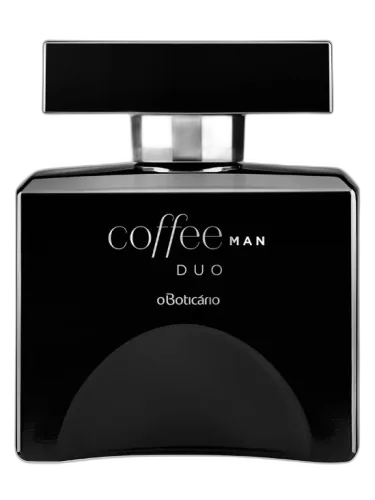
O Boticário
Coffee Duo Man O Boticário
Shared accords: amber, coffee, fruity

Annette Neuffer
Arabica Annette Neuffer
Shared accords: amber, coffee, fresh spicy
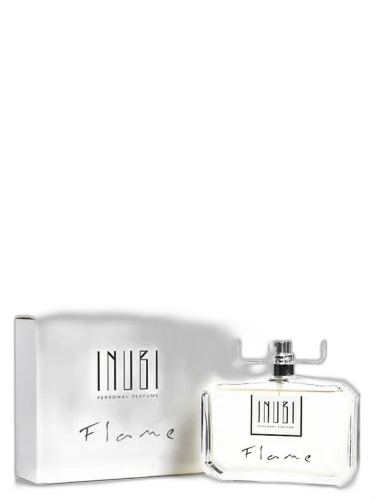
Inubi
Flame Inubi
Shared accords: amber, fresh spicy, fruity

Acqua di Genova
Violetta Extreme Acqua Di Genova
Shared accords: amber, fruity, powdery