


Leva O'driu
Fragrance Story
Leva by O'Driu is a Oriental Floral fragrance for women. Leva was launched in 2011. The nose behind this fragrance is Angelo Orazio Pregoni. Top notes are Grapefruit, Marigold, Black Pepper and Jasmine; middle notes are Turmeric, Nard Himalayan (Jatamansi), Lavender, Vanilla and Basil; base notes are Lemongrass, Woody Notes, Soybean and Vetiver.
Composition Profile
About the Perfumer

Angelo Orazio Pregoni
Angelo Orazio Pregoni is an Italian perfumer known for his work with the niche houses Bepolar and O'Driu. His creative signature blends raw, natural ingredients with unconventional, often avant-garde compositions that challenge traditional perfumery. Notable creations include the Bepolar series such as C21 Bepolar and Cin4 Bepolar, as well as O'Driu's 42 O'driu and Allegradonna O'driu, which reflect his experimental approach to scent.
Fragrance Notes
Top Notes
First impression · 15-30 min
 Grapefruit
 Marigold
 Black Pepper
 Jasmine
Heart Notes
Core character · 2-4 hours
Turmeric
Nard Himalayan (Jatamansi)
 Lavender
 Vanilla
 Basil
Basil
Base Notes
Lasting impression · 4+ hours
 Lemongrass
 Woody Notes
 Soybean
 Vetiver
Leva O'driu by O'Driu offers a distinctive olfactory experience that stands out from other fragrances in its category.
Crafted with the finest ingredients and a blend of traditional and modern perfumery techniques, this fragrance represents the pinnacle of the perfumer's art.
Leva O'driu embodies the distinctive style of O'Driu while adding a unique chapter to their fragrance portfolio.
Character Profile
The Alchemist Archetype: Portrait of Leva O'driu
Essence
To wear Leva O'driu is to embrace the esoteric, to court the mysterious alchemy of scent as if it were a whispered secret between the self and the universe. This fragrance-unconventional, elusive, almost defiant in its refusal to conform-belongs to those who see life as a crucible for transformation. Their archetype is the Alchemist, the seeker who transmutes the raw into the refined, the mundane into the extraordinary.
The Alchemist is not merely a collector of experiences but a distiller of meaning. They are drawn to the obscure, the rare, the things that defy easy categorization. Their tastes are refined but never ostentatious; they prefer the whisper of silk to the clamor of gold, the texture of aged paper to the glare of a screen. Their wardrobe is an exercise in controlled eccentricity-structured yet fluid, classic yet subtly subversive. They might wear a tailored coat over a shirt dyed in indigo, or a vintage brooch pinned to a minimalist dress. Their aesthetic is not about trend but about resonance, as if each piece were chosen for its symbolic weight.
Philosophy is their native language. They are drawn to thinkers who dismantle convention-Nietzsche, Jung, Bataille, perhaps even the mystic whispers of alchemical texts. They believe in the power of symbols, in the hidden threads that connect art, myth, and personal transformation. Their values are not rigid but fluid, shaped by an ongoing dialogue between intuition and intellect. They do not seek answers so much as deeper questions.
Shadow
Yet the Alchemist is not without their darkness. Their obsession with transformation can become a refusal to accept the present as it is. They may grow restless, always chasing the next revelation, the next layer of meaning, never satisfied with the now. Their introspection can turn into solipsism, their love of mystery into a disdain for the mundane. They risk becoming the hermit in their self-made labyrinth, so enchanted by their own symbols that they forget how to speak in plain words.
In relationships, they may demand too much depth too soon, unnerving those who are not ready for their intensity. Their disdain for the superficial can harden into arrogance, a quiet contempt for those who do not share their esoteric passions. And if their experiments in self-transformation fail, they may descend into melancholy, as if the elixir they sought was always just out of reach.
Conclusion
The Alchemist’s greatest strength is their ability to see potential where others see only raw material. They are the friend who listens and then offers not advice but a metaphor that unravels the problem in a new light. They are the artist who does not merely create but conjures, turning emotion into form. Their relationships are deep but few, for they do not give their intimacy lightly. When they love, it is with an intensity that borders on the devotional, as if the beloved were both muse and mirror.
Their lifestyle is one of deliberate curation. They might live in a loft filled with books, curios, and carefully selected objects-each with a story, a meaning. They prefer cities with history, where the past lingers like a ghost in the streets. They drink black coffee or obscure herbal infusions, eat food that feels like an experiment in alchemy-spices balanced like chemical equations. They are drawn to the liminal: dusk, the hour between waking and dreaming, the moment before a storm breaks.
Similar Fragrances
Fragrances with a comparable profile - shared accords, notes, and character.

d.grayi
Dragon Baby D.grayi
Shared accords: aromatic, balsamic, earthy
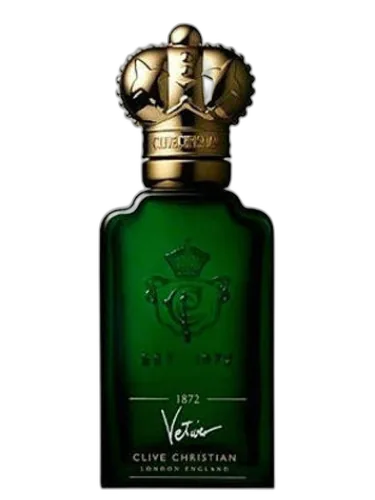
Clive Christian
1872 Vetiver Clive Christian
Shared accords: aromatic, balsamic, citrus

Helder Machado Perfumes
Timo No 1 Helder Machado Perfumes
Shared accords: aromatic, balsamic, citrus

FZOTIC
Lampblack Fzotic
Shared accords: aromatic, citrus, earthy

Olympic Orchids Artisan Perfumes
Gujarat Olympic Orchids Artisan Perfumes
Shared accords: aromatic, earthy, fresh spicy