


Sea Angel O'driu
Fragrance Story
Sea Angel by O'Driu is a fragrance for women and men. Sea Angel was launched in 2017. The nose behind this fragrance is Angelo Orazio Pregoni.
Composition Profile
About the Perfumer

Angelo Orazio Pregoni
Angelo Orazio Pregoni is an Italian perfumer known for his work with the niche houses Bepolar and O'Driu. His creative signature blends raw, natural ingredients with unconventional, often avant-garde compositions that challenge traditional perfumery. Notable creations include the Bepolar series such as C21 Bepolar and Cin4 Bepolar, as well as O'Driu's 42 O'driu and Allegradonna O'driu, which reflect his experimental approach to scent.
Fragrance Notes
All Notes
Complete scent profile
 Seaweed
 Sea Notes
Sea Salt
Sea Notes
Sea Salt
 Sand
Ozonic notes
Sand
Ozonic notes
Sea Angel O'driu by O'Driu offers a distinctive olfactory experience that stands out from other fragrances in its category.
Crafted with the finest ingredients and a blend of traditional and modern perfumery techniques, this fragrance represents the pinnacle of the perfumer's art.
Sea Angel O'driu embodies the distinctive style of O'Driu while adding a unique chapter to their fragrance portfolio.
Character Profile
The Wanderer Archetype: Portrait of Sea Angel O'driu
Essence
To love Sea Angel O'driu is to embrace the untamed spirit of the sea-its vastness, its mystery, its refusal to be contained. The fragrance is saline and luminous, evoking driftwood, salt-crusted skin, and the sharp tang of ozone before a storm. It is not a scent for those who seek comfort in the familiar, but for those who find beauty in the fleeting, the ephemeral, the untethered.
This person is defined by the Wanderer, an archetype that embodies freedom, exploration, and a refusal to be bound by convention. Like the ocean, they are fluid, shifting, impossible to pin down. They are drawn to the unknown, not out of restlessness alone, but from a deep-seated belief that meaning is found in movement, not stagnation. Their soul is nomadic, their spirit unanchored-yet this is both their greatest strength and their most perilous flaw.
Style & Aesthetic
Their style is minimal yet evocative, like the scent they wear-nothing excessive, nothing unnecessary, yet every detail deliberate. They favor raw linens, weathered leather, silver that tarnishes with time. Their home, if they have one, is sparse, filled with objects that carry stories: a shell from a distant shore, a book with salt-stained pages, a single candle burned low.
They are drawn to art that captures impermanence-the blur of a wave, the fading light of dusk. Music for them is ambient, oceanic, something that feels like it could dissolve into the air at any moment.
They are intensely magnetic, drawing others in with their quiet intensity, their refusal to conform. People are fascinated by their self-possession, their seeming indifference to approval. But intimacy is difficult for them. They love deeply, but fleetingly-like a tide that recedes as soon as it touches the shore.
Romantically, they are drawn to those who mirror their own independence, yet they often resent the very freedom they demand. Their shadow emerges when they mistake emotional distance for strength, leaving a trail of half-finished connections in their wake.
They thrive in careers that allow movement-travel writing, photography, sailing, anything that keeps them unmoored. Routine is their enemy; stagnation, their deepest fear.
Philosophy & Values
Their philosophy is one of radical autonomy. They reject dogma, whether societal, religious, or personal, believing that truth is not fixed but discovered anew with each experience. They value authenticity above all else-not the performative kind, but the raw, unfiltered self that emerges when one strips away expectation. They are drawn to thinkers like Nietzsche, Camus, and the Stoics, who speak of self-creation rather than destiny.
Yet this independence comes at a cost. Their disdain for convention can harden into cynicism, a refusal to commit to anything-or anyone-long enough to be changed by it. They mistake detachment for wisdom, forgetting that even the sea, for all its vastness, is shaped by the shores it touches.
Shadow
The Wanderer’s shadow is the Drifter-someone so afraid of being trapped that they never truly arrive. Their refusal to settle can become a form of avoidance, a way to evade the vulnerability that comes with permanence. They may pride themselves on their detachment, but beneath it lies a quiet loneliness, the unspoken fear that in never staying, they have never truly been known.
Yet even this flaw is part of their beauty. Like the sea, they are never still, never predictable. They remind us that life is not meant to be grasped, but experienced-that sometimes, the deepest truths are found not in answers, but in the endless, shifting horizon.
Similar Fragrances
Fragrances with a comparable profile - shared accords, notes, and character.

L'Aromatica Perfume
Seafaring Man L'aromatica Perfume
Shared accords: aquatic, aromatic, marine

Hawthorne
Mineral Wave Hawthorne
Shared accords: aquatic, aromatic, marine
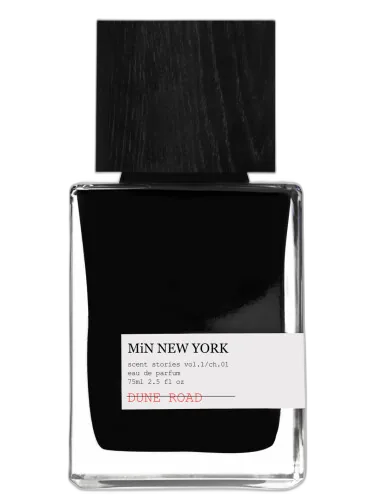
MiN NEW YORK
Dune Road Min New York
Shared accords: aquatic, aromatic, marine

Alkemia Perfumes
Sandscape Alkemia Perfumes
Shared accords: aquatic, aromatic, marine
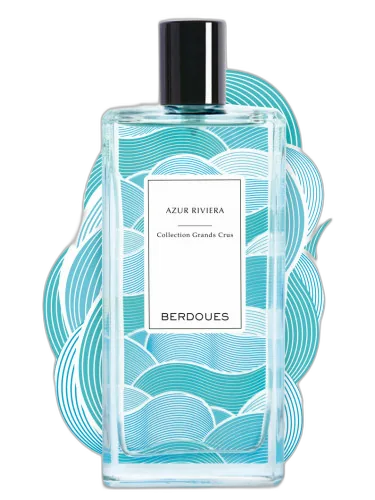
Parfums Berdoues
Azur Riviera Parfums Berdoues
Shared accords: aquatic, aromatic, marine