


Ta O'driu
Fragrance Story
Ta by O'Driu is a fragrance for women and men. Ta was launched in 2015. The nose behind this fragrance is Angelo Orazio Pregoni.
Composition Profile
About the Perfumer

Angelo Orazio Pregoni
Angelo Orazio Pregoni is an Italian perfumer known for his work with the niche houses Bepolar and O'Driu. His creative signature blends raw, natural ingredients with unconventional, often avant-garde compositions that challenge traditional perfumery. Notable creations include the Bepolar series such as C21 Bepolar and Cin4 Bepolar, as well as O'Driu's 42 O'driu and Allegradonna O'driu, which reflect his experimental approach to scent.
Fragrance Notes
All Notes
Complete scent profile
 Strawberry
 Oakmoss
 Melon
Melon
 Laurels
 Cedar
Cedar
 Tuberose
Ta O'driu by O'Driu offers a distinctive olfactory experience that stands out from other fragrances in its category.
Crafted with the finest ingredients and a blend of traditional and modern perfumery techniques, this fragrance represents the pinnacle of the perfumer's art.
Ta O'driu embodies the distinctive style of O'Driu while adding a unique chapter to their fragrance portfolio.
Character Profile
The Alchemist Archetype: Portrait of Ta O'driu
Essence
To wear Ta’O’driu is to embrace the esoteric, the rare, the alchemical. This is not a fragrance for those who seek comfort in the familiar; it is for the seeker, the experimenter, the one who distills meaning from the obscure. The person who cherishes this scent is, above all, an Alchemist-Jung’s archetype of transformation, mystery, and the pursuit of hidden truths.
Style & Aesthetic
Their wardrobe is an extension of their psyche-structured yet unpredictable, blending classic tailoring with unexpected textures or silhouettes. They might favor deep, muted tones, or conversely, a single bold accent that disrupts expectation. They do not dress to impress, but to provoke thought, even if only their own.
In conversation, they are neither effusive nor withdrawn, but deliberate. They listen with the precision of a chemist measuring reagents, weighing each word before responding. Their humor is dry, laced with irony, and often lost on those who prefer simplicity. They are not cruel, but they are unsparing-especially with themselves.
Relationships
The Alchemist does not love lightly. Their relationships are few but profound, built on mutual recognition rather than convenience. They are drawn to those who possess their own inner fire-artists, thinkers, rebels-but they are wary of those who mistake intensity for depth. Their love is a crucible: it refines, but it can also burn.
Romantically, they are both devoted and elusive. They crave a connection that transcends the ordinary, yet they resist surrender, fearing the dissolution of their autonomy. Their partners must navigate a paradox: to be close enough to matter, but not so close as to disrupt their sacred solitude.
Shadow
For all their brilliance, the Alchemist is not without flaws. Their relentless pursuit of transformation can become a form of restlessness, an inability to ever be satisfied. They may discard relationships, careers, or even their own past selves with the detachment of a scientist discarding a failed experiment.
Their obsession with the hidden can also breed arrogance-a quiet disdain for those who live unexamined lives. They may mistake obscurity for profundity, dismissing what is simple as shallow. At their worst, they become hermetic, sealing themselves away in their own intellectual fortress, mistaking isolation for enlightenment.
Conclusion
This individual moves through the world with an air of quiet intensity, as though perpetually deciphering an invisible code. Their tastes are not merely aesthetic but philosophical-they collect experiences, ideas, and objects that resonate with depth. Their home is a curated sanctuary: antique books, handcrafted ceramics, perhaps a single piece of surrealist art that unsettles as much as it fascinates. They do not follow trends; they excavate them, searching for the raw materials of meaning beneath the surface.
Their philosophy is one of transmutation-the belief that the mundane can be rendered extraordinary through perception, effort, or sheer will. They may be drawn to esoteric traditions, not out of superstition, but because they see in them the remnants of lost wisdom. Their values are rooted in authenticity, but not the kind that is loudly proclaimed. Their authenticity is private, almost secretive-a pact they make with themselves to remain uncompromising in their search for what is real.
Similar Fragrances
Fragrances with a comparable profile - shared accords, notes, and character.

Les Liquides Imaginaires
Navis Les Liquides Imaginaires
Shared accords: aquatic, aromatic, earthy

Mercedes-Benz
Mercedes Benz Man Mercedes-benz
Shared accords: aquatic, aromatic, earthy

Parfumeurs du Monde
Tjärn Parfumeurs Du Monde
Shared accords: aromatic, earthy, fresh spicy

Chouette Vierge Parfumée
Chouette Vierge No. 11 Chouette Vierge Parfumée
Shared accords: aromatic, earthy, fresh spicy
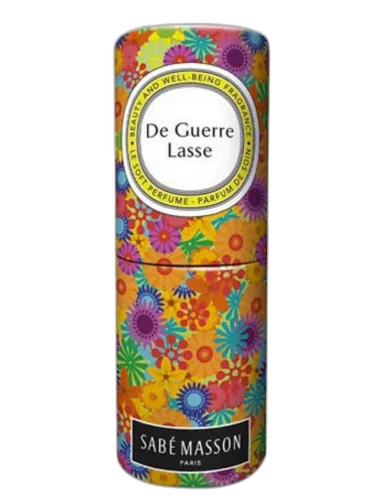
Sabe Masson
De Guerre Lasse Sabe Masson
Shared accords: aromatic, earthy, fresh spicy