


Barocco Officina Delle Essenze
At a glance
Is Barocco Officina Delle Essenze worth trying?
Barocco by Officina delle Essenze is a Oriental fragrance for women and men.
- Best match
- Evening wear in Fall
- Performance feel
- Excellent longevity with Strong sillage
- Signature profile
- amber, sweet, wine with Red Wine, Marzipan, Sweet Orange
The first impression
Barocco by Officina delle Essenze is a Oriental fragrance for women and men. This is a new fragrance. Barocco was launched in 2024. The nose behind this fragrance is Maria Celeste Lombardo. Top notes are Red Wine, Marzipan, Sweet Orange and Bitter Almond; middle notes are Tonka, Coffee, Peru Balsam and Candied Fruits; base notes are Tolu Balsam, Patchouli, Amber and Musk.
What shapes the scent
The perfumer behind it

Maria Celeste Lombardo
Maria Celeste Lombardo has created fragrances for several Italian and Middle Eastern brands. Her work includes Bronth and Colapesce for Ciatu, as well as Diamond for Dkhoon Emirates. She also composed Terra for Lord Milano and Anti Malocchio for Nobile 1942. Her style ranges from fresh Sicilian notes to rich oriental accords.
Notes pyramid
Top Notes
First impression · 15-30 min
 Red Wine
 Marzipan
 Sweet Orange
 Bitter Almond
Heart Notes
Core character · 2-4 hours
Tonka
 Coffee
 Peru Balsam
 Candied Fruits
Base Notes
Lasting impression · 4+ hours
 Tolu Balsam
 Patchouli
 Amber
Amber
 Musk
Musk
The mood it creates
The Alchemist Archetype: Portrait of Barocco Officina Delle Essenze
Essence
To wear Barocco by Officina Delle Essenze is to embrace a fragrance that is rich, complex, and layered-much like the person who chooses it. This is not a scent for the faint of spirit; it is opulent, resinous, and slightly mysterious, evoking the grandeur of old-world sophistication while retaining a modern edge. The wearer is an Alchemist-one who seeks to transmute the ordinary into the extraordinary, who values depth, transformation, and the hidden meanings beneath the surface of life.
Style & Aesthetic
Their personal style is an extension of their inner world: deliberate, textured, and slightly anachronistic. They might favor tailored blazers with a vintage patina, dark silk shirts, or structured dresses that hint at historical influences without being costumey. Their home is a sanctuary of curated objects-antique maps, rare perfumes, perhaps a collection of esoteric texts or alchemical symbols.
They are drawn to art that rewards patience-Baroque music, Renaissance paintings, films with slow-burning tension. They prefer conversation that lingers in the depths rather than skimming the surface.
Relationships
In relationships, they are magnetic but not easily known. They attract others with their quiet intensity, but few truly penetrate their inner sanctum. They value loyalty and depth in friendships, often maintaining a small circle of confidants who share their intellectual or artistic passions.
Romantically, they are drawn to partners who are equally complex-individuals who challenge them, who mirror their own contradictions. They do not love lightly; their affections are deep, sometimes possessive, and always transformative. Yet, their shadow emerges here-they can be demanding, expecting others to meet their exacting standards of depth and authenticity. If disappointed, they may withdraw into solitude rather than compromise.
Shadow
Every archetype has its dark counterpart. For the Alchemist, it is the Isolating Perfectionist-the part of them that, in seeking refinement, risks becoming detached from the raw, imperfect beauty of life. They may grow impatient with those who do not share their depth, dismissing simpler joys as trivial.
There is also the danger of obsession-whether in love, work, or their personal rituals. The very alchemy that enriches their life can become a gilded cage if they forget that transformation requires both control and surrender.
Conclusion
This person is drawn to the interplay of contrasts-light and shadow, tradition and rebellion, intellect and sensuality. They do not merely experience life; they dissect it, refine it, and reassemble it into something more meaningful. Their philosophy is one of intentional evolution-they believe in refining the self through experience, knowledge, and aesthetic discipline.
They are not content with superficial pleasures, though they appreciate beauty in all its forms. A well-worn leather-bound book, a meticulously crafted cocktail, the play of candlelight on aged wood-these are not just objects or moments to them, but fragments of a larger alchemy they are perpetually conducting.
If you like this, try these
Fragrances with a comparable profile - shared accords, notes, and character.

Renier Perfumes
Kisses Rain Renier Perfumes
Shared heart notes: coffee

Joterc
Maple Cedar Joterc
Shared heart notes: coffee
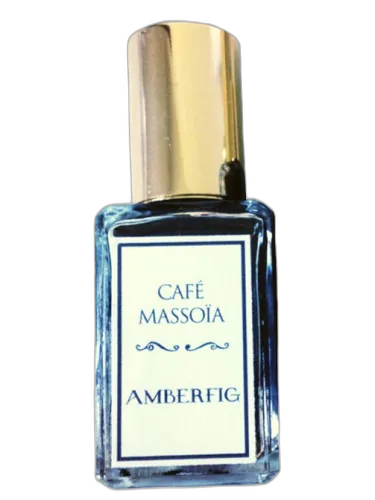
Amberfig
Café Massoïa Amberfig
Shared top notes: bitter almond, sweet orange

Montale
Dallachaï Montale
Shared heart notes: coffee

Roccobarocco
Iron Extreme Roccobarocco
Shared heart notes: tonka