
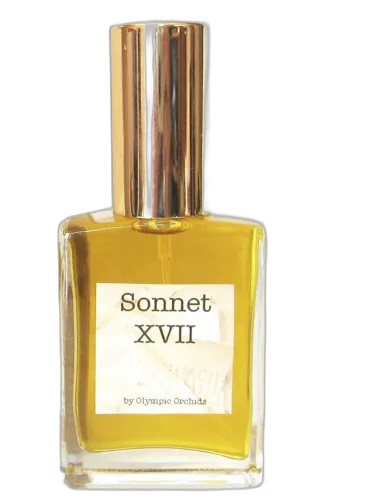

Sonnet Xvii Olympic Orchids Artisan Perfumes
At a glance
Is Sonnet Xvii Olympic Orchids Artisan Perfumes worth trying?
Sonnet XVII by Olympic Orchids Artisan Perfumes is a Floral Woody Musk fragrance for women and men.
- Best match
- Evening wear in Fall
- Performance feel
- Very Good longevity with Moderate sillage
- Signature profile
- floral, earthy, woody with Champaca, Mastic or Lentisque, Cubeb or Tailed pepper
The first impression
Sonnet XVII by Olympic Orchids Artisan Perfumes is a Floral Woody Musk fragrance for women and men. Sonnet XVII was launched in 2012. The nose behind this fragrance is Ellen Covey. Top notes are Champaca, Mastic or Lentisque, Cubeb or Tailed pepper and Citron; middle notes are Osmanthus and Orchid; base notes are Nard Himalayan (Jatamansi), Ambergris, Musk, Woody Notes, Oakmoss, Haitian Vetiver and Bourbon Vanilla.
What shapes the scent
The perfumer behind it

Ellen Covey
Ellen Covey is the founder and perfumer behind Olympic Orchids Artisan Perfumes. She has created a diverse range of fragrances including African Orchid, Arizona, and Blackbird. Her work often draws on natural and botanical inspirations, resulting in unique and evocative scents.
Notes pyramid
Top Notes
First impression · 15-30 min
 Champaca
 Mastic or Lentisque
 Cubeb or Tailed pepper
 Citron
Heart Notes
Core character · 2-4 hours
 Osmanthus
 Orchid
Base Notes
Lasting impression · 4+ hours
 Nard Himalayan (Jatamansi)
 Ambergris
 Musk
Musk
 Woody Notes
 Oakmoss
Haitian Vetiver
Bourbon Vanilla
Oakmoss
Haitian Vetiver
Bourbon Vanilla
The mood it creates
The Lover Archetype: Portrait of Sonnet Xvii Olympic Orchids Artisan Perfumes
Essence
This person is most closely aligned with the Alchemist archetype-a seeker who transforms raw experience into meaning, blending the sensual with the intellectual. Like the fragrance itself-a complex interplay of osmanthus, apricot, and deep woody resins-they are drawn to the liminal spaces where beauty meets mystery. The Alchemist does not merely consume life; they transmute it, distilling fleeting moments into something eternal.
Philosophy & Values
They believe in the sacredness of the senses, that to truly experience the world is to engage with it fully-texture, scent, sound. For them, pleasure is not indulgence but a form of knowing. They reject the binary of "deep" versus "superficial"; a perfectly brewed cup of tea can be as meaningful as a philosophical treatise.
Yet, they are wary of sentimentality. Their appreciation for beauty is tempered by a Nietzschean awareness of its fleeting nature. They do not cling to things but savor them, knowing all moments dissolve. This gives them a quiet intensity-an ability to be fully present, yet always slightly detached.
Relationships
They attract others effortlessly, their presence magnetic yet elusive. People sense depth in them, a promise of understanding, but they do not give themselves easily. Their closest relationships are those built on mutual curiosity-partners and friends who appreciate nuance, who can discuss a novel as passionately as they can sit in comfortable silence.
Romantically, they are drawn to those who mirror their complexity-someone who is both tender and self-possessed. They disdain neediness but crave emotional richness. Their love is deep but not possessive; they would rather lose a lover to truth than keep them with illusions.
Shadow
Their greatest strength-their self-sufficiency-is also their flaw. In their quest for refinement, they can become overly self-contained, mistaking solitude for wisdom. There is a danger of aestheticizing life to the point of detachment, of observing rather than participating. At times, they withdraw into their curated world, dismissing those who cannot meet their exacting standards.
They may also struggle with a quiet arrogance, believing their sensitivity makes them superior to those who live more simply. This can lead to a subtle condescension, a belief that others "don’t truly understand." If unchecked, their pursuit of beauty becomes a barrier, not a bridge.
Conclusion
They are neither entirely of this world nor apart from it-a wanderer between realms, turning the mundane into the poetic. Sonnet XVII suits them because it, too, is a paradox: fruity yet dark, delicate yet enduring. Their life is an ongoing experiment in alchemy, seeking gold in the ordinary.
But the question remains: Will they learn that true transformation requires not just observation, but immersion? That even the most exquisite fragrance fades-and that is precisely what makes it precious?
If you like this, try these
Fragrances with a comparable profile - shared accords, notes, and character.

Herve Leger
Herve Leger Herve Leger
Shared heart notes: orchid, osmanthus
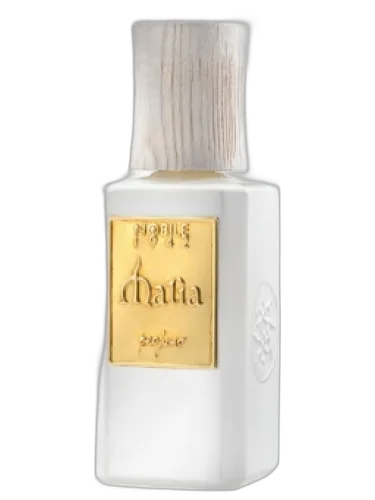
Nobile 1942
Malia Nobile 1942
Shared heart notes: osmanthus

Ahmed Al Maghribi
Awfa Ahmed Al Maghribi
Shared base notes: ambergris, bourbon vanilla, haitian vetiver

Avon
Avon Luck Limitless For Her Avon
Shared heart notes: orchid

Jimmy Choo
Jimmy Choo Limited Edition Parfum Jimmy Choo
Shared heart notes: orchid